





This article was written by Atlas following an interview with Quentin Lallemand, Director of Performance Marketing, conducted on October 1, 2026.
Lucca is a French publisher of HR software that offers an HRIS made up of 14 products spread across five product lines. They all rely on the same HR foundation, which centralizes the data used to manage topics as different as time off, payroll or employee benefits.
This architecture makes cross-selling a major issue: once a first product is adopted, Lucca seeks to identify its customers' other needs and gradually equip them with several building blocks of its HRIS.
This is one of the topics led by Quentin Lallemand, Director of Performance Marketing at Lucca. His team works on acquisition, but also on the relationship with existing customers and on qualifying cross-sell opportunities.
To do this, Lucca relies on a stack that connects, in particular,  Amplitude to analyze usage,
 BigQuery to centralize data,
 Userflow to communicate in the product and
 Pardot for marketing automation. The challenge is to turn the behaviors observed in the software into signals relevant enough to personalize campaigns.
How does Amplitude help Lucca identify cross-sell opportunities?
The first cross-sell logic rests on the product portfolio itself.
Historically, Lucca has identified certain software products as better suited to serve as entry products. They address needs that make the initial acquisition easier. Other products can then be offered as add-ons.
But the company does not want to reason only from the products already purchased. It also seeks to understand how they are actually used.
This is where Amplitude comes in.
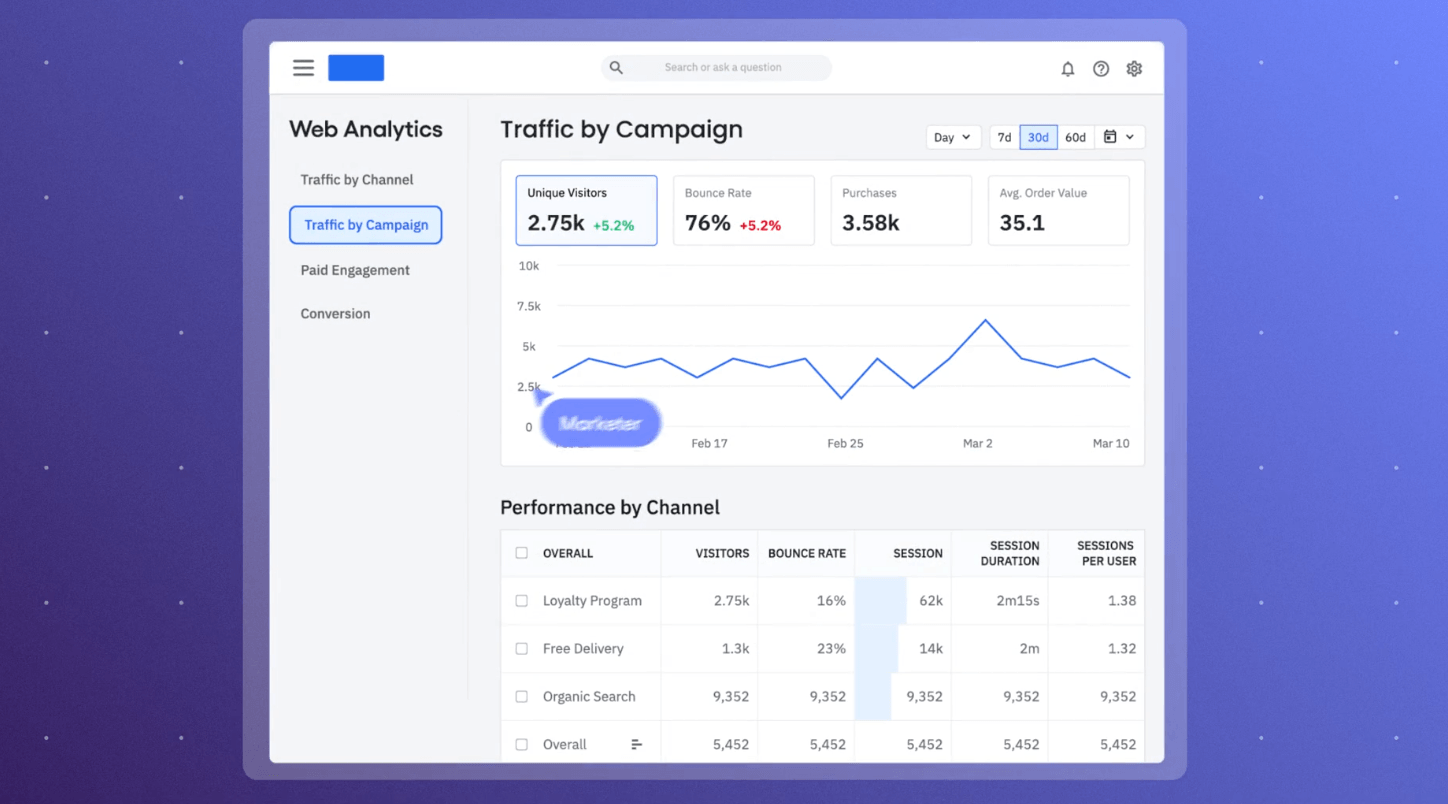
The tool makes it possible to analyze behavior in Lucca's software and identify usage patterns likely to reveal a need. An administrator who frequently uses certain features may, for example, have a relevant profile for another complementary product.
These behaviors then become intent signals that can be used to build segments.
“From these behaviors in Amplitude, we can create segments and intent signals for cross-selling.”
Product data is therefore no longer used only by the Product teams. It also becomes marketing data.
Tools in this section
How do Amplitude, BigQuery and Pardot fit together at Lucca?
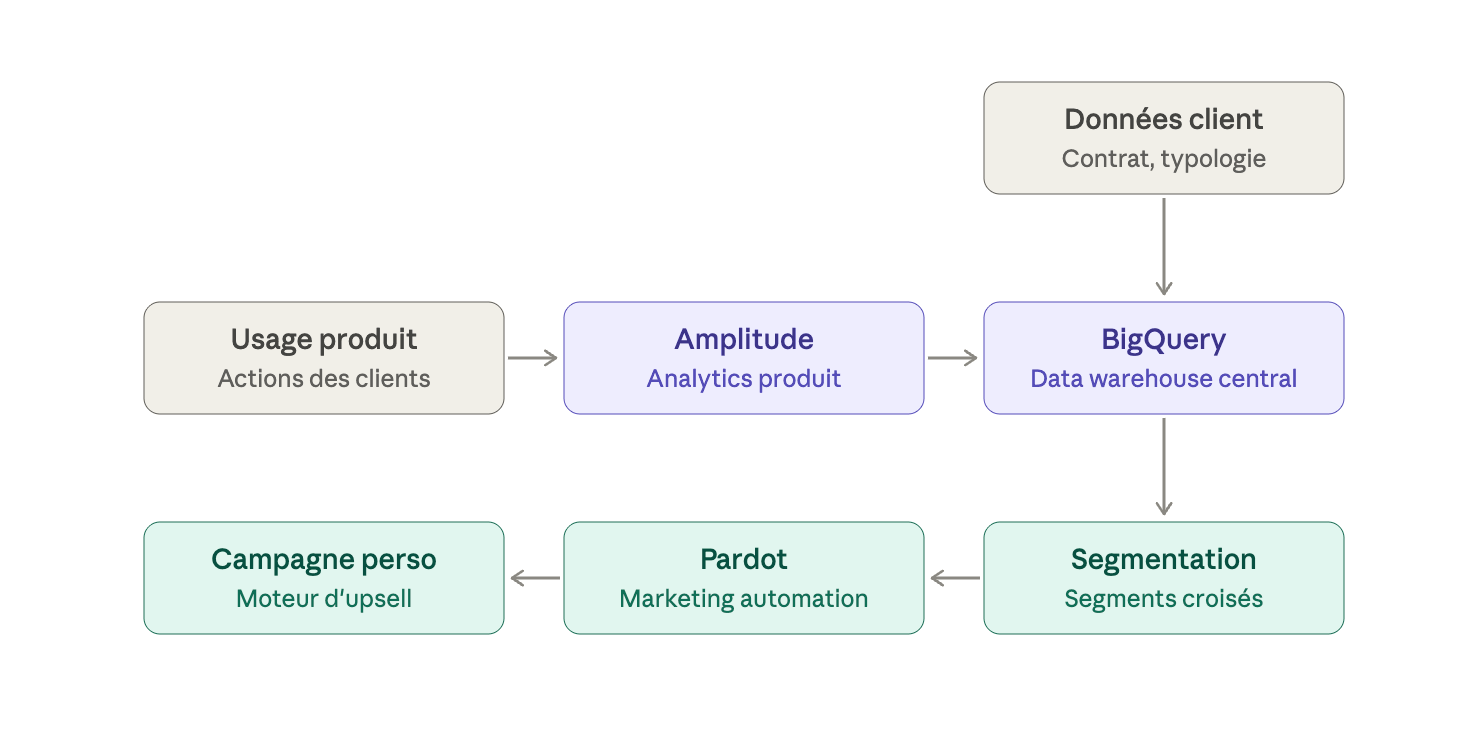
Amplitude is the behavioral analysis layer. BigQuery plays a different role: it serves as the central data warehouse for a large share of the data Lucca uses. Information from the various tools can be centralized or reprocessed in BigQuery before feeding the marketing workflows.
The principle is not to look at a product behavior in isolation. Lucca can match it with other information, such as the type of customer, their contract or the software they already use.
From there, the company can build segments and trigger different scenarios in Pardot, used for email sequences and marketing automation.
The workflow can thus be summarized as follows:
Product usage → Amplitude → BigQuery → segmentation → Pardot → personalized campaign
The sequences are therefore not necessarily identical for all customers of the same product. Quentin describes this mechanism as one of the drivers of upsell growth at Lucca.
Tools in this section
Why does Lucca use Userflow to communicate in its software?
Email is only one of the channels used for cross-selling.
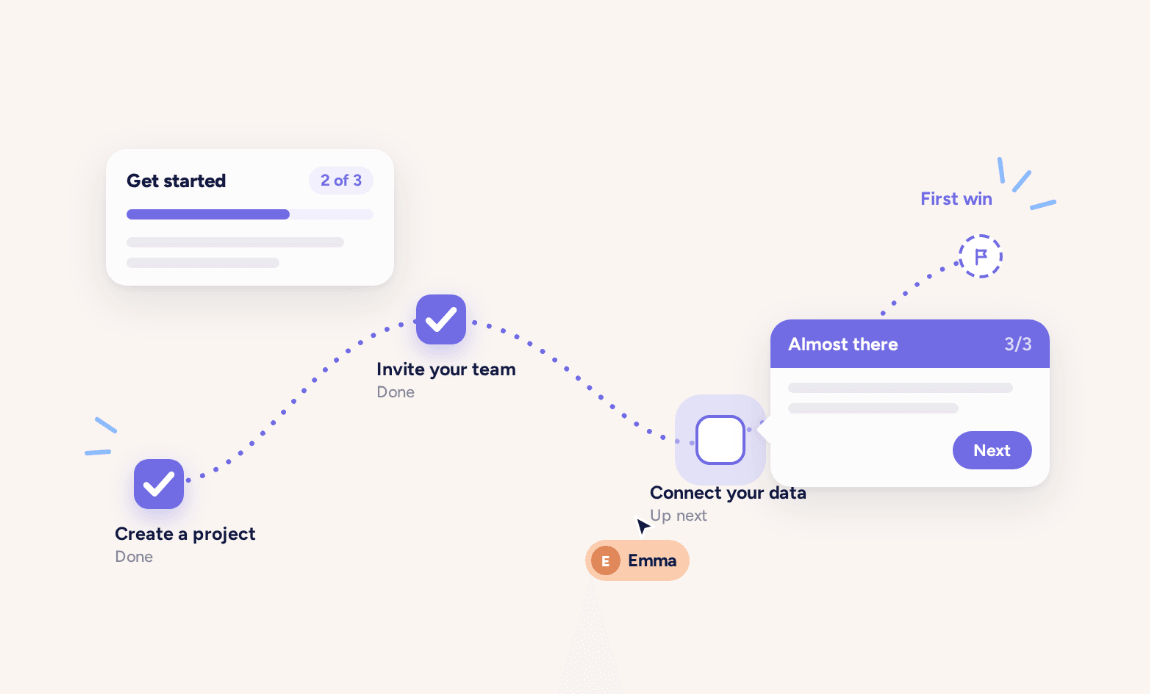
Lucca uses Userflow to display communications directly in Lucca's applications: banners, pop-ups, surveys and other in-product formats.
The company had already built some banners in-house. This approach offered more technical control, but limited marketing's autonomy: each new need could require the involvement of technical teams. Userflow adds a layer on top of the product that lets teams create and edit their communications more easily.
“We're happy with Userflow: the product lets you do banners, surveys, pop-ups and quite a few different formats.”
The choice of Userflow is therefore also part of a search for autonomy: allowing marketing to act in the product without turning every campaign into a development project.
Tools in this section
How do Userflow and Amplitude complement each other?
The two software products come into play at different points in the workflow.
Amplitude helps understand behavior. Userflow makes it possible to act on it.
Amplitude can, for example, reveal that a group of administrators regularly uses certain features. This information helps build a segment. Userflow can then display a communication tailored to this audience directly in the application.
The Marketing team can also analyze the behaviors that follow exposure to a Userflow campaign.
This interplay between observation and activation is particularly important for a multi-product publisher. The challenge is not simply to promote another piece of software, but to use existing behaviors to determine which message may be relevant.
How does Lucca combine Pardot and Userflow?
Historically, the strategy was more focused on the effectiveness of email campaigns. Userflow was mostly used on the Product side before being gradually brought into the marketing logic.
This convergence does, however, create a difficulty: coordinating the communications sent by email with those displayed directly in the software.
The same customer may receive a Pardot sequence while also being exposed to a Userflow banner. Without coordination between the two systems, Lucca risks needlessly increasing marketing pressure or repeating the same message.
The goal is therefore to gradually bring the two channels closer together.
Pardot handles email sequences. Userflow handles interactions in the application. But their integration is not yet fully automated. Some steps remain manual to orchestrate campaigns across the two environments.
For Quentin Lallemand, this limitation eventually raises the question of a more complete campaign orchestration, capable of handling several channels in a single workflow.
CSMs of course also play an important role in cross-selling by identifying, over the course of their conversations with customers, needs or opportunities they can pass on to Account Managers. This qualitative feedback complements the signals from product usage and CRM data to better detect sales opportunities.
How does Lucca want to use AI to make better use of its intent signals?
Lucca is also working on internal projects designed to gather more context around a lead or an account.
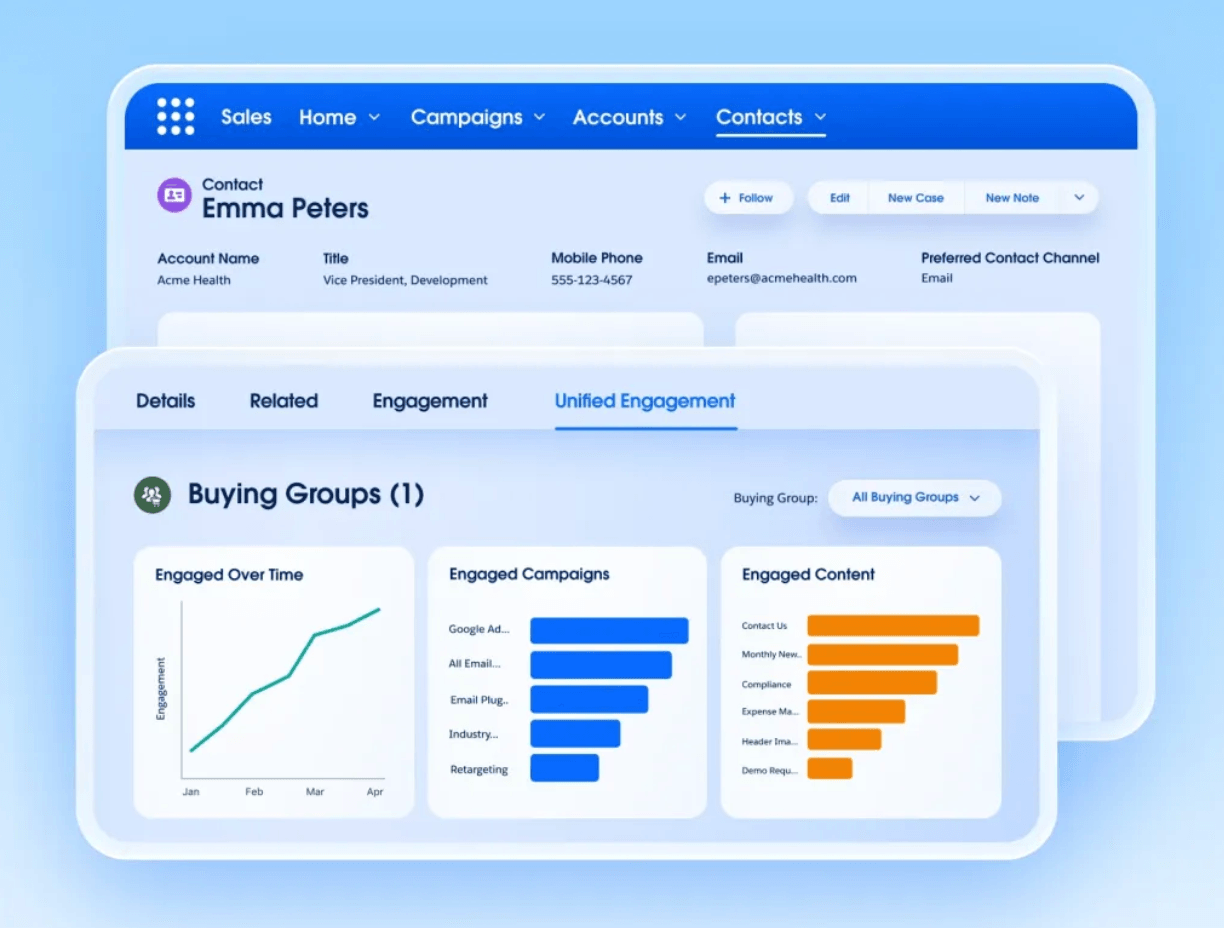
The goal is to bring together in a single view the history of interactions, marketing touchpoints, downloaded content, certain external signals, known information about the company and the interactions of other employees from the same account.
An AI layer can then synthesize this information and suggest an angle of approach to the salesperson.
These projects are developed in-house and then connected to Salesforce.
The logic is a direct extension of the one used for cross-selling: centralizing enough context to turn a multitude of signals into a more relevant sales or marketing action.
Summary of the software this article mentions in Lucca's stack
| Status | Workflow | Tool | Usage |
|---|---|---|---|
| In use | Product Analytics | Amplitude | Analyzes product usage to identify behaviors and intent signals |
| In use | Data | Google BigQuery | Centralizes and reprocesses the data used to build cross-sell segments |
| In use | In-product Marketing | Userflow | Banners, pop-ups and targeted surveys directly in the software |
| In use | Marketing Automation | Salesforce Marketing Cloud | Email sequences triggered by the segments and signals identified |
| In use | CRM |  Salesforce | Centralizes acquisition and cross-sell opportunities |