


For Alain Garnier, president and co-founder of Jamespot, companies are often wrong to want to centralize all their software. He advocates for an architecture composed of independent tools, which are easier to replace and evolve. This conviction is reinforced by the arrival of AI, which could significantly simplify integrations between software. At Jamespot, this philosophy is reflected in the choice to maintain several billing systems rather than launching a large ERP project.
Alain Garnier is wary of large platforms where companies end up centralizing all their processes. He prefers to multiply specialized software, provided they can communicate with each other, rather than relying on a single system that is difficult to evolve.
The president and co-founder of Jamespot advocates for what he calls a “resilient multi-system architecture.” An organization in which each application can evolve independently of the others, without calling into question the entire IT system.
“With our software, we have light horses. I can change software on one side without touching the flagship on the other. What I ask is that the information comes back for operational management.”
This conviction is not new, but the arrival of artificial intelligence could, according to him, make it even more relevant. Because one of the main obstacles to multi-system architectures has always been the difficulty of making different software communicate.
With tools like  Claude and new integration protocols, this constraint could gradually lose its importance.
A multi-system architecture inspired by the functioning of the Internet
To explain his vision, Alain Garnier draws a parallel with the history of computer networks.
He contrasts the Internet with X.25, an old network technology based on a more centralized organization of addresses. The Internet followed a different logic, allowing different networks to communicate through common protocols.
“The Internet was designed to allow people you didn't know to exchange and expand the network. X.25 was based on a unique addressing plan. The network that won is the Internet, because it is resilient.”
He finds this opposition in enterprise software.
On one side, a central platform where all processes must gradually integrate. On the other, several independent applications that communicate through interfaces and common rules.
In the second model, a software can be replaced without necessarily modifying all the others. New solutions can also be added gradually, without waiting for a central platform to develop the corresponding features.
Alain Garnier prefers this second organization, even if it requires more coordination between teams.
“I am always wary of democratic centralism. Managing everything from a single tool seems appealing from afar, but in reality, it imposes the same constraints on everyone. I believe more in multi-system resilience.”
This philosophy goes beyond just IT architecture. Jamespot markets its own collaborative suite, but Alain Garnier explains that the company has never completely prohibited its employees from using other communication tools.
Some parallel uses can reveal needs that official applications do not sufficiently cover. Rather than immediately eliminating them, he prefers to understand why teams have adopted these solutions.
Claude and MCPs could facilitate software integrations
The arrival of artificial intelligence reinforces this conviction.
Today, connecting two software often requires specific developments. Interfaces must be created, data transfers organized, and integrations maintained as applications evolve.
Alain Garnier believes that Claude could make this work much simpler and less costly.
“With Claude, it will become much easier to create small connectors, import data, and transfer it to another tool. This seems more interesting to me than imagining a grand ultimate plan that takes eighteen months to deploy.”
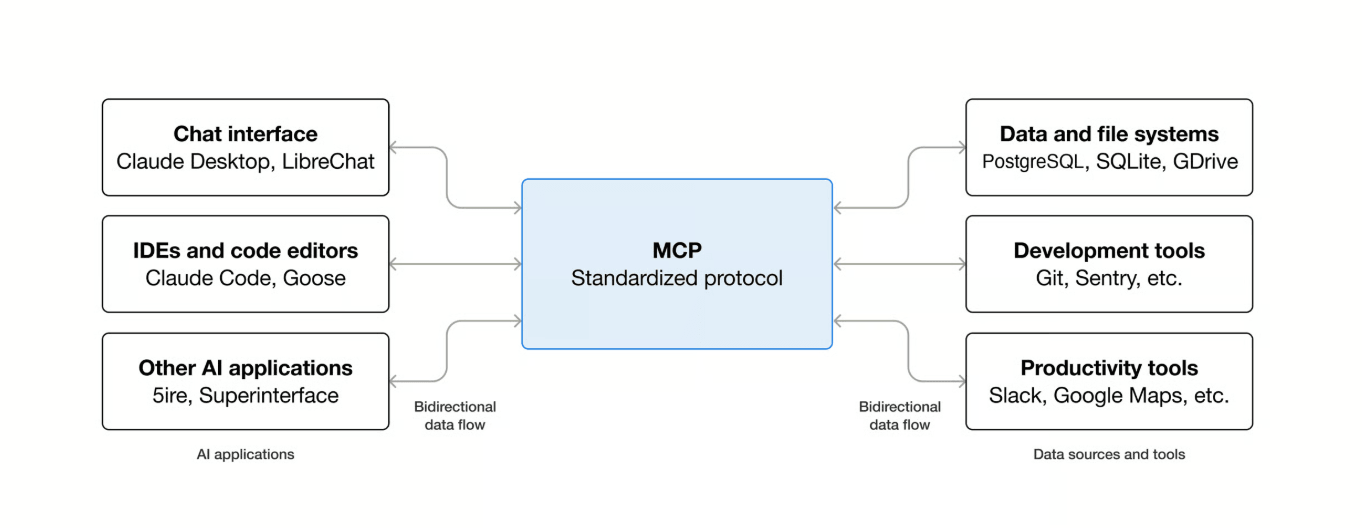
The MCP (Model Context Protocol) also contributes to this evolution by allowing AI assistants to interact with the features of compatible software.  Jamespot even has its own MCP server.
For Alain Garnier, these new possibilities could facilitate the use of several specialized applications without having to invest as much time in their integration.
He also highlights the speed at which software evolves today. An IT project that requires eighteen months of deployment risks becoming partially outdated before it is even completed. Meanwhile, new tools emerge, team needs change, and the possibilities offered by AI advance.
In this context, he prefers to be able to add or gradually replace software rather than wait for the end of a large centralization project.
The limits of all-in-one platforms like HubSpot or SAP
This preference for multi-system architectures is accompanied by a certain wariness of integrated platforms.
Alain Garnier specifically mentions  HubSpot and
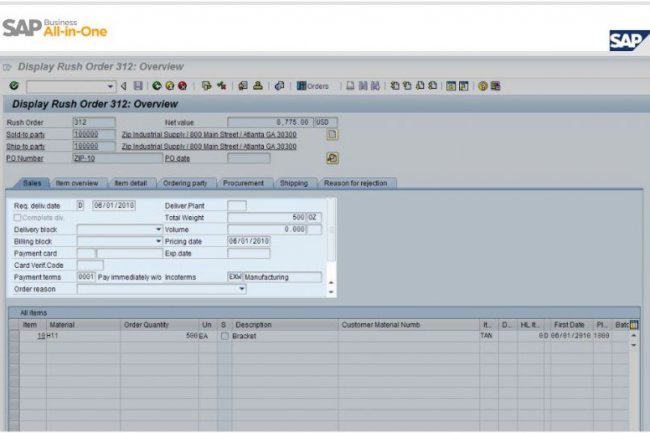
 SAP, whose uses he has observed in various companies. He does not directly question their technical qualities. What concerns him more is the organizational dependency they can create when a company ends up centralizing everything.
“All the people who ended up putting everything into HubSpot because it was going to save their lives sometimes find themselves with a gas factory. It's the same with ERPs: once you've put everything in, moving even the slightest thing becomes very complicated.”
As processes are consolidated into a single platform, each modification can have consequences for several teams. A change that seemed simple at first then requires validations, arbitrations, and sometimes the intervention of a central administrator.
Alain Garnier also sees it as a question of power within the organization.
“The person who holds the keys to the ERP or HubSpot becomes the king of the hill. They decide everything for everyone. It's more reassuring for them, but it imposes the same constraints on everyone.”
He prefers to give teams more autonomy, even if it means accepting that each uses different tools. This organization requires a bit more coordination but avoids having a single team or administrator become the bottleneck for evolving the company's software.
Alain Garnier readily acknowledges that this vision can be debated. He does not claim that a decentralized architecture suits all companies, but it aligns more with his way of working.
At Jamespot, four billing software instead of a single ERP
This philosophy is very concretely reflected in the financial management of Jamespot.
The company is pursuing an external growth strategy to expand its product portfolio. But each acquisition also brings its share of internal software.
This is particularly the case with  SafeBrain and Alinto, two companies acquired by Jamespot, each of which had its own management systems.
Today, four software coexist to manage billing and subscriptions:
 Zoho for billing.
 ProAbono for managing recurring subscriptions.
 Hyperline, acquired during the acquisition of SafeBrain, for billing and subscriptions.
 Dolibarr, used by Alinto for CRM, billing, and certain management functions.
“We acquired Hyperline when we bought SafeBrain. It was their billing and subscription system. We kept it, we didn't unplug it. And with Alinto, we also acquired Dolibarr, which handles CRM, billing, and mini-ERP.”
Jamespot did not intentionally equip itself with four software solutions to perform the same tasks. This diversity simply reflects the history of the companies that now make up the group.
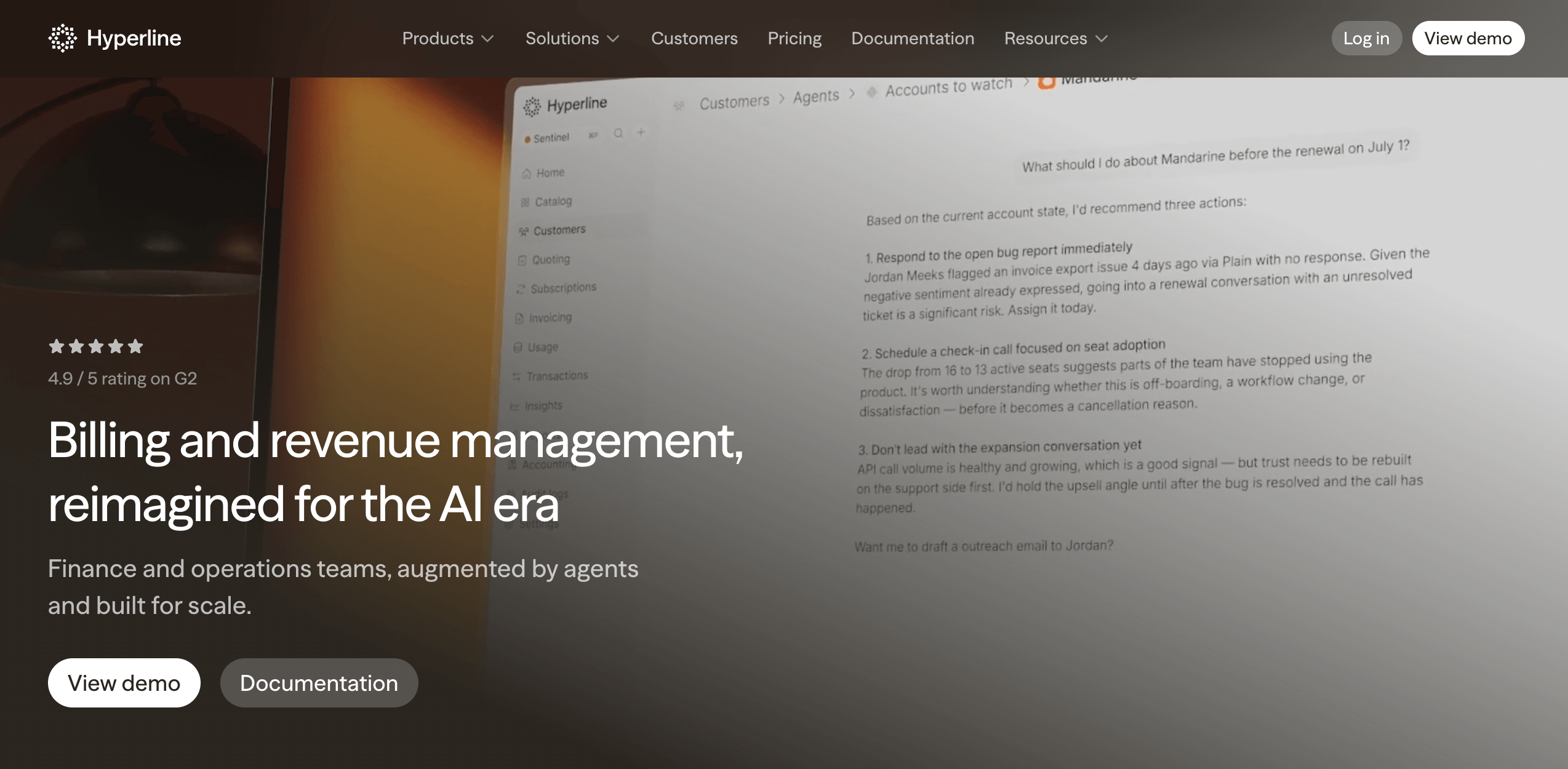
Alain Garnier acknowledges that the whole is quite heterogeneous, but he does not see this as a problem in itself. As long as the teams can work properly and the financial data is reported, he sees no reason to replace everything.
Keeping existing systems also avoids launching migrations whenever a new company joins the group. The acquired teams can continue to operate with their usual tools without waiting for complete harmonization.
The same logic applies to payments. Jamespot currently uses  Mollie and
 Stripe, again due to the history of the various acquired companies.
The question of reducing the number of tools arises with each acquisition. Alain Garnier addresses it on a case-by-case basis, comparing the expected savings to the actual cost of a migration.
Metabase to consolidate data without centralizing software
With several billing software solutions, Jamespot must still be able to track its financial performance at the group level.
This is where  Metabase comes in, used to consolidate data from different systems and produce the indicators necessary for management, notably MRR and revenue.
“Today, we have several billing systems. Then, we aggregate all that in Metabase, which allows us to create a small data warehouse and produce our MRR and revenue indicators.”
The operation is partially automated. Each software continues to manage its own operations, while the information needed for reporting is consolidated in Metabase.
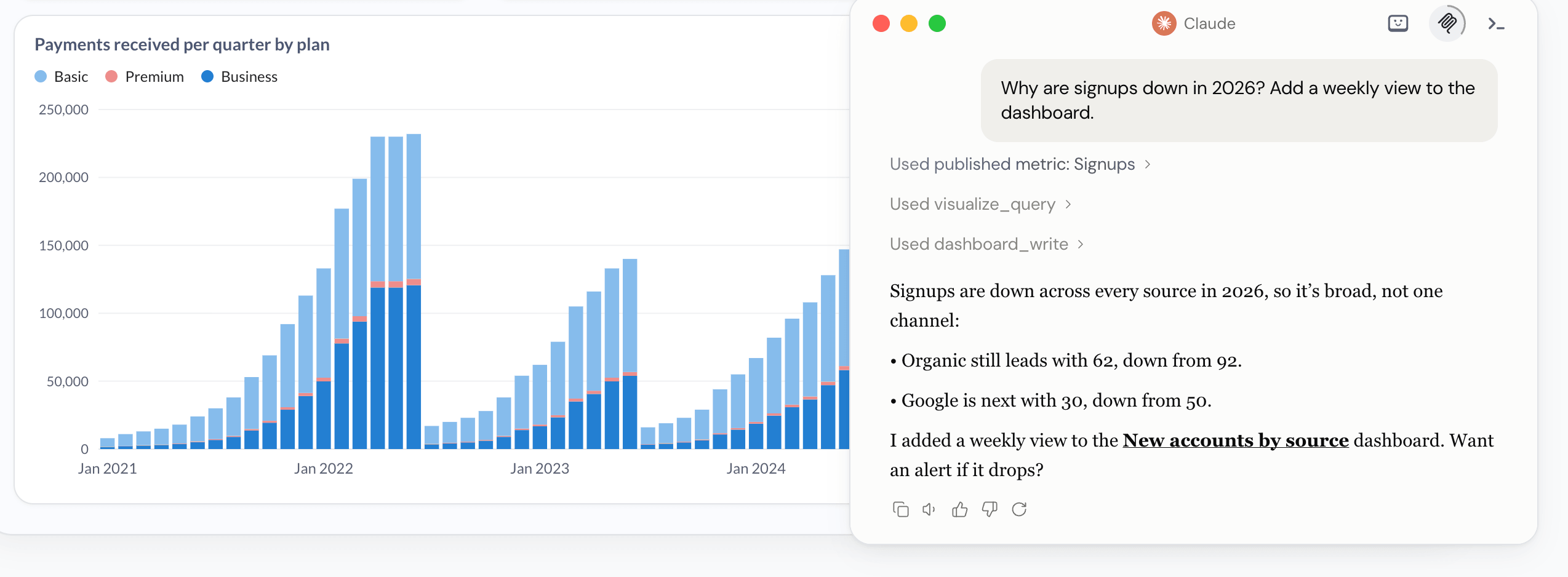
For Alain Garnier, a company can perfectly have a common financial vision without imposing the same software on all its entities. The financial teams certainly have to deal with multiple systems and billing plans, but the executives have the consolidated indicators they need.
This organization, however, requires careful design of data exchanges. Alain Garnier provides a very concrete example: invoice numbers.
Two software solutions can assign the same number to two different invoices. Therefore, to correctly identify an invoice in a consolidated system, the number alone is not sufficient.
“An invoice number is not unique on its own. What is unique is the billing plan, the tool, and the invoice number. If you design your architecture like that from the start, you can make multiple systems work together.”
The same problem arises with clients, who may have different identifiers in Zoho and Dolibarr. To reconcile the information, it is necessary to plan for correspondences between these identifiers, notably through foreign keys and normalization of exchanged data.
This work requires rigor and coordination between teams. Each application must be able to transmit information that other systems will be able to understand. But for Alain Garnier, this complexity is preferable to that of a large central system where all processes would be interdependent.
Tools in this section
Why Alain Garnier refuses to launch an ERP project
With several billing, payment, and management systems, the temptation could be great to launch an ERP project to centralize everything.
Alain Garnier is well acquainted with these projects, having already supported them in other companies. And his experience urges caution.
“An ERP project, having seen and done it elsewhere, is a sprawling project. It takes three years, it's a nightmare. I'm not going to launch that now and exhaust everyone for an added value that remains questionable.”
The leader is not definitively closing the door on an ERP. He simply believes that it is not the right time.
Jamespot wishes to continue its external growth, with the ambition to double in size. Alain Garnier mentions this milestone as a possible moment to seriously consider a new financial architecture.
Launching a major centralization project before completing the next acquisitions seems premature to him. The company might spend several years building a system that would then need to be adapted to new entities.
The cost of migrations, often higher than the savings achieved
Alain Garnier also emphasizes a fairly simple point: eliminating a software subscription does not necessarily mean saving money.
A specialized tool can cost several thousand euros per year. But replacing it requires mobilizing consultants, internal teams, and sometimes management for several weeks or months.
“A software that costs several thousand euros per year, honestly, what are we talking about? Three days of a consultant to think about what we're going to do, and you've paid for the product for a year.”
For him, the real cost appears especially when the tools start to slow down the teams. If employees have to re-enter the same information in multiple software, regularly correct errors, or multiply manipulations to obtain data, centralization can become relevant.
But as long as the systems are functioning correctly, the cost of a migration can far exceed that of the subscriptions the company seeks to eliminate.
This is the comparison he wants to prioritize, rather than reducing the number of software as an objective in itself.
This does not mean that Jamespot will never adopt an ERP. If the coexistence of tools ends up generating too much re-entry, control, or wasted time, Alain Garnier may reconsider this decision.
But for now, his priority remains to retain software that teams can easily evolve, while having the consolidated data necessary for managing Jamespot.
Summary of the software this article mentions in Jamespot's stack
| Status | Workflow | Tool | Usage |
|---|---|---|---|
| In use | Billing | Zoho | Billing management |
| In use | Subscription management | ProAbono | Recurring subscription management |
| In use | Billing and subscriptions | Hyperline | Solution inherited from SafeBrain |
| In use | CRM / Billing / ERP | Dolibarr | Solution inherited from Alinto |
| In use | Business intelligence | Metabase | Consolidation of MRR and revenue |
| In use | Payments | Mollie | Payment provider |
| In use | Payments | Stripe | Payment provider |
| In use | AI / Development | Claude | AI assistant, potential for creating connectors |
| In use | Collaborative suite / MCP | Jamespot | Internal collaborative suite and MCP server |