


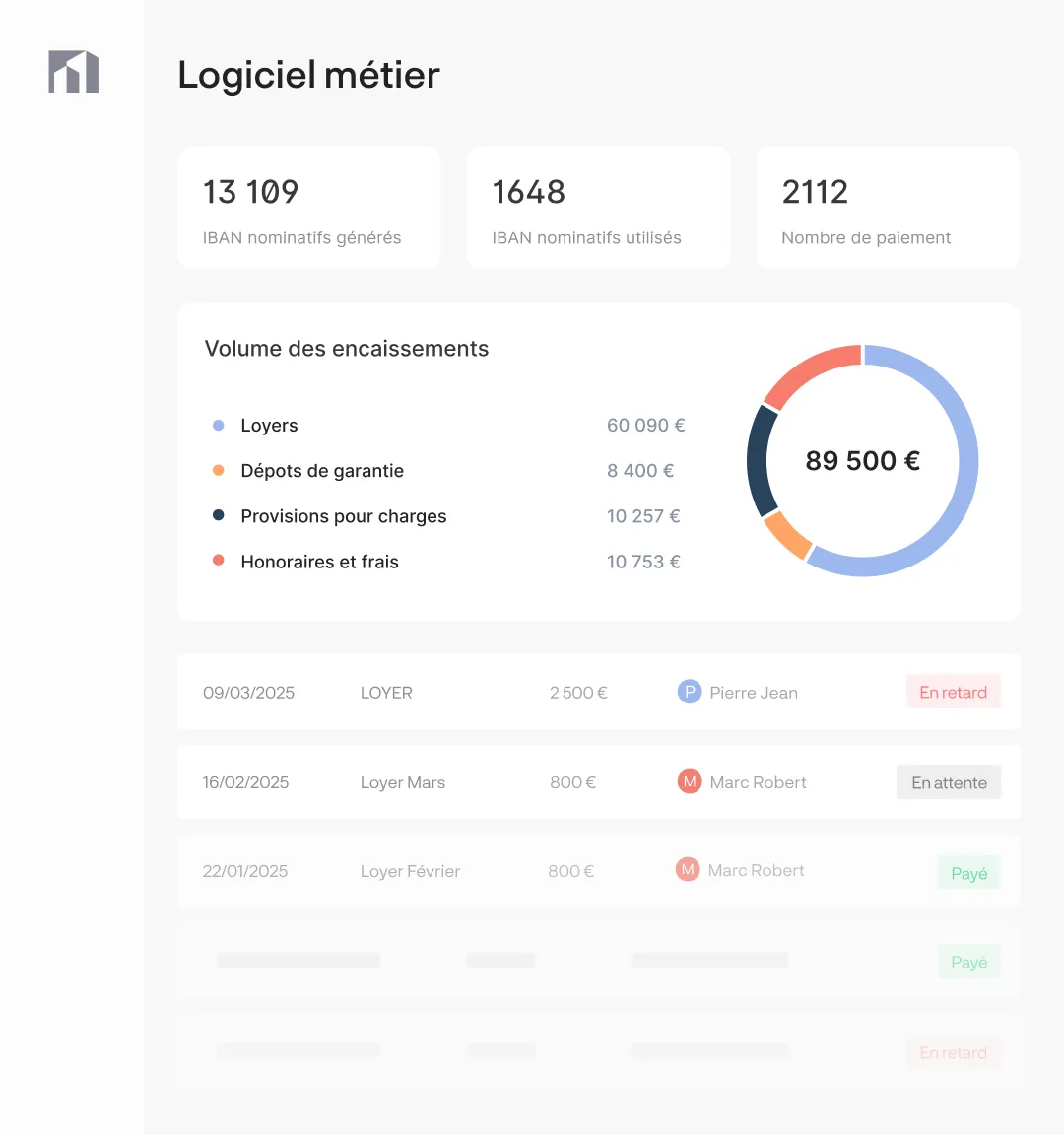

Julian Philip, co-founder and co-CEO of Piloc, discusses the software used by his fintech to manage sales, client deployments, billing, and support functions. With about twenty employees, the company has learned to automate a significant portion of its operations without multiplying tools.
Piloc orchestrates more than €700 million in payments per year, supports about a hundred key accounts, and serves over a million end users in France. All this with a small team of about twenty employees, without a CFO or dedicated HR team.
Founded by Julian Philip and Mathieu Roche Toussaint, Piloc develops payment orchestration solutions for major billers: social landlords, energy companies, water utilities, and healthcare providers. The company offers various payment methods, both online and offline. Among them, Request to Pay, used notably for reminders, or Tap to Pay, which allows field employees to directly process payments.
Internally, Mathieu oversees the sales and marketing teams, with one person dedicated to the latter function. The rest of the staff mainly consists of developers and Implementation Specialists, responsible for deploying solutions at clients and supporting their adoption. Julian supervises tech, product, and operations, among other things.
To make this organization work, Piloc relies on several software tools, as well as internally developed applications. With a fairly consistent idea: avoid adding a new tool when software already in use can do the job.
HubSpot, Claap, and Kaspr: automating sales tracking
Piloc has been using  HubSpot as a CRM for about five years. Salespeople track their opportunities and centralize information about their prospects and clients there.
For a year and a half, part of this work has been automated thanks to  Claap. The tool analyzes commercial exchanges and feeds information directly into HubSpot.
It's not just about transcribing meetings. Teams use qualification frameworks to identify decision-makers, understand needs, and spot potential objections. Claap retrieves these elements from conversations and integrates them into the CRM.
“We are very happy with Claap because it automatically feeds all our HubSpot records, including the parameters that will allow us to characterize and understand the need.”
Mathieu, who oversees the salespeople, more directly manages these qualification methods.
Piloc also uses  Kaspr to enrich its commercial data. However, the company is questioning the value of keeping certain specialized tools, especially since HubSpot now includes features previously offered by standalone software.
“We have questioned some enrichment tools that were somewhat peripheral, and whose functional scope is gradually being absorbed by HubSpot. We try to reduce the number of tools when possible.”

Why Piloc replaced Zoho Analytics with Metabase
Piloc also replaced  Zoho Analytics with
 Metabase to have a tool combining an accessible visual interface and the ability to directly write SQL queries.
Julian found Zoho Analytics relatively complex to share with other employees. He was also limited by the data manipulation possibilities in his use of the tool.
“With Zoho Analytics, I couldn't use other modes than a highly simplified approach to data visualization, with questions where we had to make joins between tables. Impossible, for example, to directly write SQL. Metabase allows you to have both modes.”
With Metabase, which he now uses daily, Julian can build analyses from a visual interface or write SQL queries when he needs to go further. He also appreciates the features that help generate visualizations from a natural language question.
Another advantage: the ability to directly integrate dashboards into an application, without developing the entire reporting interface. Julian had already observed this functionality in the back offices of several companies in the financial ecosystem.
“Metabase allows you to create iframes that you can directly embed in your tool and make available to your clients. You can do really customized things without having to internalize the development of a dashboard.”
At Piloc, Metabase is also involved in a much more operational process: client billing.
Tools in this section
Metabase, Vercel and Qonto: an internal application to automate billing
Billing a hundred key accounts is not simple when each has its own commercial terms.
At Piloc, contracts can include different pricing grids with multiple consumption tiers. Each month, it is necessary to retrieve the actual consumption volumes, match them with the negotiated rates, and generate the corresponding invoices.
To automate this work, Piloc developed an internal application that connects Metabase,  Vercel and
 Qonto.
The operation is based on three steps:
1. Metabase retrieves the consumption data for each client.
2. An internal application hosted on Vercel matches these volumes with the pricing grids and calculates the amounts by applying the different tiers.
3. Qonto, via its API, generates the invoices and sends them to the clients.
“We make the connection on Vercel between our pricing grid, based on the client and consumption data. Then, it triggers API calls to Qonto, which generates the invoices and sends them to the clients.”
The company particularly benefits from Qonto's electronic invoicing features.
This application was developed about two years ago by an employee proficient in Python, before Piloc adopted  Claude Code. The company had already become accustomed to creating its own tools when no market software exactly met its needs. AI-assisted development has since made this type of project more accessible.
Tools in this section
Youtrust: why electronic signatures are not enough to automate contracts
Piloc has used  Youtrust, formerly Yousign, from the start for electronic signatures. But signing a contract with a key account remains a fairly manual operation. Many clients purchase their services through purchasing centers, notably UGAP or RESAH.
Each organization has its own procedures, platforms, and forms. Even when Piloc has an automated internal process, it must adapt to the administrative constraints of its clients.
“We have been using Youtrust from the beginning, but this part remains largely artisanal. No matter how fluid and automated you design something, you face the administrative hurdle that prevents full automation.”
The difficulty does not come from the signature tool, but from the purchasing procedures of large organizations, which make complete automation difficult.
PayFit, Dougs and Qonto: managing support functions without a CFO or HR team
With around twenty employees, Piloc still operates without a CFO, HR manager, or anyone dedicated to administration.
The founders directly manage these matters using three software tools:  PayFit for payroll, human resources, and expense reports,
 Dougs for accounting, and Qonto for financial operations and billing.
For Julian, these solutions are autonomous enough to allow a small company to manage most of its routine obligations.
“Finance and HR are completely managed through these tools. It takes us a bit of time, but it's perfectly manageable, even with just about twenty people.”
Julian says he is satisfied with PayFit and Dougs, both for daily operations and for the quality of responses obtained when he encounters a difficulty.
Things get complicated especially when a situation is out of the ordinary. He cites the example of the change of Piloc's headquarters. Despite the procedures carried out on the single window, some information may not have been correctly transmitted to URSSAF or DGFiP, leading to administrative penalties.
Recurring operations work well, but exceptional events sometimes require more human intervention.
Piloc is also considering hiring someone to take over part of the administrative tasks. The software has allowed them to operate for several years without this role, but not necessarily to do without it permanently.
Why Piloc continues to use Excel for its cash management
Despite the numerous software used by Piloc, cash management still mainly relies on Excel.
Julian acknowledges that software specialized in cash forecasting could be useful. But so far, the need has not been significant enough to justify an additional subscription.
Before adopting a new solution, he prefers to see what Qonto and Dougs already offer.
“There are so many products we pay for that are somewhat dormant, that we use just for a tenth of their features, while we could do things differently.”
For Piloc, better utilizing existing software takes precedence over purchasing new solutions. Excel remains sufficient for now.
Monday and Claude Code: two other important software at Piloc
Two other tools hold a special place in Piloc's operations.
The first is  Monday, which replaced
 Jira for coordinating technical and operational projects.
Piloc notably uses monday dev and monday service to organize client deployments. Some projects can include around fifty tasks, with interventions to coordinate between developers and Implementation Specialists.
The goal was to facilitate collaboration between these teams without imposing a tool primarily designed for developers on all employees.
The second is Claude Code, used to more easily develop internal applications. The use cases are varied: creating HTML mockups, producing communication materials, automating mail merges, and preparing responses to calls for tenders.
These two topics are the subject of specific feedback: one on the transition from Jira to Monday, the other on the applications developed with Claude Code.
Summary of the software this article mentions in Piloc's stack
| Status | Workflow | Tool | Usage |
|---|---|---|---|
| In use | CRM | HubSpot | Sales management and customer tracking |
| In use | Meeting analysis | Claap | Automatic enrichment of HubSpot records |
| In use | Commercial enrichment | Kaspr | Enrichment of commercial data, reassessed interest |
| Replaced by Metabase | Business intelligence | ZohoReplaced by Metabase | Former BI tool, replaced by Metabase |
| In use | BI and reporting | Metabase | Data analysis, reporting, and consumption extraction |
| In use | Application hosting | Vercel | Hosting of the internal billing application |
| In use | Finance and billing | Qonto | Financial operations and automatic invoice generation |
| In use | Electronic signature | Youtrust (anciennement Yousign) | Client contract signing |
| In use | HR and payroll | Payfit | Payroll, HR management, and expense reports |
| In use | Accounting | Dougs | Accounting and administrative tracking |
| In use | Spreadsheet | Excel | Cash flow tracking and forecasting |
| In use | Application monitoring |  Sentry | Monitoring of front-end and back-end errors |
| In use | Project management | monday.com | Coordination of technical and operational projects |
| In use | Technical project management | monday Dev | Tracking of development work |
| In use | Service management | monday Service | Coordination and tracking of client deployments |
| Replaced by Monday | Project management | JiraReplaced by Monday | Former project management tool, replaced by Monday |
| In use | AI-assisted development | Anthropic | Creation of internal applications and task automation |