


Julien Frèche, who works at Folk on revenue development and sales operations, explains how the company automates its sales cycle. From lead qualification to sales follow-ups, including demos and call transcription, he walks through the software used and the choices his teams made.
At Folk, 95% of acquisition comes from inbound. The company therefore already receives a lot of inbound requests. Its main challenge is to identify the most promising prospects, improve their conversion and keep salespeople from wasting time on administrative tasks.
The main goal is to enable salespeople to run six demos a day, rather than filling their calendars with meetings, some of which will ultimately not take place.
To get there, Folk gradually automated its sales journey. Some prospects are invited to book a demo before they even create their account, meetings with a risk of no-show can be canceled automatically, and the information exchanged during calls is recorded directly in the CRM.
Why does Folk offer some prospects a demo before signup?
Historically, Folk worked like many self-service SaaS products. All visitors were first invited to create an account. The company then qualified the new users and offered a demo to those who matched its sales target.
But Folk gradually reversed this logic for the prospects with the highest potential.
Today, when a visitor wants to access Folk, they fill in some information. The company takes into account their team size, their geographic location, their likelihood to convert and the potential contract value to determine the most suitable path.
Julien gives the example of a prospect on a team of more than ten people, located in a country where Folk gets good sales results. Rather than sending them straight into the product, Folk can offer them a meeting with a salesperson before they even sign up. Conversely, a visitor whose sales potential is judged lower can go directly into the product in self-service.
This change is based on A/B tests. Folk found that qualified prospects converted better when they met a salesperson earlier in their journey.
“Historically, we pushed all our leads toward the product before offering them a demo. With A/B tests, we realized that we converted qualified deals much better by offering them a meeting with a salesperson before they entered Folk.”
For Folk, immediate access to the product is therefore not necessarily the best path for every customer.
Why does Folk use Calendly rather than Cal.com?
Folk has used Calendly for several years to organize its demos. When a qualified prospect books a slot, several actions are triggered automatically: an opportunity is created in Folk, salespeople receive a notification in  Slack and the communications leading up to the meeting are prepared.
Salespeople therefore do not need to manually create a deal for each booked demo.
Julien acknowledges that the choice of  Calendly is partly historical. Some software was adopted very early and the teams built their processes around it. He cites
 Cal.com as an interesting alternative, notably for its open source approach and its pricing, but Folk has not started a migration.
Calendly meets current needs and remains well integrated with the sales automations. The main difficulty lies elsewhere: making sure prospects actually show up to their meetings.
Tools in this section
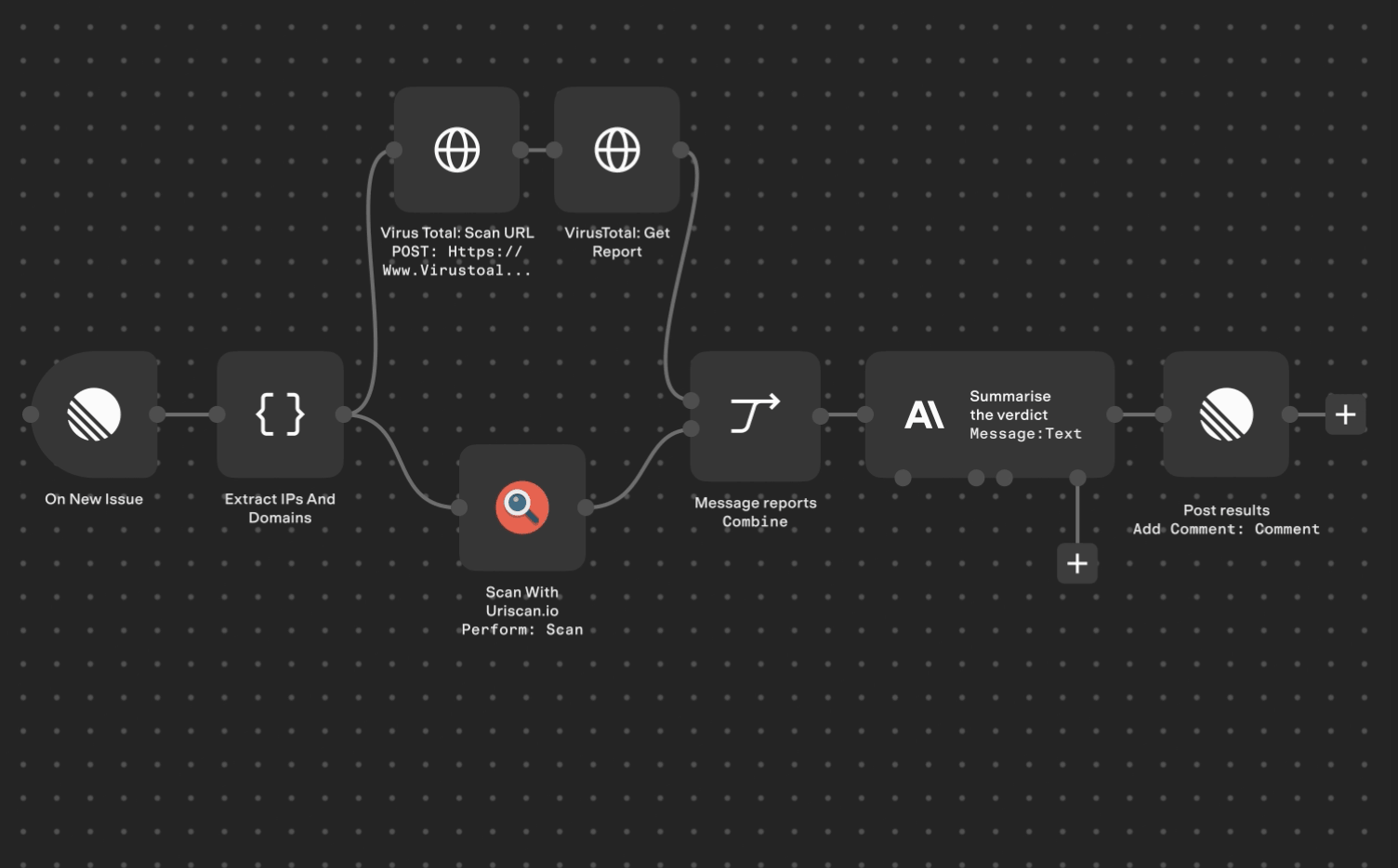
How does Folk use n8n to reduce no-shows?
Folk uses  n8n to automatically check whether prospects have confirmed their demo. When they respond to neither emails, nor text messages, nor calls, the meeting can be canceled 24 hours in advance.
Julien noticed in particular that some prospects book a demo without accepting the calendar invitation. They are then likely to forget it or not see the meeting appear in their calendar.
To limit these situations, Folk built a workflow that analyzes several signals:
“With n8n, we orchestrate a workflow that checks whether the prospect has accepted the calendar invitation and replied to the salesperson. If they don't react to emails, calls or text messages, we can cancel their demo 24 hours in advance.”
Preemptively canceling a meeting may seem surprising. The prospect could still show up. But Julien prefers to free up a slot for someone more likely to come, rather than tie up a salesperson for a demo that may not happen.
“Our goal isn't to book as many demos as possible. It's to make sure our sales reps actually do six demos a day.”
The prospect is not abandoned, though. When a demo is canceled, they can be added to a nurturing sequence in Lemlist to encourage them to book a new slot.
How does Folk use Grain to make the most of sales conversations?
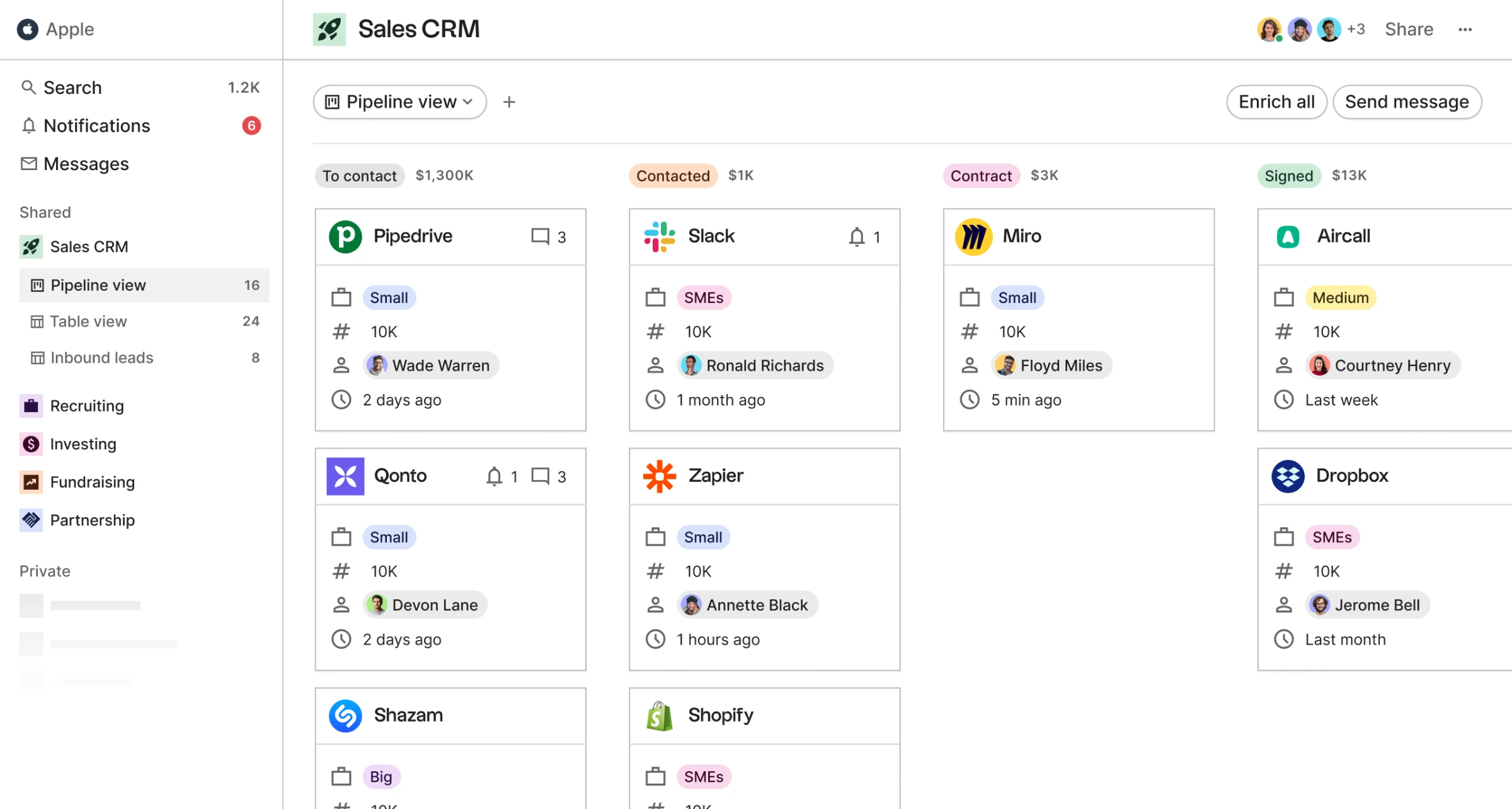
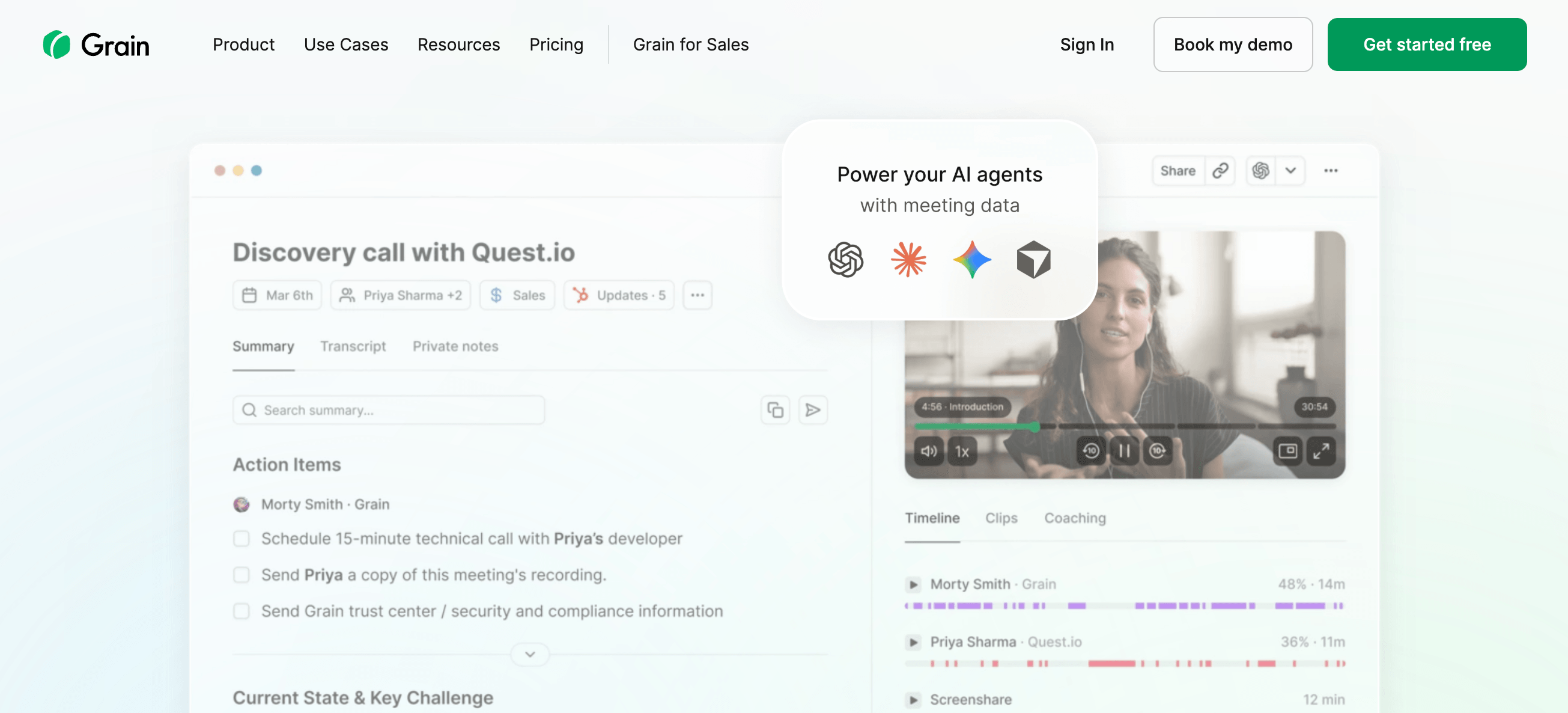
Folk uses  Grain to record and transcribe its sales demos, then uses the AI fields of its own CRM to turn these conversations into structured data.
After each call, the transcript generated by Grain is automatically sent to Folk. The AI fields then analyze the conversation and extract several pieces of information:
- The number of employees likely to use Folk, to estimate the potential contract value.
- The needs and pain points expressed by the prospect.
- The software already used in their company.
- The competitors being considered, notably Attio, HubSpot or Salesforce.
- The qualification information needed to follow up on the opportunity.
This data is recorded in the CRM's custom fields. Salespeople can find the important information without having to go back over their notes or fill in each record manually.
For the Revenue Operations teams, this also makes it possible to analyze the pipeline better. Julien notably cites the ability to track Folk's sales performance against different competitors, based on the information mentioned during demos.
“We record calls with Grain, then push the transcripts into the Folk CRM. The AI fields extract the important information, like the number of seats, the competitors being evaluated or the customer's needs, without the sales reps having to fill in the CRM.”
This automation matches the way Julien sees the use of a CRM: information should be collected as interactions happen, without asking salespeople to spend time entering it.
“That's Folk's philosophy: don't fill in the CRM, just use it as infrastructure and a database.”
Folk thus seeks to reduce salespeople's administrative work while having more complete data to track opportunities and analyze performance.
Tools in this section
How do salespeople use Folk's MCP to prepare their follow-ups?
Once the information is centralized in  Folk, salespeople can work with it using AI assistants connected to the CRM through MCP (Model Context Protocol).
Julien describes several routines that help prepare daily sales work. A salesperson can, for example, ask an agent to identify the prospects who have not replied to their latest messages, find the opportunities with no recent follow-up or select the deals to follow up on first.
The agent then uses the conversation history and the information recorded in Folk to prepare personalized emails, directly in the salesperson's inbox.
“Sales reps use Folk's MCP to identify the deals to follow up on, the ones that haven't replied and the ones to focus on each morning. The AI prepares their emails as drafts directly in their inbox.”
Instead of opening opportunities one by one and checking the latest interactions, the salesperson can therefore ask an agent to prepare their next actions. The CRM becomes a database accessible to AI assistants, without forcing the teams to go through its interface every time.
Folk can also retrieve information from other transcription tools, such as  Fireflies or
 tl;dv. Julien also cites
 Granola, whose meeting notes can be transferred to Folk using Claude routines. Users can thus keep their usual tools while centralizing sales information in the CRM.
How does Folk centralize LinkedIn, email and WhatsApp conversations?
Product demos are only one part of the interactions with prospects. Folk also seeks to centralize information from LinkedIn, email and WhatsApp.
On LinkedIn, salespeople use the Folk extension to identify a company's employees and add them directly to the CRM. Julien compares this feature to  Surfe, which also lets you transfer LinkedIn contacts to a CRM, but here the capability is built directly into Folk.
Contacts can then be enriched through a waterfall of providers including Apollo, Dropcontact, Datagma, Prospeo and Wiza. These services make it possible in particular to find missing email addresses or phone numbers.
Folk also offers a native integration with WhatsApp, in order to keep conversations in the CRM.
This centralization makes the most sense with AI agents. When an assistant prepares a follow-up, it can draw on the various recorded interactions, rather than only on the information entered manually by the salesperson. It also makes it possible to keep the history of conversations regardless of anyone's memory.
Why does Folk still use Ringover, and why is it considering Minari?
Folk has historically used  Ringover for its sales calls, notably for following up with prospects already in the pipeline.
Julien says he is generally satisfied with the solution, even though he finds its interface dated and regrets how hard it is to create call lists.
In parallel, salespeople are starting to use the standard calling features of  Lemlist. The two tools serve different purposes: Lemlist is used mainly for calls built into prospecting sequences, while Ringover is still used for one-off calls and follow-ups.
Julien is also considering  Minari, a parallel dialing solution that would, in his view, make it possible to launch up to five calls simultaneously.
“We're relatively satisfied with Ringover, but the interface isn't very modern and it's hard to create call lists. We could move to a parallel dialer like Minari, which lets you launch five calls at the same time.”
The benefit would be to increase the number of prospects contacted by phone. But Julien first wants to verify that this channel contributes enough to creating new opportunities before investing in an additional tool.
For now, Folk is therefore keeping Ringover and gradually expanding its use of Lemlist calls.
Tools in this section
Summary of the software this article mentions in folk's stack
| Status | Workflow | Tool | Usage |
|---|---|---|---|
| In use | CRM / Sales Ops | folk | Opportunity management, AI fields, MCP and sales follow-up |
| In use | Meeting scheduling | Calendly | Demo booking |
| In use | Automation | n8n | Meeting confirmation and cancellation workflows |
| In use | Collaboration | Slack | Notifications to salespeople |
| In use | Prospecting | lemlist | Nurturing, sequences and standard calls |
| In use | Conversation intelligence | Grain | Demo recording and transcription |
| In use | AI assistant | Claude | Sales routines and working with the CRM |
| In use | Professional network |  LinkedIn | Identifying and importing contacts via the Folk extension |
| In use | Enrichment |  Apollo.io | Provider built into Folk's enrichment waterfall |
| In use | Enrichment |  Dropcontact | Provider built into Folk's enrichment waterfall |
| In use | Enrichment |  Datagma | Provider built into Folk's enrichment waterfall |
| In use | Enrichment |  Prospeo | Provider built into Folk's enrichment waterfall |
| In use | Enrichment |  Wiza | Phone enrichment built into Folk |
| In use | Telephony | Ringover | One-off calls and sales follow-ups |
| Dropped | Parallel dialing | MinariDropped | Solution considered for launching several calls simultaneously |