



Guillaume Blanc, CEO of MerciYanis, explains how the company started replacing some SaaS software with its own tools built with Claude Code and Lovable. The September 2026 interview covers in particular the replacement of Airtable by My Stock, then the rebuild of the website previously managed with Webflow.
For a long time, building a tool in-house was not really an option for MerciYanis. Like many companies, it used SaaS software, even if that meant adapting its processes to their limits. With the progress of AI-assisted development tools, Guillaume Blanc, the CEO, began to question that trade-off.
The first test was operational. MerciYanis used Airtable, surrounded by many Zapier automations, to manage its sensor fleet. The company decided to replace that setup with a vibe-coded tool, My Stock, its own ERP.
The project took about four months, with a freelancer working on it around two days a week. Guillaume Blanc estimates the total effort at about thirty days of development. In the end, Airtable is out of the workflow and Zapier usage, according to him, has been cut by a factor of ten.
This first experience acted as a trigger. MerciYanis has since launched about ten internal tools. The most structural ones go through a development chain built around Claude, GitHub and Vercel; for more one-off needs, the teams tend to use Lovable.
The same logic was then applied to the website. Webflow was dropped after a freelancer reproduced the site in less than a week, at a cost of around €1,000 according to Guillaume Blanc.
AI does not replace the entire SaaS stack, though. Some tools are dropped, others are simply used less or complemented by internal developments. For Guillaume Blanc, what is really shifting is the line between buying and building software, with, in return, a question that remains wide open: maintenance and technical debt.
Why stop using Airtable and vibe-code your own business software?
MerciYanis replaced  Airtable because the pile-up of
 Zapier automations around its sensor database was gradually making the system fragile.
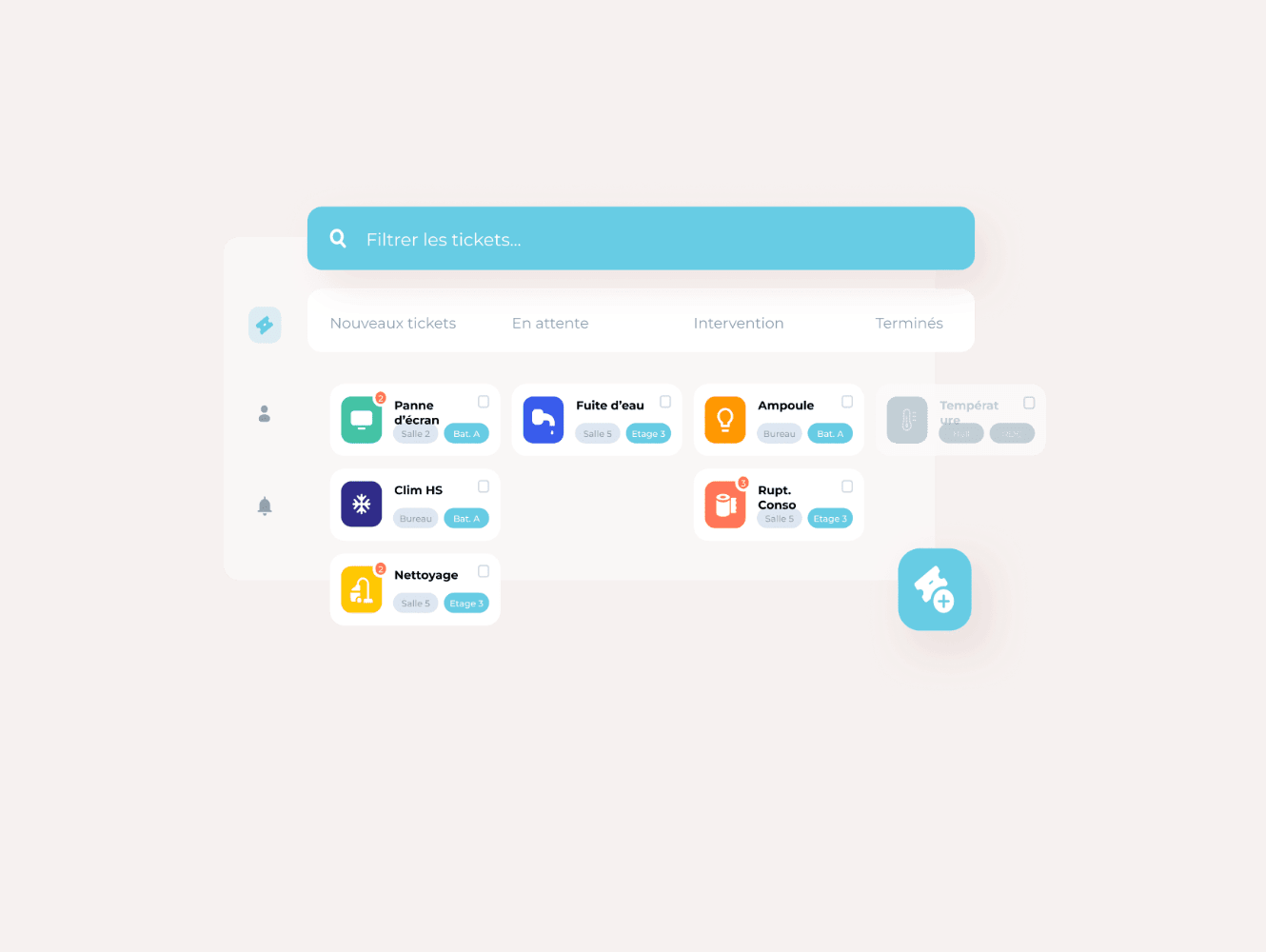
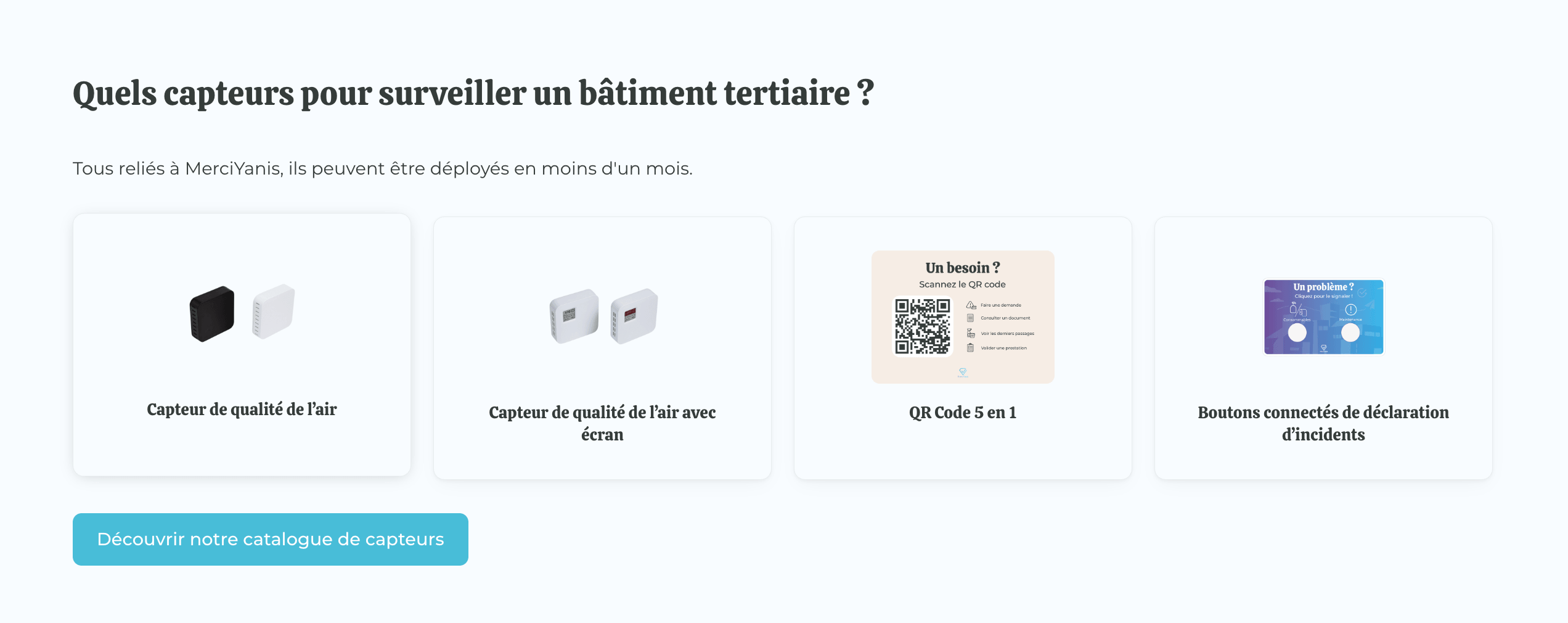
Managing these sensors is at the core of its business: MerciYanis helps companies manage maintenance, cleaning and employee services in their offices, relying in particular on sensors to track usage or detect certain events.
Around his Airtable base, Guillaume Blanc had built many Zapier automations. For example, they automatically sent messages to manufacturers when equipment needed to be ordered.
The system worked, but it was becoming fragile.
Guillaume Blanc compares it to “plumbing with small water leaks” that regularly had to be patched. The company then decided to rebuild the workflow as a true internal ERP, coded directly with Claude Code. The project's name: My Stock.
The goal is not simply to reproduce Airtable in another interface. MerciYanis is looking to build a tool exactly suited to the way its operations work.
“By building our own solution with Claude Code, we end up with a tool that meets 100% of our needs.”
How does MerciYanis's vibe-coded ERP connect HubSpot to sensor orders?
My Stock is gradually taking over orders, purchasing and sensor inventory, as well as their deployment at customer sites.
But the workflow starts upstream, in  HubSpot.
When a sales opportunity involves a need for 100 sensors with a 50% probability of closing, My Stock can count a forecast need of 50 sensors. As the opportunity moves through the pipeline, this probability-weighted need increases.
MerciYanis can thus consolidate its future needs even before contracts are signed and try to group its orders to optimize the unit cost of the equipment. Sales data becomes directly usable by operations.
Guillaume Blanc is also considering evolving My Stock so that project managers handle more of their work in it, whereas part of that work still goes through HubSpot.
How long did it take MerciYanis to build its own ERP?
It took MerciYanis about four months to get a first version truly in production, for an effort that Guillaume Blanc estimates at about thirty days of development.
The freelancer's profile weighs heavily in his feedback.
He is a former CPO, not a pure developer. Guillaume Blanc values his ability to understand the business need and to structure the product. He also talks regularly with MerciYanis's CTO, a former colleague of his.
This setup addresses Guillaume Blanc's main reservation about in-house development:
“The risk I see when you build a solution on your own is a kind of debt if the foundations are poorly built.”
AI lowers the cost of producing code, but not the need to make good architecture decisions.
Why does Claude Code change the build versus buy calculation?
For Guillaume Blanc, companies have long accepted a compromise: paying a subscription for software that did not exactly meet their needs because building a specific solution cost far too much.
AI changes that calculation.
“With the progress of AI, the cost of building your own software is collapsing.”
My Stock was the first full-scale test of this hypothesis at MerciYanis.
His reasoning, however, is not “build rather than buy” on principle. The question becomes instead: does the gain from a perfectly suited tool make up for the maintenance MerciYanis will then have to take on?
Why use Lovable for small internal tools?
MerciYanis reserves  Lovable for simple applications and one-off needs, while the more structural tools go through a development chain built around
 Claude,
 GitHub and
 Vercel.
After My Stock, MerciYanis started building other homegrown applications. Guillaume Blanc mentions about ten internal tools, usually named with the prefix “My”.
For the simplest applications or one-off features, the company prefers Lovable. Guillaume Blanc finds it more “turnkey” than the chain used with Claude, where you notably have to go through GitHub and Vercel.
Non-specialist employees can thus quickly create a small feature that meets a very specific need.
MerciYanis applies a similar logic with Claude Skills. Rather than building an application for every need, the company creates reusable instructions that let Claude carry out certain tasks based on internal data and rules. Guillaume Blanc cites, for example, a Skill that can check the margin on a quote by retrieving the reference costs of the sensors, or another one used to verify several thousand QR codes.
The idea is therefore to choose the level of development based on the need: a Claude Skill to automate a specific task, Lovable to quickly create a small interface, and a more structured chain around Claude, GitHub and Vercel for larger internal applications.
The consequence is acknowledged: MerciYanis today has a “mosaic” of internal tools rather than one large unified interface. Guillaume Blanc does not yet see this as a problem. A Notion page simply serves as the entry point and lists the different tools.
How does MerciYanis use My Success and My Facture?
Among the tools created after My Stock, Guillaume Blanc cites My Success and My Facture.
My Success is used for Customer Success and project activities. It draws in particular on the data available in HubSpot to provide an interface better suited to internal needs.
My Facture addresses a different problem.
MerciYanis uses Axonaut for quotes and invoicing, but Guillaume Blanc feels that some workflows do not go far enough for the company's specific needs. Rather than replacing Axonaut right away, MerciYanis therefore built a module on top of it.
My Facture is linked to  Axonaut via API and webhooks and connected to HubSpot. It is used in particular to better manage reminders for unpaid invoices and renewals.
MerciYanis's experience does not, therefore, always consist of removing the existing SaaS. In-house development can also fill in the last 20% of a very specific need.
Why is My Stock becoming MerciYanis's sensor reference database?
Building My Stock also changed the data architecture.
Historically, part of the knowledge about the sensors was documented in  Notion. My Stock now holds the real structured reference data, including the sensors' specifications and costs.
MerciYanis built an MCP around My Stock so that certain Claude skills can use this information directly. This is the case, for example, of the skill the salespeople use to check margins.
The system can retrieve a quote, look up a sensor's purchase cost in My Stock and flag that a discount risks hurting the project's profitability. Notion still makes this knowledge accessible to the teams, but Guillaume Blanc explains that My Stock “is going to become the central organ” of the sensor reference data.
Why drop Webflow and rebuild your entire website with Claude Code?
MerciYanis dropped  Webflow after realizing that a freelancer could rebuild its website with Claude in less than a week, for a cost of about €1,000.
After the My Stock experience, Guillaume Blanc and his CTO began to wonder whether the same approach could apply to other teams. Marketing quickly provided a use case.
Laura was struggling to make changes in Webflow. Earlier in the year, MerciYanis had paid a developer about €600 to add a menu to a page. The need was real and the work had been approved. But Guillaume Blanc began to find the equation hard to justify given the progress of AI-assisted development.
“When I see the progress, I find it expensive to pay €600 for a menu change.”
MerciYanis then asked a freelancer to reproduce the site “pixel perfect” with Claude. According to Guillaume Blanc, the work took less than a week.
How do you run your website without Webflow or a CMS?
After dropping Webflow, MerciYanis also abandoned its CMS: new pages are produced directly in HTML with Claude, while forms remain connected to HubSpot.
Laura, in marketing, now creates new pages with Claude.
Forms, on the other hand, remain connected to HubSpot. MerciYanis thus keeps data collection and CRM automations without using HubSpot to build the page itself.
The site also has a design system meant to frame new creations. At the time of the interview, the company still uses two separate systems, one for the product and one for the website, with the idea of bringing them together.
For Guillaume Blanc, the change is also organizational: Laura can now update certain pages directly without always depending on a developer or an agency.
What are the benefits of coding your website with Claude Code instead of going through Webflow, Wix or Wordpress?
Guillaume Blanc estimates that the site's loading time has improved by a factor of ten since it was rebuilt.
He also reports that some visual bugs have disappeared, bugs previously encountered when changes in Webflow had unexpected consequences on other parts of the site.
Finally, the company has reduced its dependence on certain landing pages built in HubSpot. The page is produced directly in HTML, but the form remains connected to the CRM.
How does Claude help MerciYanis present its product better?
The autonomy gained on the website encourages the team to test formats that would previously have required external resources.
The sales team, for example, has started using Claude to create GIFs showing how the product works. Guillaume Blanc particularly likes the format because it can be inserted directly into a presentation or an email, unlike a Loom video, which adds more friction.
The company is also experimenting with motion design and 3D.
How far does MerciYanis want to bring its software in-house?
MerciYanis's logic is not to remove its entire SaaS stack, but to build in-house when the need is specific enough to justify it.
HubSpot remains central for the CRM. Notion keeps an important role in documentation. Axonaut is still used for quotes and invoicing, even though MerciYanis adds internal building blocks to it.
The difference lies elsewhere: the perceived cost of an alternative built in-house has dropped enough that Guillaume Blanc now asks himself the question more often.
Airtable has been replaced. Zapier is still used, but much less. Webflow has been dropped. Axonaut is complemented by My Facture. And small specific applications can be created with Lovable.
For MerciYanis, Claude Code and Lovable therefore do not replace SaaS across the board. Above all, they lower the threshold at which a team can decide that a specific enough need deserves its own tool.
Summary of the software this article mentions in MerciYanis's stack
| Status | Workflow | Tool | Usage |
|---|---|---|---|
| Replaced by My Stock | Database / operations | AirtableReplaced by My Stock | Former management of the sensor fleet, replaced by My Stock |
| In use | Automation | Zapier | Operational automations, usage cut by a factor of ten |
| In use | ERP / inventory management | My Stock | Tool built in-house to manage sensors, purchasing, inventory, forecasts and the reference data |
| In use | CRM | HubSpot | Sales pipeline and connection with internal tools |
| In use | AI | Claude | Development, website, skills and content creation |
| In use | AI development | Claude Code | Development and technical workflows |
| In use | AI app building | Lovable | Building small internal tools |
| In use | Development | GitHub | Code management for internal tools |
| In use | Hosting / deployment | Vercel | Deployment of internal developments |
| In use | Documentation / collaboration | Notion | Documentation and access point to internal tools |
| In use | Customer Success | My Success | Tool built in-house to manage Customer Success workflows |
| In use | Billing / collections | My Facture | Tool built in-house to manage unpaid invoices and renewals |
| In use | Billing | Axonaut | Quotes and invoicing, complemented by My Facture |
| Replaced | Website / CMS | WebflowReplaced | Former website |
| In use | Video communication |  Loom | Compared with GIFs to present certain features |