




In an interview conducted on October 16, 2026, Thibaud Plaquet, Chief Revenue Officer (CRO) of Dougs, discusses the internally developed AI agents, the company's software choices, and its ambition to make its services accessible through assistants like ChatGPT.
With 50,000 entrepreneurs supported and over 800 employees, including 120 in technical teams, Dougs has chosen to develop some of its AI agents internally, rather than relying solely on the features of its suppliers.
The company notably collects data from Ringover, Intercom, and HubSpot to analyze customer conversations, detect dissatisfaction, or prepare files before handling them. It is also testing CallDesk to automate incoming calls, with mixed results so far.
But Dougs is already looking further ahead. The company is preparing its own MCP (Model Context Protocol), with the ambition of eventually allowing an entrepreneur to create and manage their business directly from ChatGPT, without necessarily going through the Dougs interface.
Why Dougs develops its own AI agents
Dougs began developing its own AI systems before the democratization of agent platforms like  Dust.
The company already had centralized knowledge bases, accessible to agents capable of utilizing internal information. These initial developments primarily addressed the needs for production and verification of accounting, tax, and legal content.
In these areas, reliability is essential. Regulations change regularly, and some content must be updated annually.
Dougs therefore continues to rely on its industry experts while increasingly using  Claude to facilitate their work. The tool is particularly involved in proofreading articles, detecting inconsistencies, and preparing updates based on internal knowledge.
Gradually, the agents have found other applications, notably in exploiting telephone conversations and data from business software.
With more than 120 employees in its technical teams, Dougs has the resources necessary to develop features tailored to its needs when those offered by publishers do not fully meet its requirements.
The company does not seek to rebuild everything. It retains its specialized software for telephony, CRM, or customer relations, but prefers to directly control certain processes and how data is utilized.
Why Dougs kept Ringover instead of Aircall or HubSpot
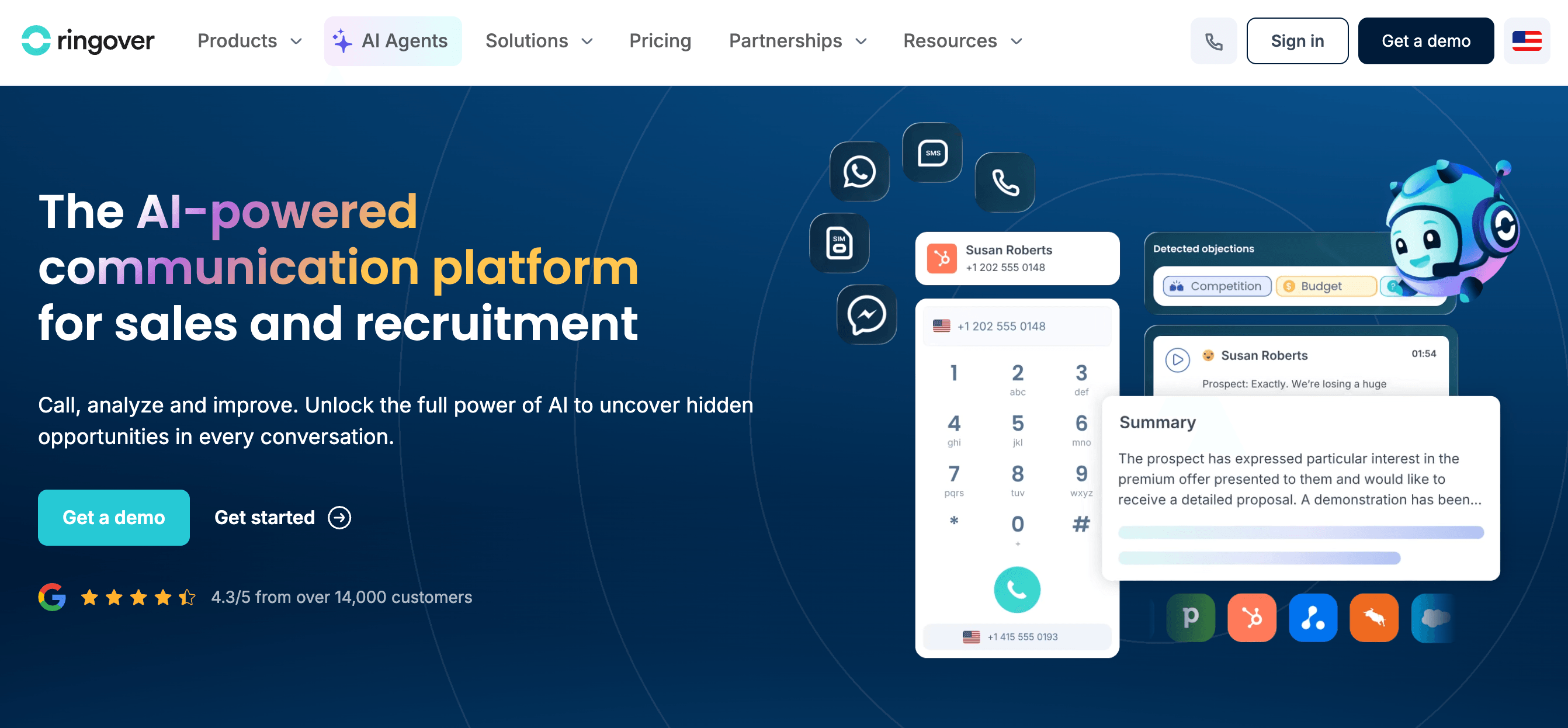
 Ringover has been supporting Dougs for several years with its telephony. The company considered
 Aircall and the telephony features of
 HubSpot before deciding to keep its historical provider.
Thibaud acknowledges that the relationship has had its ups and downs, but his overall assessment remains positive. He particularly highlights the software's flexibility and its integration possibilities.
“Ringover provides us with flexibility that satisfies us. We also have quite advanced API integrations with Ringover.”
One of the main use cases involves telephone call transcriptions. Dougs retrieves them via Ringover, then stores them in a central database to make them accessible to its own AI agents.
“We retrieve the transcripts from Ringover and we pull everything in.”
To Thibaud's knowledge, Dougs does not use the advanced AI analysis features offered directly by Ringover. The company prefers to retrieve the transcriptions and conduct its own analyses.
Ringover thus remains the communication tool, while the agents developed by Dougs leverage the conversations for various business needs.
Detecting potentially unsatisfied clients
Dougs has notably developed agents capable of analyzing conversations to detect signs of dissatisfaction.
These analyses can operate continuously and highlight situations that require special attention, without waiting for a team member to manually review the exchanges.
The transcriptions from Ringover thus become a source of information to more quickly identify the difficulties encountered by customers, beyond the simple call history.
Preparing files before handling
Another use case: helping team members understand the context of a file before responding to a client.
When an entrepreneur calls Dougs, an agent can gather available information to identify the probable reason for the call, any difficulties already encountered, or the current status of their file.
The goal is to provide the team member with a summary of useful elements before they handle the request.
This organization is particularly interesting at Dougs, where the same entrepreneur may interact with multiple contacts: accountants, lawyers, tax specialists, or advisors.
Information is sometimes spread across different software and multiple conversations. The agent allows for the reconstruction of this context without forcing the team member to search through each exchange, while still leaving them responsible for handling the file.
Tools in this section
Intercom remains at the heart of client relations
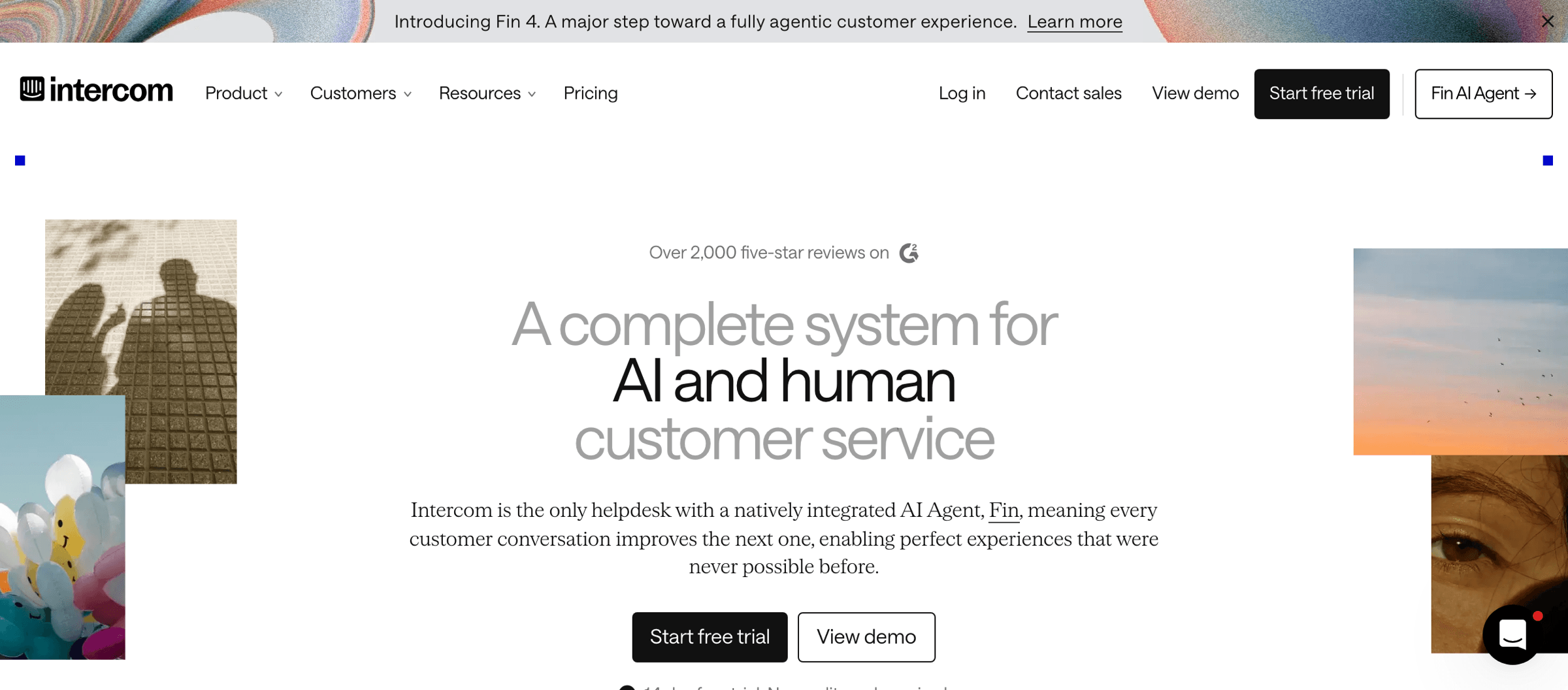
Despite the development of its own agents, Dougs continues to rely heavily on  Intercom to manage interactions with its customers.
The software serves as a common interface for teams in contact with entrepreneurs. Accountants, lawyers, tax specialists, salespeople, and Customer Success teams can find conversations there, rather than going directly through  Gmail.
Intercom is also connected to HubSpot and Ringover thanks to bidirectional integrations.
“We have bidirectional integrations between Intercom, HubSpot, and Ringover.”
These connections allow information to flow between the three software: client interactions in Intercom, commercial data in HubSpot, and phone conversations in Ringover.
Dougs can then leverage this information in its own systems, without questioning the tools used daily by its team members.
Conclusion: a positive view of Intercom's AI
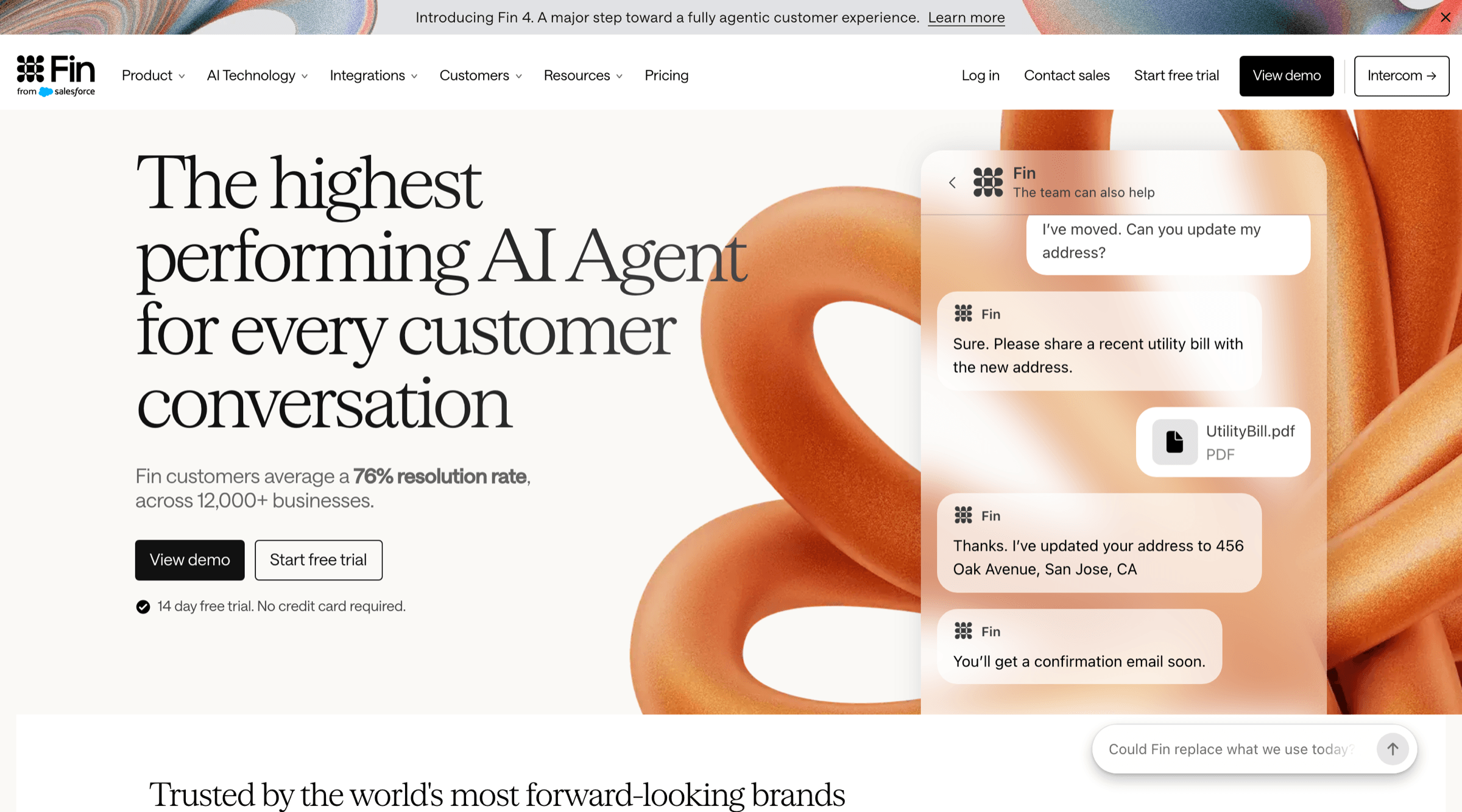
Thibaud particularly appreciates the developments made by Intercom around Fin, its AI agent dedicated to customer relations.
He considers Intercom one of the pioneers of conversational assistants capable of meeting concrete support and customer relationship needs.
His opinion on the product is very favorable, although he points out that the cost of Intercom remains high.
This interest in Fin does not prevent Dougs from continuing its internal developments. Intercom retains its role as a communication interface, while in-house agents can cross-reference information from multiple software to meet specific needs.
Tools in this section
PostgreSQL and BigQuery: how Dougs centralizes its data
To leverage the information from its software, Dougs relies on a broader data architecture.
The company uses  PostgreSQL for its production databases and
 BigQuery for data storage and analysis. Thibaud also mentions data marts and pipelines that organize the flow between different systems.
Data from HubSpot, Intercom and Ringover circulate thanks to integrations developed by the technical teams. Telephone transcriptions, in particular, are retrieved and then stored in a central database.
This organization allows Dougs to reuse the information produced by its software in its own applications, without relying solely on the analysis features offered by each vendor.
CallDesk: the limits of the AI phone system
Dougs is also experimenting with CallDesk, a phone system solution using artificial intelligence.
Unlike agents who analyze conversations after a call,  CallDesk intervenes directly with the client.
When an entrepreneur contacts Dougs, the agent can ask the reason for the call, identify the subject matter, and attempt to verify their identity before directing them to a colleague.
Thibaud gives the example of a client who calls because an accounting declaration did not go through. The agent must understand that the request concerns accounting, ask a few questions to identify the caller, and then pass the information to the right contact.
In theory, this process would prevent teams from having to systematically repeat the same qualification steps.
But the test results remain insufficient for Dougs.
Thibaud first notes issues with the quality of conversations: the French voices still seem too robotic to him, and the latency makes exchanges less natural.
The main difficulty, however, concerns identity verification.
“There are 50% of identity verifications that do not work and revert to a human.”
As part of the test, Thibaud estimates that about one out of every two identity checks fails.
When this happens, the client must be transferred to a staff member, who may need to ask for information already provided to the agent. Automation then lengthens the process instead of simplifying it, causing frustration for the affected clients.
For Thibaud, the AI phone system is not yet sufficiently satisfactory in its current configuration. Experience also shows that speaking directly to a client imposes more constraints than analyzing a conversation to assist a staff member.
Tools in this section
Tomorrow, create your company from ChatGPT thanks to Dougs' MCP?
Beyond the agents used internally, Dougs is preparing another evolution: making its services accessible to external AI agents.
The company is notably working on launching a MCP (Model Context Protocol), which would allow assistants like ChatGPT to interact with certain Dougs features.
The idea is to allow a user to perform operations without systematically needing to open the application.
“At Dougs, we want to be the best tool for agents. Tomorrow, we want people to be able to create their business from ChatGPT without even going into the Dougs interface.”
In practical terms, an entrepreneur could express their need directly in  ChatGPT. The assistant would then leverage Dougs' features to perform the necessary operations.
Dougs would continue to manage accounting, legal, or administrative data and processes, but part of the user experience could take place in an external assistant.
Today, users generally need to log into each application to access its features. Tomorrow, some might prefer to go through an AI assistant capable of communicating with multiple software programs.
This is precisely what Dougs aims to anticipate by making its services directly accessible to agents, rather than assuming all its clients will continue to use its interface.
Limova AI: making agents accessible to non-expert users
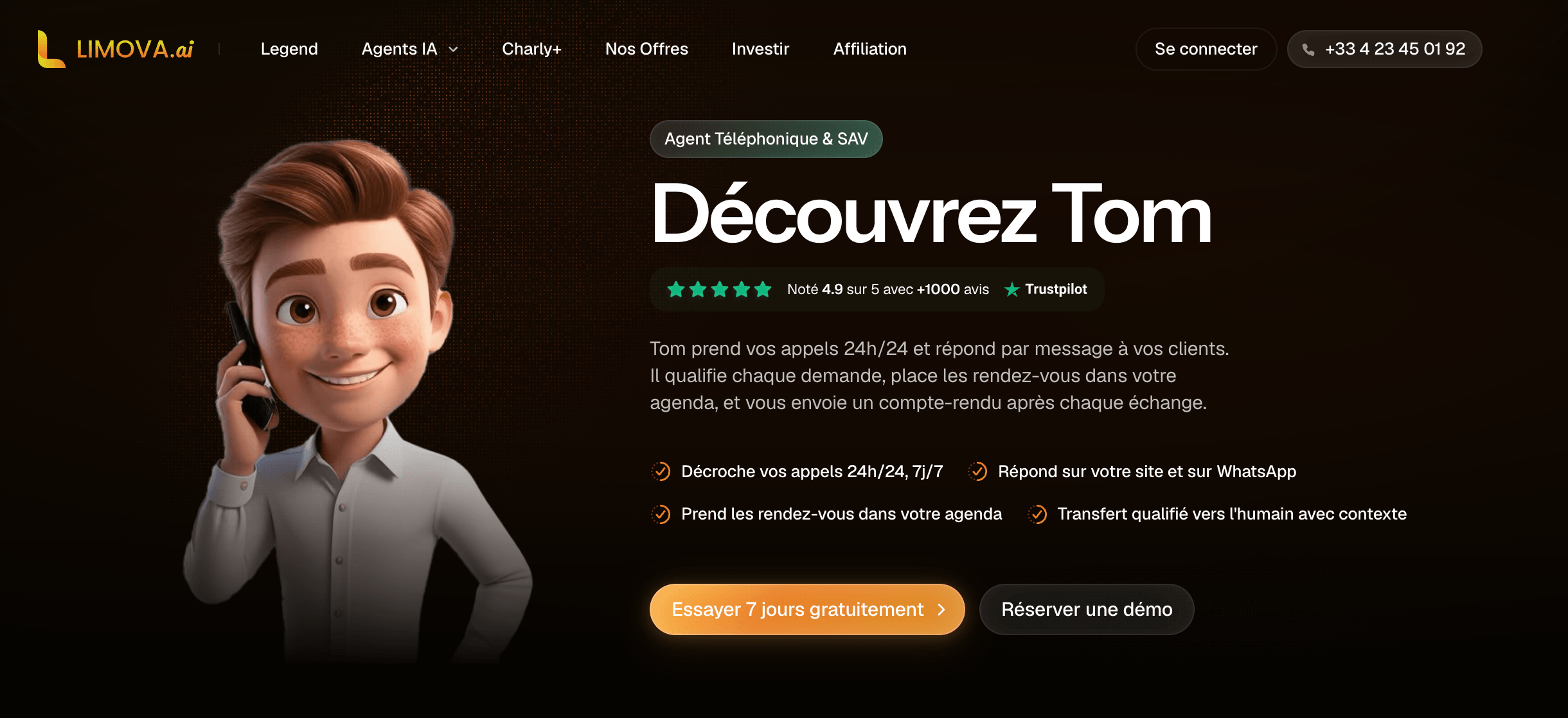
Thibaud also mentions partnership discussions with  Limova AI, a company offering AI agents specialized by profession. He specifically cites agents intended for SEO, sales, accounting, or telephone reception.
What interests him most is the simplicity of the user experience.
For Thibaud, the traditional interfaces of LLMs are not always suitable for people new to AI. On ChatGPT or Claude, the user is faced with an input field without necessarily knowing what to ask or how to phrase their instructions.
“Using AI in an agent-like manner, as an agent, like someone who is going to do something, is not something everyone can do.”
Limova AI offers another approach, with agents directly associated with professions or functions. Instead of building a process themselves in a chat interface, the user chooses an agent suited to their need.
A simplicity that Thibaud appreciates, which aligns with the reflections at Dougs on how AI agents could facilitate access to software.
Tools in this section
Summary of the software this article mentions in Dougs's stack
| Status | Workflow | Tool | Usage |
|---|---|---|---|
| In use | Telephony | Ringover | Calls, transcription retrieval, and API integrations |
| Dropped | Telephony | AircallDropped | Alternative considered to Ringover |
| In use | CRM | HubSpot | CRM connected to Ringover and Intercom; telephony also evaluated |
| In use | Customer Relations | Intercom | Common interface for teams in contact with clients |
| In use | Messaging | Google Workspace | Messaging rarely used directly for client exchanges |
| In use | Generative AI | Claude | Review, update, and utilization of internal knowledge |
| In use | Database | PostgreSQL | Production data |
| In use | Data Warehouse | Google BigQuery | Storage and use of analytical data |
| In use | AI Phone System | Calldesk | Testing in progress for call qualification and identity verification |
| In use | AI Assistant | ChatGPT | Interface from which clients could eventually access Dougs' services |
| In use | AI Agents | Limova | AI agents |