



In 2024, Collective.work changed its business model. After several years connecting collectives of freelancers with companies, the company repositioned itself around sourcing and recruiting software.
This pivot also changed how it manages its finances. In the marketplace days, Collective had to invoice services delivered by several freelancers, collect payments and split the funds. With SaaS, the company now bills subscriptions directly to its customers.
Collective now generates about €2 million in ARR, with around twenty employees. Its software is aimed at recruitment firms, IT services companies, agencies and independent recruiters, mainly in France, but also in the Benelux, the United Kingdom and Spain.
Théo Bartholmé, who works on finance, operations and RevOps at Collective, looks back on this shift. He explains why the company moved from Mangopay to Stripe, why it is keeping Pennylane, and the difficulties this setup creates for tracking its ARR in ChartMogul.
From Mangopay to Stripe: how Collective adapted its billing to SaaS
In its early days, Collective connected collectives of freelancers with companies that needed intellectual services. The model was fairly standard: the freelancers invoiced Collective, which then invoiced its customers. The difference between the two amounts was its margin.
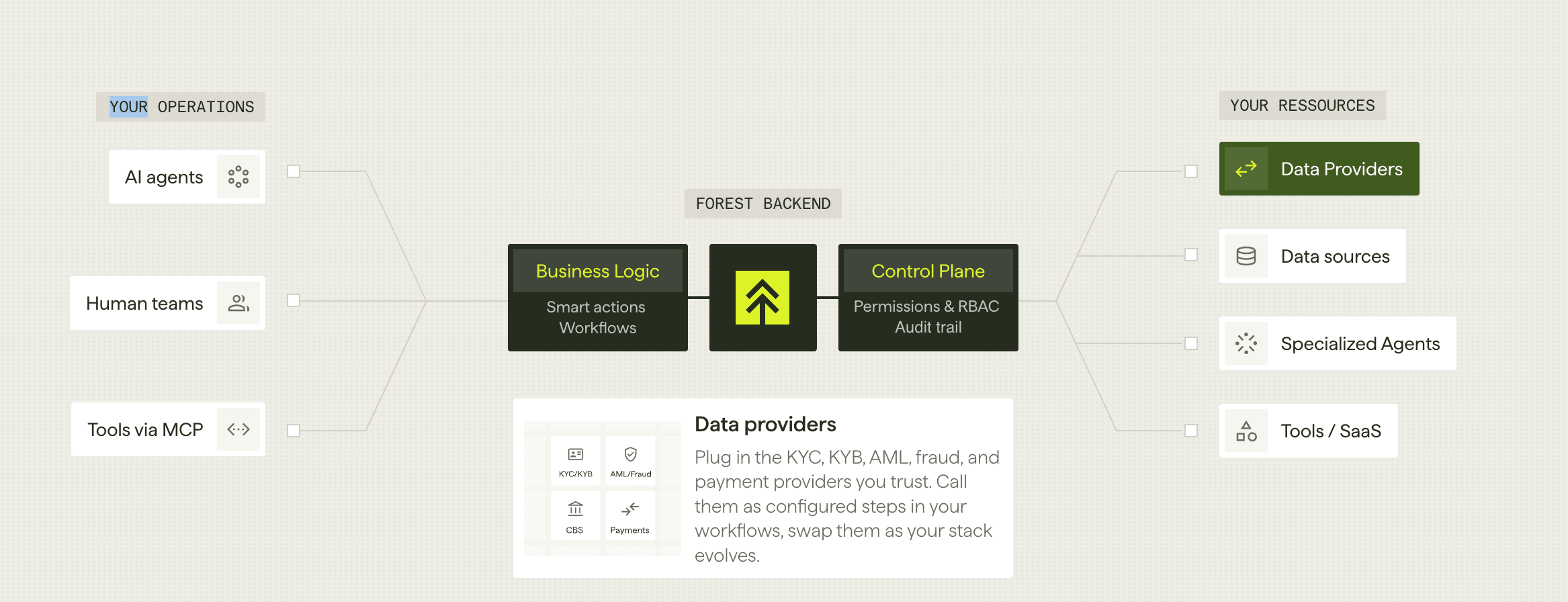
The company gradually automated this process with  Forest Admin, back-office software it has been using for about four years. Forest Admin also let the operations teams look up information on users, assignments and invoices, without systematically calling on the developers.
It is an aspect Théo particularly appreciates. Without being a developer, he can modify certain dashboards and adapt the interface to the teams' needs. Even though he loves the tool, he acknowledges that Forest remains fairly technical and that some salespeople can struggle to find their way around it.
“The advantage of Forest is that we were able to buy a back office rather than build it ourselves. It keeps us from piling up technical debt and, above all, from depending on developers every time we want to change something.”
Why did Collective use Mangopay for its payments?
In parallel, Collective had developed a collective invoicing business for assignments it had not necessarily brought in itself.
Take three freelancers working together for the same client. Rather than sending three separate invoices, they could use Collective to centralize invoicing, then split the payments among themselves.
But this model raised a regulatory difficulty. Since Collective was not directly a party to the service, the company could not simply collect the money in its bank account before redistributing it.
So it used  Mangopay, a payment provider specialized in marketplaces, among others. The solution made it possible to receive funds on a regulated infrastructure, split them among the freelancers and handle the identity verification, or KYC, procedures.
For Théo, Mangopay above all spared Collective from having to build a complex payment infrastructure, with the regulatory constraints that come with it. This collective invoicing business gradually became secondary. With the SaaS pivot, Collective had much less need to handle payments on behalf of third parties.
Why Stripe replaced Mangopay for SaaS subscriptions
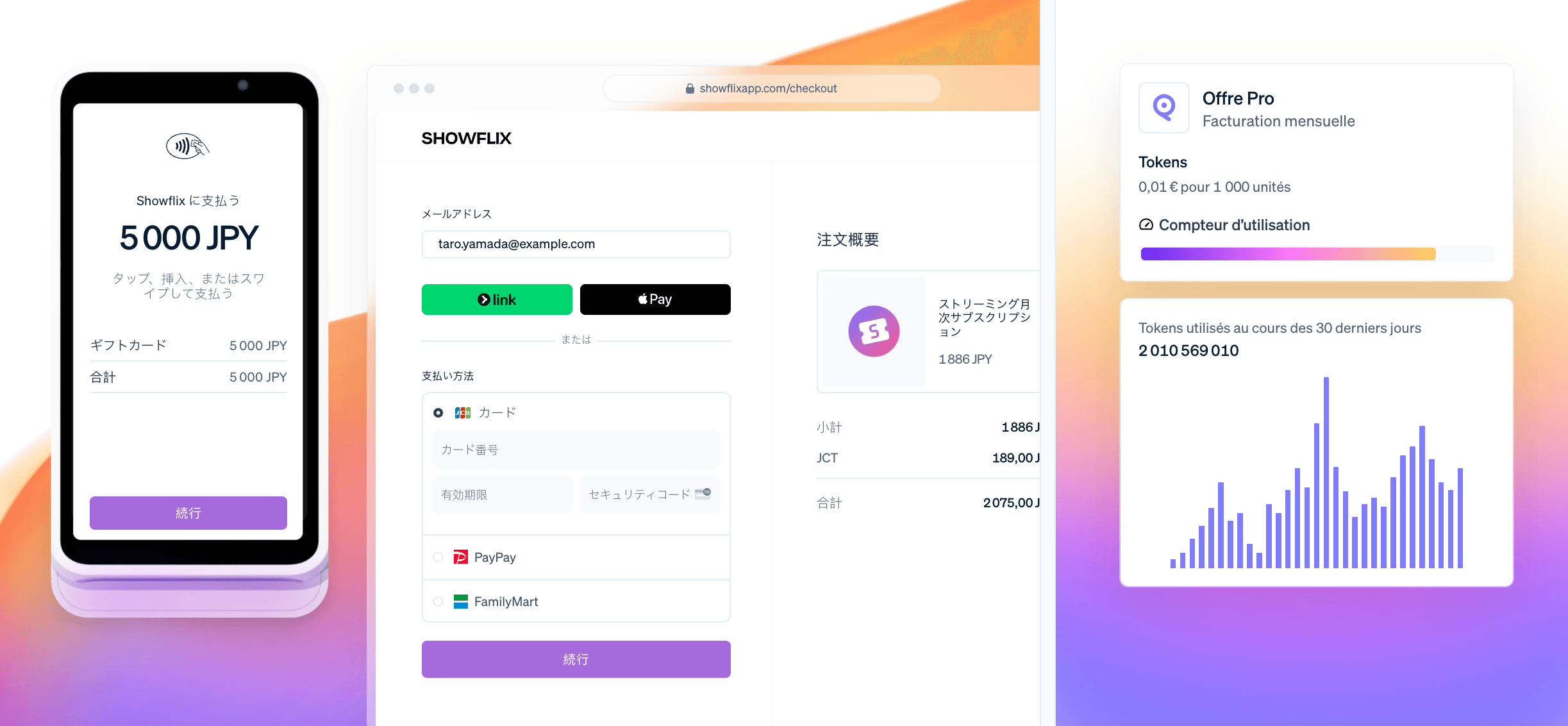
The move to SaaS considerably simplifies payment flows. Collective now sells monthly, quarterly or annual subscriptions to its software. The company chose  Stripe, in particular for how easy it is to set up and the quality of its interface.
Théo particularly appreciates Payment Links, which let you create payment links directly from the dashboard, without building a full API integration. This feature fits well with the way Collective sells its software, with two subscription paths.
- The first is self-service: customers choose a standard plan and subscribe directly from the application.
- The second covers custom offers. Some customers need a specific number of credits or integrations with their recruiting software. The salespeople then negotiate the terms and generate a Stripe payment link matching the agreed amount and billing frequency. This way, they can handle a good share of the billing themselves, without systematically going through the finance team.
Théo also has a better impression of the Stripe dashboard than of the Mangopay one, which he found less practical day to day. In particular, he likes being able to manually modify a subscription when a customer upgrades.
“What's really handy with Stripe is that you can do almost everything from the dashboard. If a customer wants to change their subscription or upgrade, you can handle it directly. You don't need to build an API integration for every operation.”
Today, Stripe handles payments, invoicing, VAT and subscriptions. Théo estimates that about 90% of Collective's billing goes through Stripe.
Tools in this section
Why Collective is keeping Pennylane alongside Stripe
Collective still uses  Pennylane for its accounting, together with its accounting firm, but also to invoice certain customers, mainly key accounts.
Unlike customers who subscribe directly online, some large companies do not want to pay for their subscription by credit card. They ask to receive an invoice before making a bank transfer.
Yet in the Stripe flow Collective favors, the customer first pays for the subscription, then receives the invoice.
This process does not always match large companies' purchasing procedures. Collective therefore uses Pennylane to issue the relevant invoices before payment. Bank transfers also have an economic advantage: they avoid the fees associated with card payments.
E-invoicing could strengthen Pennylane's role
The French e-invoicing reform could shift this balance.
Since September 1, 2026, all companies in scope must be able to receive electronic invoices. The obligation to issue them applies from that date to large companies and mid-sized companies, then to SMEs and microbusinesses starting September 1, 2027.
For Collective, this means adapting its invoicing processes, especially since some customers are already asking for electronic invoices.
Théo therefore expects to use Pennylane more. But this raises a concrete problem: today, invoicing in Pennylane requires more manual work than in Stripe.
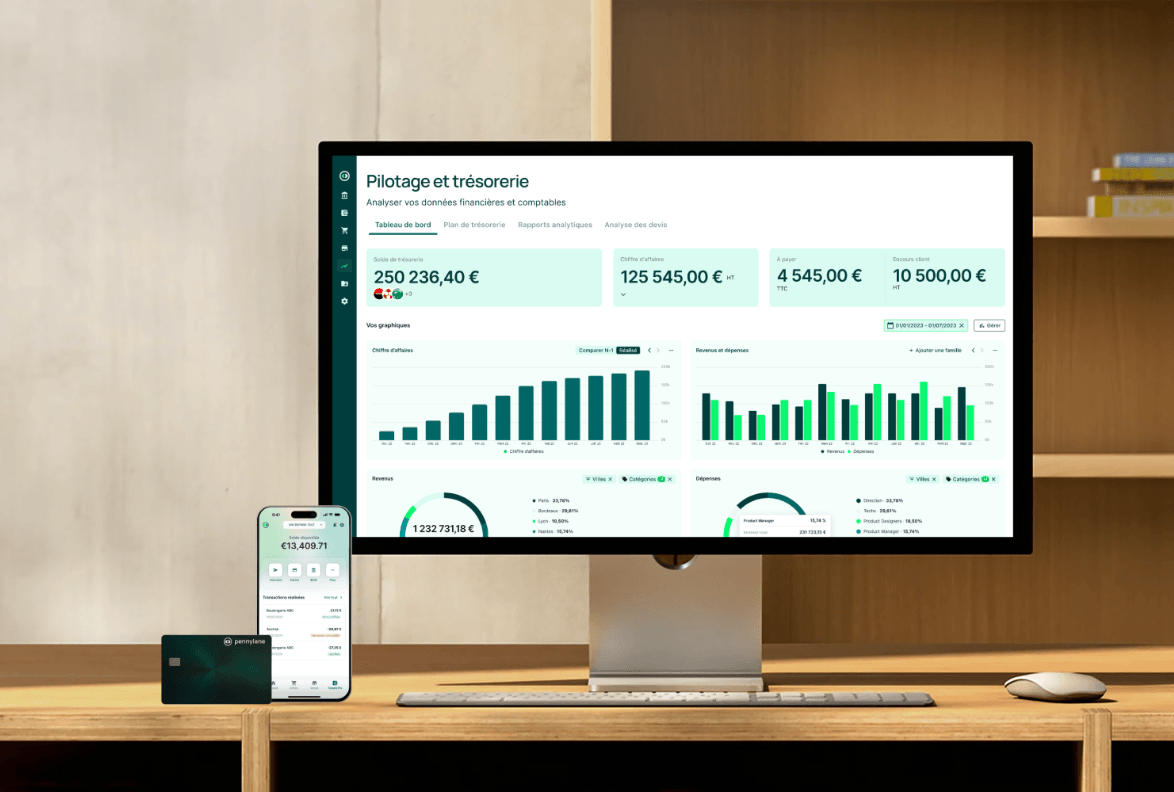
With Stripe, a salesperson can create a payment link in a few clicks. Collective does not yet have an equally simple flow in Pennylane for its custom offers.
Théo is therefore thinking about building a system that lets salespeople generate their invoices more easily, without having to call on the finance team every time. For now, this process has yet to be built.
Stripe remains more practical for managing renewals
The other difficulty concerns managing subscriptions over time.
Stripe makes it possible to create subscriptions, manage recurring payments and track subscription changes.
With Pennylane, Collective issues an invoice and waits for payment by bank transfer. In its current setup, nothing guarantees that a new subscription will be automatically created or renewed the following year.
Théo points out that he has not studied all of Pennylane's subscription management features in depth. But for his current needs, he finds Stripe better suited. Specialized solutions such as  Chargebee or
 Hyperline are also worth looking into.
Tools in this section
ChartMogul: the limits of reporting across Stripe and Pennylane
Having two billing tools is not necessarily a problem day to day. However, it complicates tracking SaaS metrics.
To measure its ARR, MRR and churn, Collective uses  ChartMogul, a reporting tool specialized in subscriptions. ChartMogul is directly connected to Stripe. When a customer subscribes, upgrades or cancels, the information can flow into the tool automatically.
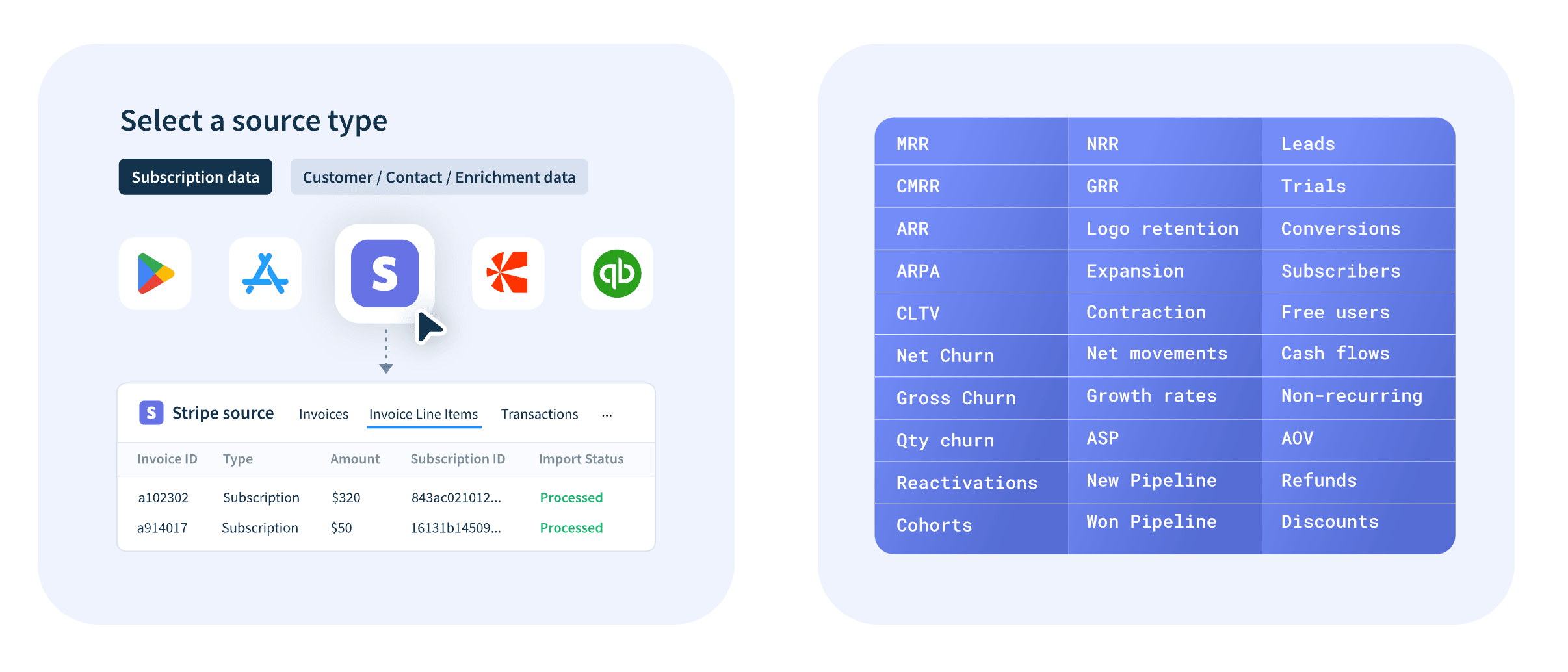
Théo particularly appreciates ChartMogul's flexibility for analyzing churn.
Take a customer who cancels their subscription, then comes back a few weeks later. Collective can choose not to treat this interruption as a permanent loss. ChartMogul lets you set 30- or 60-day windows to account for this kind of situation and keep temporary interruptions from skewing the churn reading.
The problem with subscriptions billed in Pennylane
Things get more complicated with customers who do not go through Stripe.
In Collective's current setup, Pennylane is not automatically synced with ChartMogul. Théo therefore has to manually recreate the corresponding subscriptions.
In practice, when a salesperson tells him a customer has been invoiced in Pennylane, he adds the subscription to ChartMogul himself. It is not particularly complicated, but it requires rigor.
If the customer does not renew their subscription the following year, someone has to remember to update the data in ChartMogul. Otherwise, the subscription stays counted and ARR can be overstated.
Reporting therefore depends partly on the information passed on by the salespeople and on manual updates made by the finance team.
This is currently one of the main limitations of Collective's setup.
Why Collective is looking at Fincome to replace ChartMogul
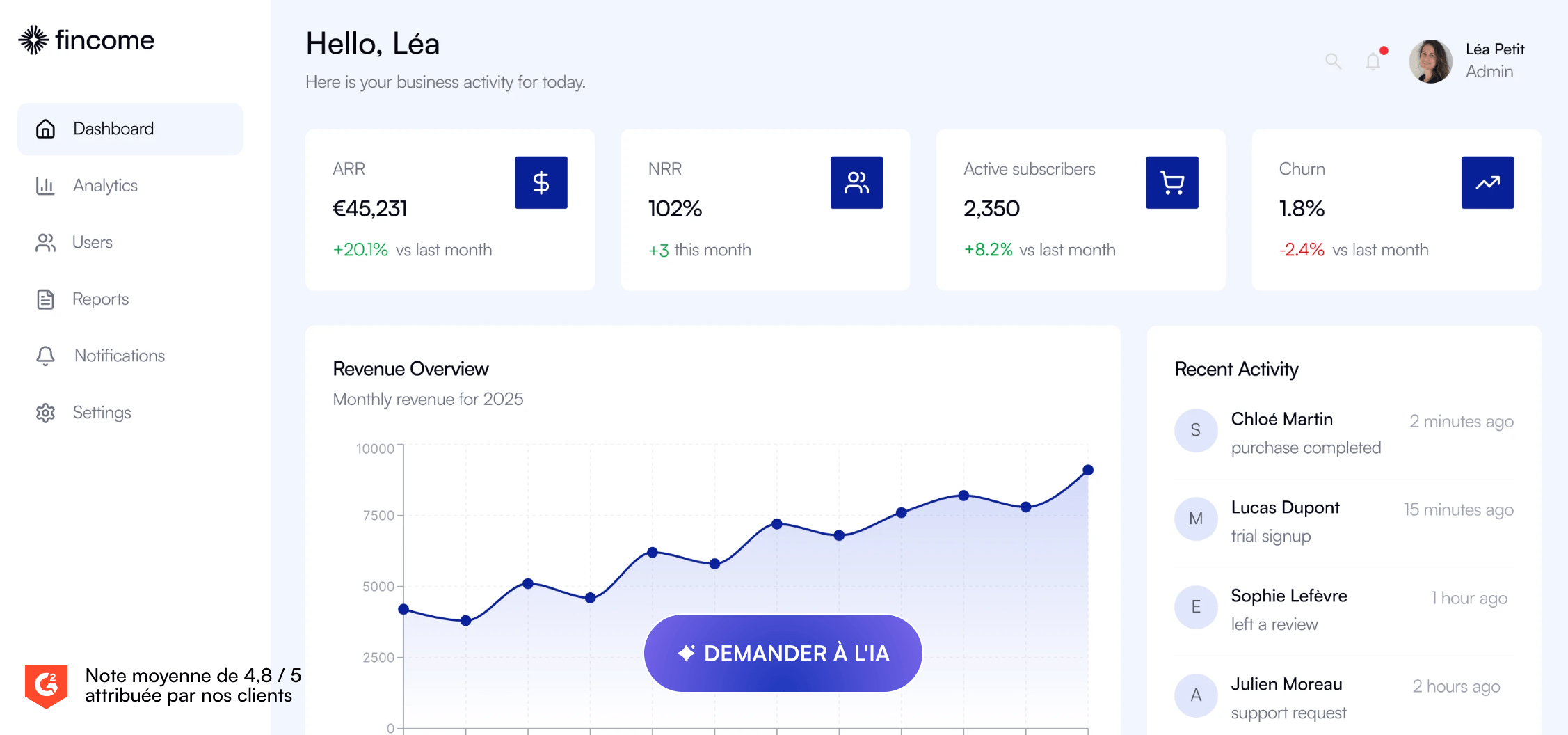
To solve this problem, Théo has started talking with  Fincome, another SaaS reporting tool. One of its strengths is the ability to consolidate several billing sources. Fincome notably offers an integration with Pennylane, which could allow Collective to reduce its manual work.
But the two products do not work in quite the same way.
Théo finds ChartMogul particularly accessible. Collective was able to start using it in self-service, without going through a salesperson or launching an implementation project.
Fincome seems to him to rely more on personalized support, especially to build the reporting and adapt the metrics to the company's needs.
“ChartMogul is very easy to use in self-service. Fincome offers more support and can better meet complex needs, especially with Pennylane.”
For now, Théo does not think Collective needs to take on such a project. ChartMogul broadly meets its expectations, despite the manual steps needed to add the subscriptions billed in Pennylane. The question could come up again, however, if the share of billing done outside Stripe were to grow.
Qonto vs Pennylane: two players converging on banking and accounting
Beyond billing and reporting, Collective mainly uses  Qonto for its day-to-day banking operations. Théo appreciates how easy it is to use and its relatively low cost. The company also keeps an account at BNP Paribas, in particular for operations related to its financing.
But the line between Qonto and Pennylane is becoming increasingly blurred. Historically, Qonto grew around the business account and financial management, while Pennylane first made its name in accounting. Today, both companies are trying to cover a growing share of SMEs' financial needs.
Qonto is strengthening its accounting features, especially since acquiring Regate in 2024. For its part, Pennylane is developing its banking services, with the ambition of bringing accounting, invoicing and payment management together in a single platform.
Théo is following this evolution with interest. He nonetheless believes Pennylane could have an advantage in this convergence: in his view, it is easier to start from full accounting software and add banking services to it than to gradually build an accounting offering on top of a business account.
“My feeling is that it's easier for Pennylane to add banking services than for Qonto to build the whole accounting side. Pennylane starts from a fairly complex line of business, whereas banking features seem simpler to me to integrate.”
That said, Collective is not considering a migration in the short term. Théo might one day use Pennylane's business account to centralize more of his operations, but Qonto meets his needs today. So he sees no good enough reason to switch.
On the HR side, Collective uses  PayFit for payroll, contracts and expense reports. Since the company has few expense reports to process, it did not see the need to add specialized software.
Summary of the software this article mentions in Collective.work's stack
| Status | Workflow | Tool | Usage |
|---|---|---|---|
| In use | Back office | Forest | Operations management and billing history |
| Replaced | Marketplace payments | MangopayReplaced | Payment splitting and KYC |
| In use | SaaS payments and billing | Stripe | Subscriptions, invoices, VAT and Payment Links |
| In use | Accounting and billing | Pennylane | Accounting and billing for some key accounts |
| In use | SaaS reporting | ChartMogul | Tracking ARR, MRR and churn |
| Dropped | SaaS reporting | FincomeDropped | Potential alternative to ChartMogul |
| In use | Business banking | Qonto | Day-to-day banking operations |
| In use | Business banking |  BNP Paribas | Company bank account |
| In use | Payroll and HR | PayFit | Payroll, contracts and expense reports |