

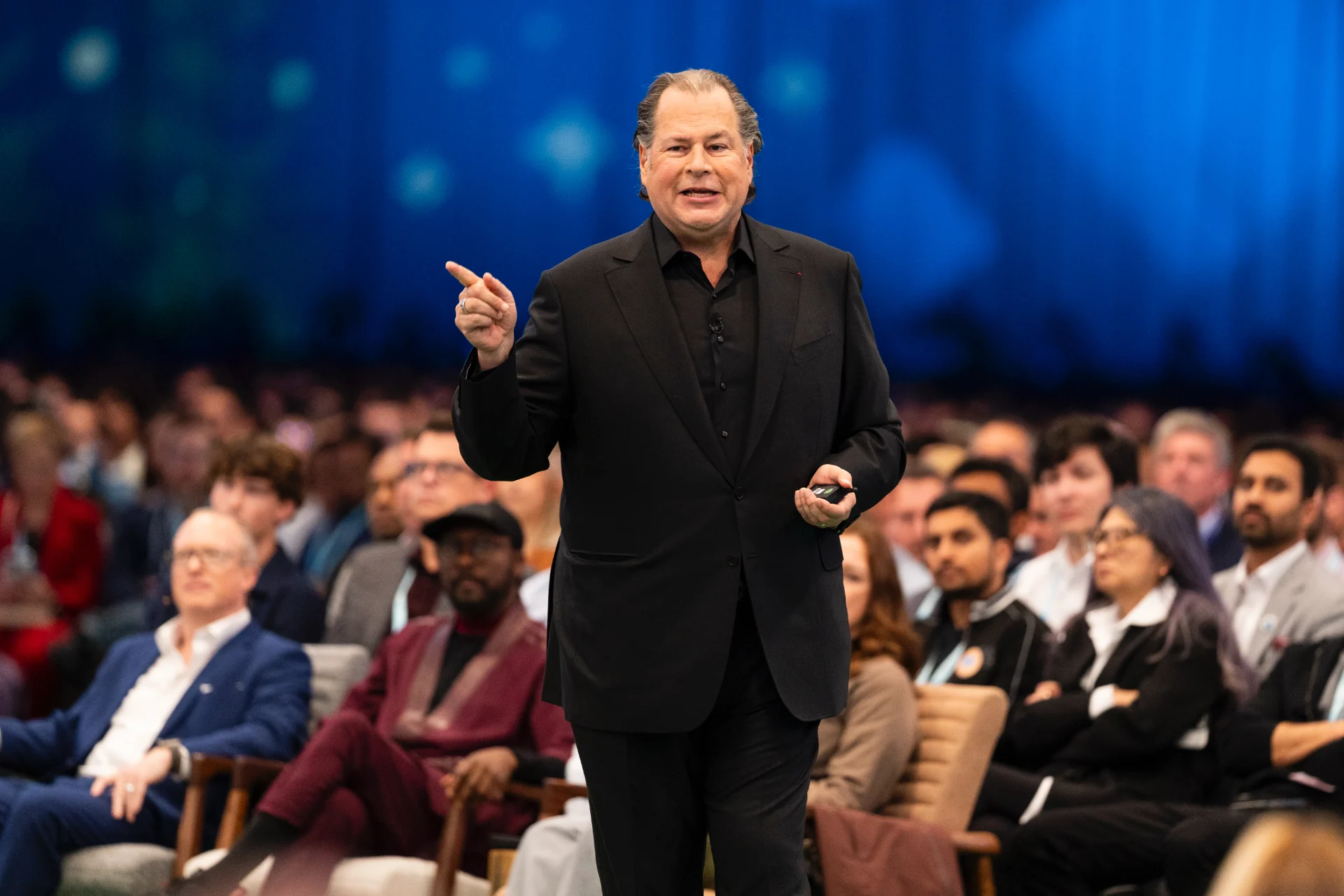


This article was written by Atlas following an interview with Quentin Lallemand, Director of Performance Marketing, conducted on October 1, 2026.
Lucca is a French HR software vendor that sells an HRIS made up of 14 products across five product lines. This multi-product organization generates large volumes of marketing, sales and customer data, with one central challenge: making information flow properly between the different teams.
Quentin Lallemand is Director of Performance Marketing at Lucca. He leads, in particular, acquisition and customer relationship topics on the marketing side, in a company that also has an Ops team of about 40 people.
Over the years, Lucca has used several specialized tools for its CRM, marketing automation, sales sequences and support. But the growing number of systems also created data synchronization and consistency problems.
The company gradually made a structural choice: refocusing several building blocks of its stack around Salesforce, even if that sometimes means accepting a less smooth user experience than that of some specialized tools.
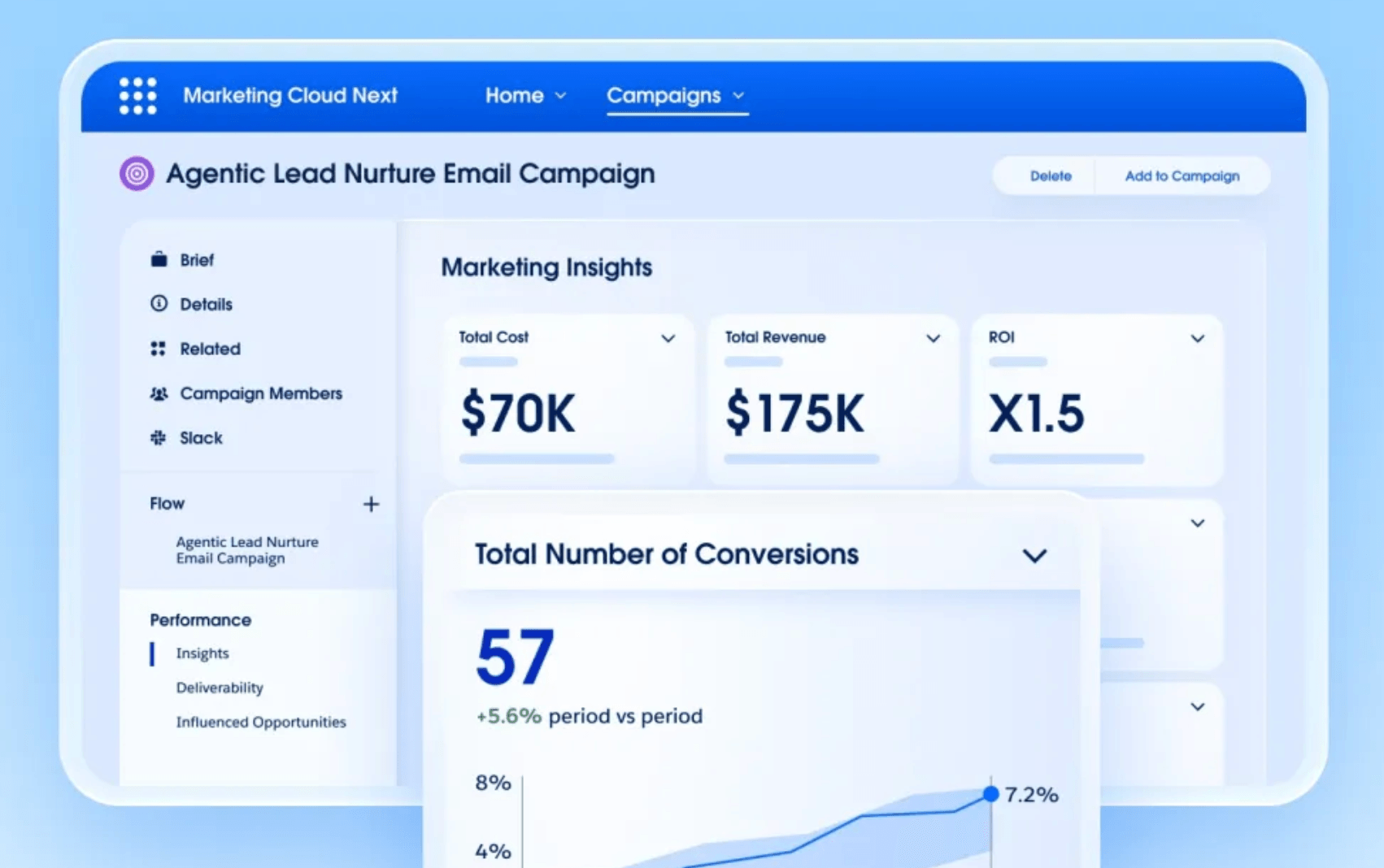
After  HubSpot and then Pardot on the marketing side, Lucca is now preparing its migration to
 Marketing Cloud Next, with Data Cloud as a key element of this new architecture.
Why did Lucca replace HubSpot with Pardot?
Historically, the sales teams worked in  Salesforce CRM, while marketing used HubSpot Marketing. This setup created two separate environments, with marketing activities on one side and sales data on the other.
Yet marketing performance is evaluated in part from information held in Salesforce: opportunity creation, qualification and sales progress. Keeping the two systems properly synchronized was therefore becoming an issue in its own right.
Lucca decided to bring its marketing closer to its sales CRM by replacing HubSpot with Pardot, Salesforce's marketing automation solution. Pardot made it possible to manage emails, workflows and marketing automation while being integrated into the Salesforce environment.
But this first consolidation did not fully solve the problem.
Why didn't Pardot eliminate the synchronization problems with Salesforce?
To understand the limits Lucca ran into, you have to go back to the history of Pardot. The company was first acquired in 2012 by ExactTarget for $100 million. Less than a year later, Salesforce itself acquired ExactTarget, bringing Pardot into its portfolio in 2013.
Pardot was therefore not built natively as a Salesforce building block. Its integration deepened gradually, to the point of requiring Salesforce authentication for all its users in 2021. But the two environments continued to operate with their own objects and synchronization mechanisms.
So, even after replacing HubSpot with Pardot to get closer to Salesforce, Lucca still had to manage the fields, the mappings, the data flows and the various workflows between the two systems.
Salesforce has since gradually evolved the product. Pardot was renamed Marketing Cloud Account Engagement in 2022, while the Pardot Classic app built into Salesforce was retired in October of the same year. The Account Engagement product still exists, but in parallel Salesforce is developing Marketing Cloud Next, launched in 2024 and built much more directly around the Salesforce platform and Data Cloud.
Why is Lucca migrating from Pardot to Marketing Cloud Next?
The next step for Lucca is therefore the migration to Marketing Cloud Next. For Lucca, one of its main benefits comes from how it works with Data Cloud.
The goal is to work more from a common foundation that brings together the information needed for marketing and sales workflows: customer data, contracts and other elements available in the Salesforce ecosystem.
The choice does, however, involve a trade-off.
Quentin Lallemand does not present Salesforce's user experience as the best on the market for a marketer. But Lucca already knows the environment, and the value of better-consolidated data can make up for an interface that is less pleasant than that of more specialized tools.
This is precisely the kind of compromise the company seems ready to accept. The philosophy Quentin Lallemand describes is quite clear:
“Our approach is more data first. We're willing to accept a slightly worse UX if, behind it, we have consolidated and clean data.”
Why did Lucca replace Salesloft with Salesforce Sales Engagement?
The consolidation does not only concern marketing.
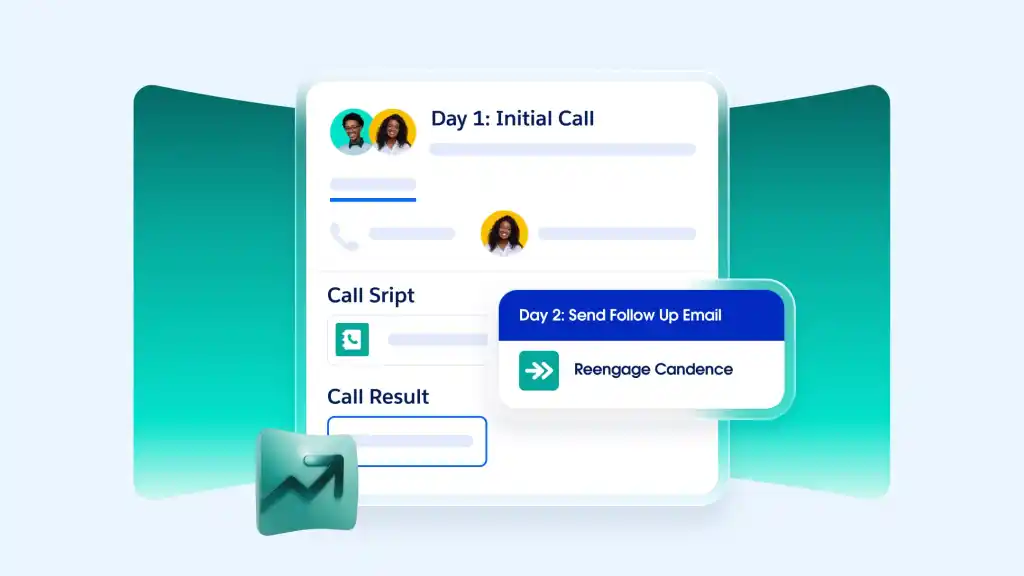
Lucca previously used Salesloft for some sales sequences. The company has moved to Salesforce Sales Engagement.
Beyond a question of satisfaction, the value of this migration should rather be understood as part of the general consolidation movement: bringing SDR activities closer to the CRM where opportunities and a significant share of sales data already live.
The choice clearly illustrates Lucca's philosophy: the trade-off is not made only tool against tool, but also according to each tool's place in the overall architecture.
Why did Lucca also leave Zendesk for Salesforce?
The same movement can be seen on the support side.
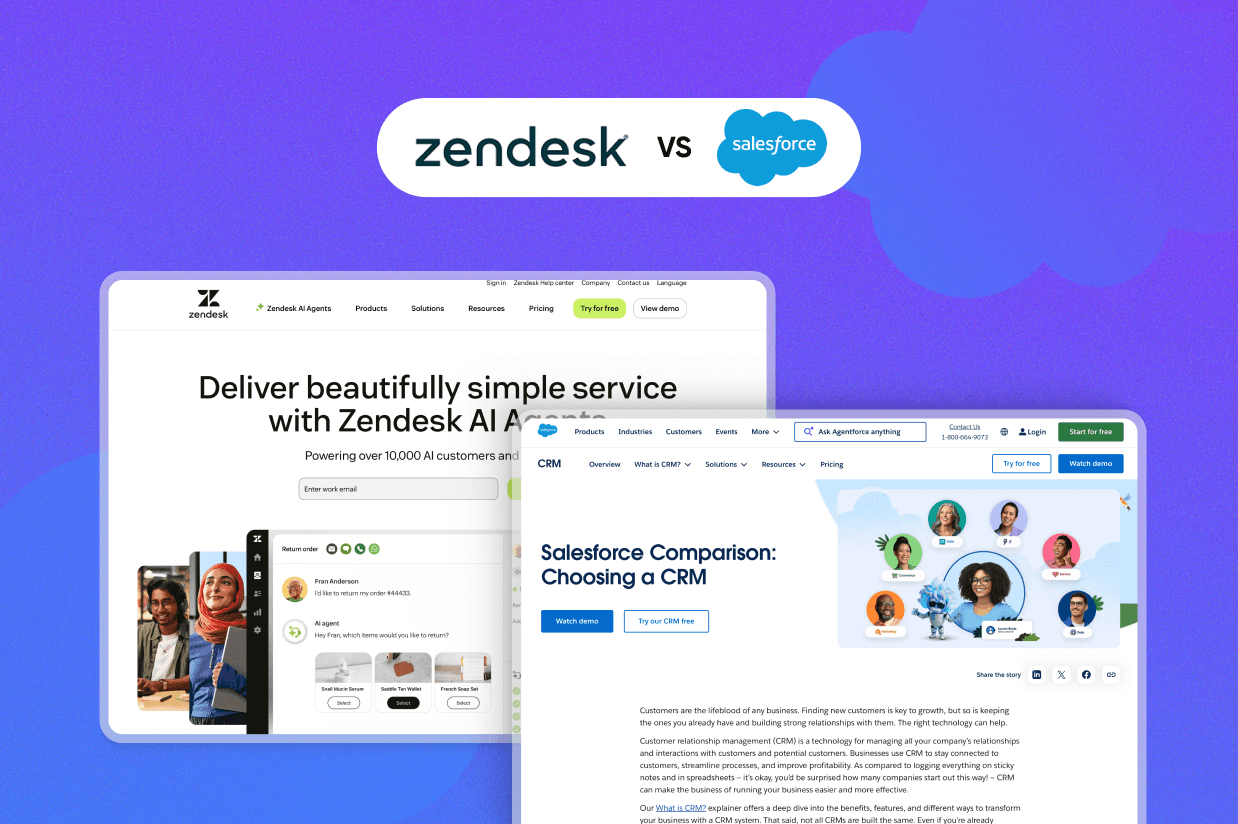
Lucca previously used  Zendesk before migrating its ticketing to Salesforce.
Here again, Quentin Lallemand does not offer a detailed judgment on the respective merits of the two tools.
The interesting point is rather the gradual convergence of several functions toward the same environment: Sales, SDRs, marketing, support and Customer Success can work around more closely shared data.
This also makes it easier to bridge uses. Information raised by support can, for example, provide context on a customer already in the CRM, even though Lucca does not automatically trigger a sales opportunity after every ticket.
This does not mean the entire stack is destined to migrate to Salesforce.
BigQuery remains central to the data architecture.  Amplitude is used for product analytics.
 Userflow handles part of the in-product communication.
 Modjo is used on the Sales side.
The consolidation therefore mainly concerns the building blocks for which having common data brings enough value.
How do BigQuery and Salesforce Data Cloud complement each other at Lucca?
The rise of Data Cloud does not mean that Lucca is abandoning  BigQuery.
The two tools operate at different levels. BigQuery remains the data warehouse used to centralize and reprocess a significant share of the data coming from Lucca's various tools.
Data Cloud addresses more the challenge of unifying data within the Salesforce ecosystem, notably to allow Marketing Cloud Next and the other Salesforce building blocks to work from a more common foundation.
Why is Lucca also building its own tools around Salesforce?
Nor does consolidation mean that Lucca expects Salesforce to provide every feature its teams need. Thanks to its Ops resources, the company also builds several building blocks in-house.
One tool, for example, makes it possible to feed prospect lists, enrich data and retrieve certain intent signals from other sources. This information can then be connected to Salesforce.
The data is therefore centralized in the sales environment, but the intelligence that feeds it can be developed elsewhere.
How does Lucca combine Salesforce, Modjo and AI to help salespeople?
Another internal project aims to bring together the context available around a lead: interaction history, touchpoints, downloaded content, external signals, company information or interactions from other people belonging to the same account.
An AI layer can then summarize this information and suggest an angle of approach to the salesperson. The system is built in-house and then connected to Salesforce.
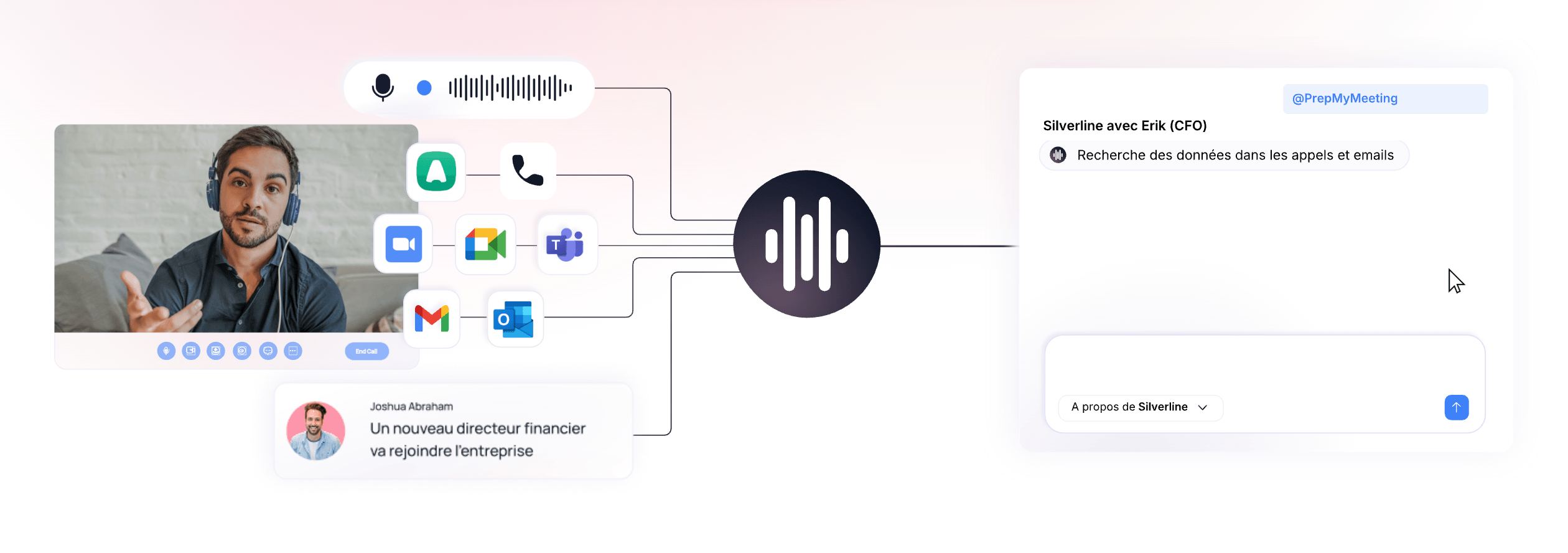
In parallel, Lucca uses Modjo, notably to summarize conversations and help salespeople prepare or write their emails.
These uses address the same challenge: the more information the company centralizes, the more it must be able to surface the right context without asking the salesperson to manually go through several tools.
Lucca's strategy is therefore not to do everything in Salesforce. Rather, it consists of making Salesforce a common foundation around which specialized tools and in-house developments can continue to gravitate.
Summary of the software this article mentions in Lucca's stack
| Status | Workflow | Tool | Usage |
|---|---|---|---|
| In use | CRM |  Salesforce | Central CRM for acquisition and cross-sell opportunities |
| Replaced | Marketing Automation | HubSpotReplaced | Former marketing tool used before the migration to Pardot |
| In use | Marketing Automation | Salesforce Marketing Cloud | Emails, workflows and marketing automation |
| In use | Customer Data |  Salesforce Einstein | Data foundation to further unify the information used in Salesforce |
| In use | Sales Engagement | Salesforce Sales Cloud | Managing SDR prospecting sequences |
| Replaced by Salesforce Sales Cloud | Sales Engagement |  SalesloftReplaced by Salesforce Sales Cloud | Former solution used for sales sequences |
| Replaced by Salesforce | Support / CX | ZendeskReplaced by Salesforce | Former ticketing solution before the migration to Salesforce |
| In use | Data Warehouse | Google BigQuery | Centralizes and reprocesses data from various tools |
| In use | Sales Intelligence | Modjo | Summarizes conversations and helps salespeople prepare their communications |
| In use | AI / Sales | Outils internes | Enrichment, intent data and a summary of the context around leads |