




This article was written by Atlas following an interview with Marion Comolet, Manager of the CX Scale teams at Pleo, conducted on September 3, 2026, as part of a use case dedicated to Customer Success tools.
Pleo is a scale-up of about 800 employees offering a spend management solution with about 40,000 customer companies, mainly in Europe. More than 30,000 of them are handled by the CX Scale teams, who must support both the largest SMB customers and a large number of customers that operate more in self-service.
The Customer Experience team brings together Customer Success and Customer Support. Marion Comolet works in the CX Scale team, in charge of SMB (Small & Medium Businesses) customers.
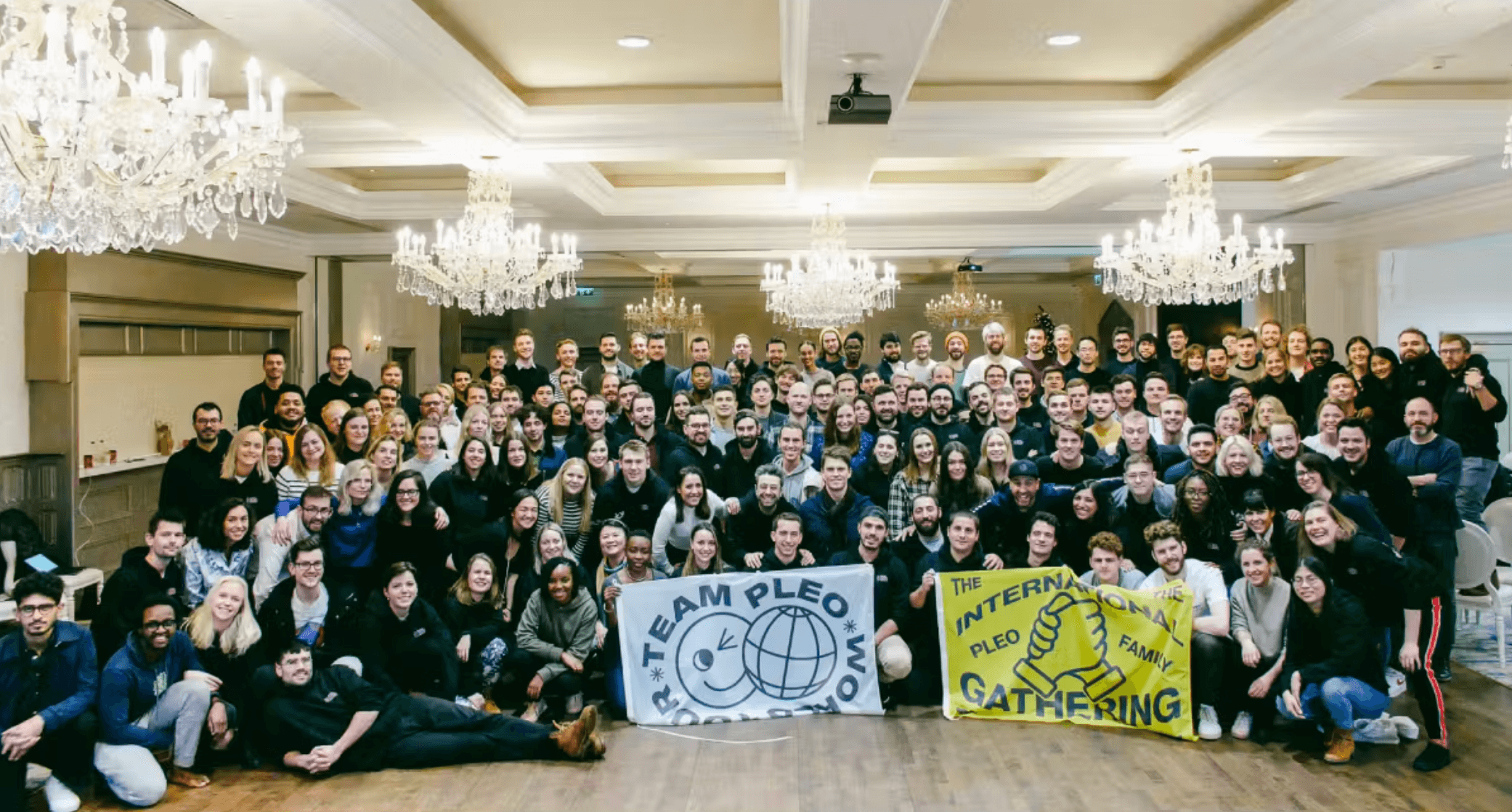
The problem Pleo had to solve is fairly mechanical: the number of customers has to grow much faster than the number of Customer Success Managers.
“When Pleo had few customers, we could treat each of them like a VIP. With 30,000 SMB customers today, that model is obviously no longer scalable: we can't grow the teams at the same pace as the number of customers, so we have to find solutions to bring the same level of service to our customers while being more efficient.”
Pleo's answer is not to replace CSMs with a single tool or a chatbot. The company has gradually built an architecture combining data centralization, conversation analysis, automated support, educational content and community.
This article aims to better understand this transformation.
What software does Pleo use to handle its Customer Success challenges?
Pleo's CX stack was built gradually.
 HubSpot and
 Freshworks were among the historical building blocks.
 Vitally was then added to create a true work environment dedicated to CSMs.
 Gong arrived more recently. Other specialized tools then rounded out this architecture.
Why is Vitally the cockpit of Pleo's CSMs?
Vitally has been used at Pleo for more than five years. For Marion Comolet, it works as the “HubSpot for CSMs.”
There, the teams find product usage data, the customer's segment, previous interactions, CSM notes and various pieces of information that help them understand the state of the relationship.
What makes Vitally especially valuable at Pleo is the data that converges in it.
- -
 BigQuery feeds the product usage data.
- Sales information from HubSpot also flows into Vitally. When a salesperson talks with a customer, the CSM can therefore see that activity.
- Calls recorded in Gong also appear in Vitally.
- Freshworks tickets are also accessible at the customer level.
Vitally thus becomes the CSM's operational starting point rather than another isolated database.
“It's really the control center of the activity,” Marion sums up.
She does add a nuance, though: after more than five years of use, some functions could now be covered differently by other tools. But Vitally keeps an important role as a monitoring center and as the CSMs' daily environment.
How does Pleo use Gong to analyze and coach its CSMs?
Gong is a more recent building block of the stack. Pleo had been using it for less than a year or so at the time of the interview (September 2026)
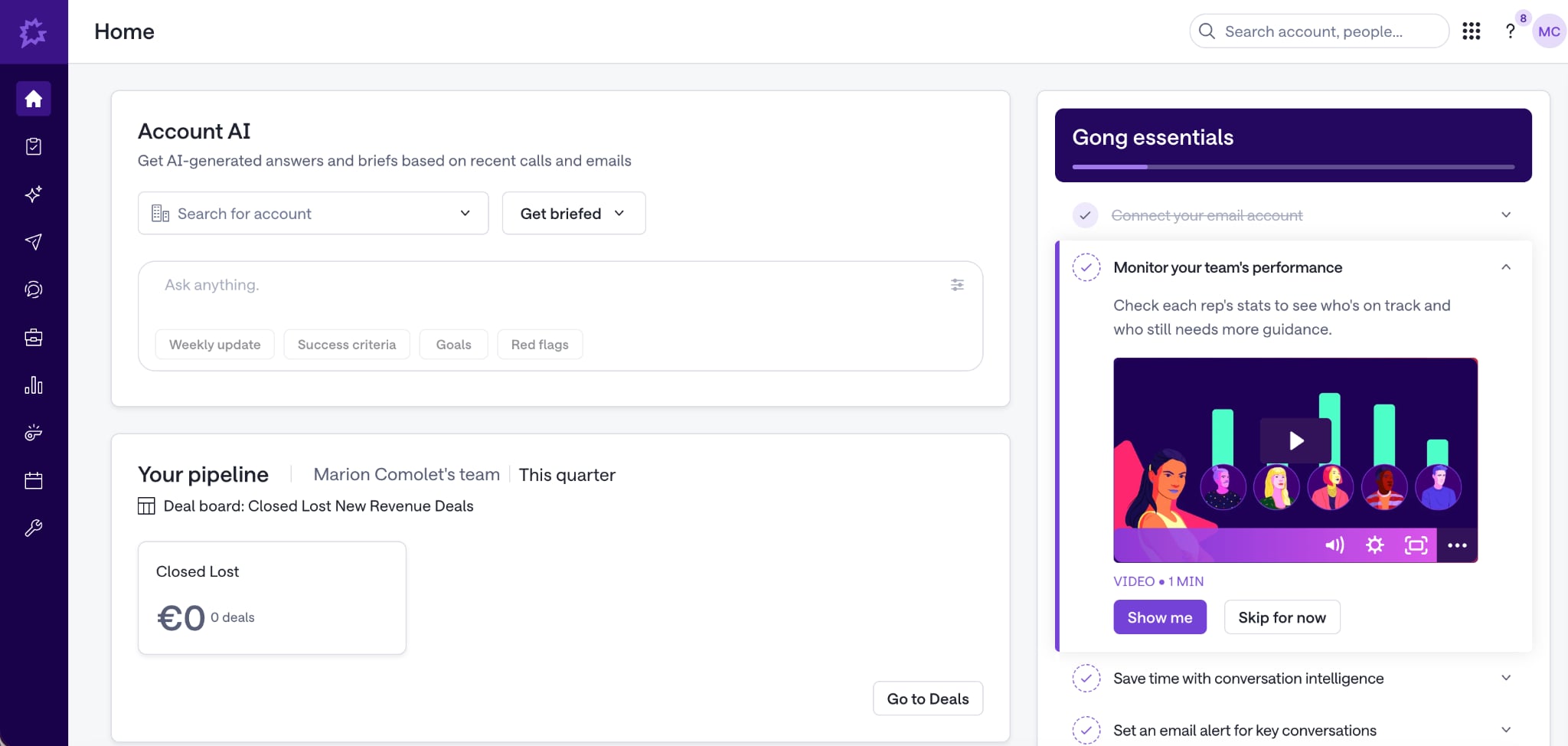
All customer calls are recorded. They can then be analyzed by Gong and flow into Vitally. Pleo notably uses Gong's scorecards.
For example, a team can create a specific scorecard for an onboarding call. Gong then checks whether the CSM asked certain questions, set out the framework of the meeting or covered the expected features.
The criteria can change depending on the type of call. An onboarding call, a call related to a churn risk and an optimization meeting do not have the same analysis grid. Gong is also used to analyze several calls from the same team member and to coach CSMs, AMs and Sales.
Marion Comolet nevertheless keeps a fairly pragmatic approach to these AI analyses:
“There's nothing like actually watching a call to be able to give relevant, tailored feedback.”
For her, automated analysis mainly saves time. When she wants to move fast, the insights and scorecards give her a first read. When she has the time needed for in-depth coaching, she prefers to listen to the call herself.
Gong is also used for churn forecasting. Each month, CSMs enter their forecast for the current month and the following three months, before comparing that estimate with the churn actually observed.
How does Pleo automate its support with Freshworks and Rippit?
Freshworks is the other historical building block of the stack. Pleo uses it to manage support tickets, the Help Center, the knowledge base and the AI chatbot.
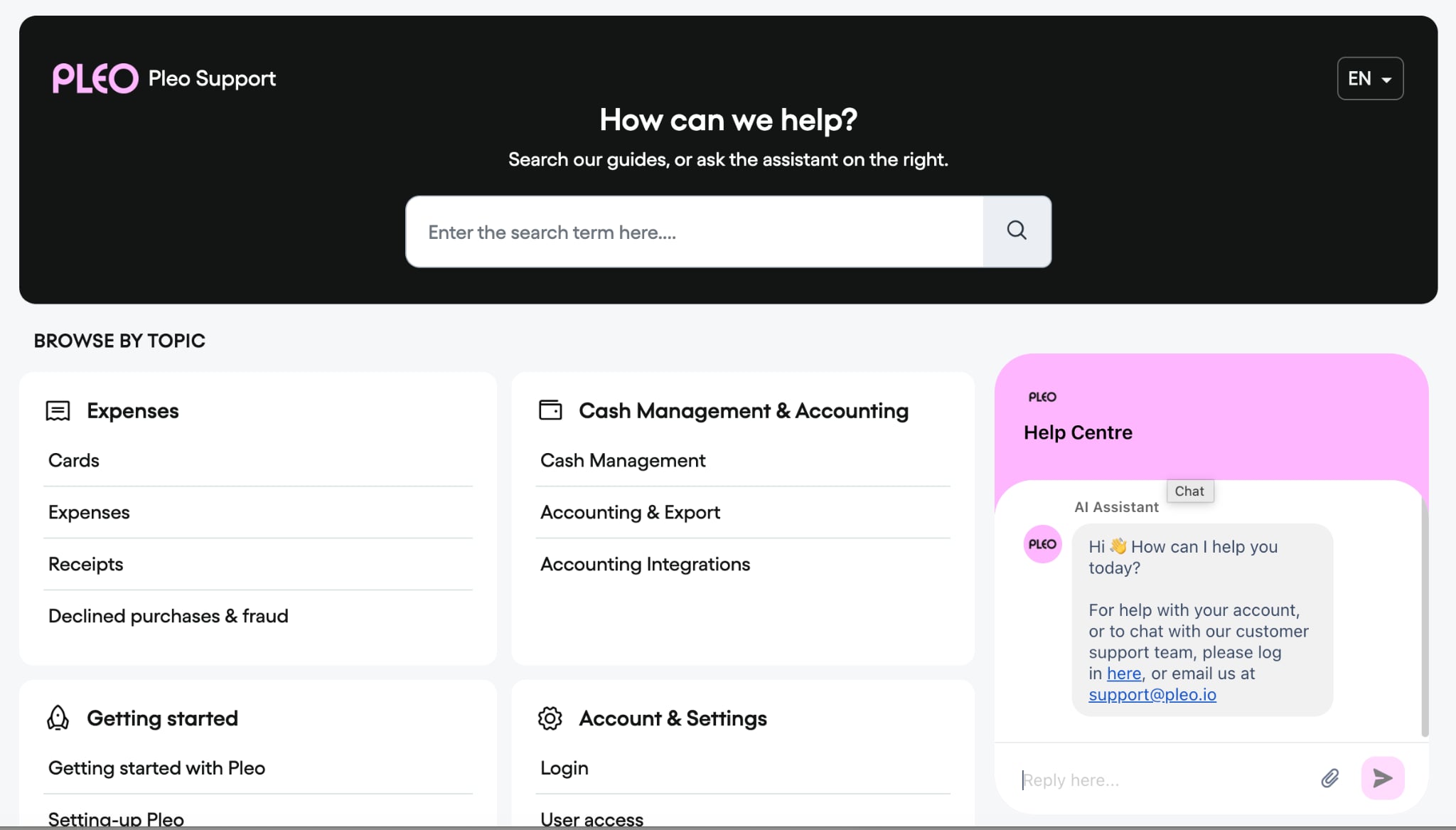
This layer becomes especially important for long-tail customers. For these accounts, Pleo aims more to enable resolution through the bot in the first instance, in order to answer questions faster and avoid the time-consuming task of always answering the same questions. This does not mean CSMs lose interest in these interactions. They also monitor what happens in the bot to make sure self-service customers get appropriate answers.
Freshworks is described by Marion as a very comprehensive tool that evolves quickly. But some needs still require specialized building blocks.
This is notably the case for Quality Assurance.
Pleo uses  Rippit to analyze the quality of Freshworks tickets and bot interactions.
This combination illustrates the overall logic of Pleo's stack: keep a central platform while adding specialized tools when a workflow requires more depth.
Why did Pleo create a community for its 40,000 customers with Circle?
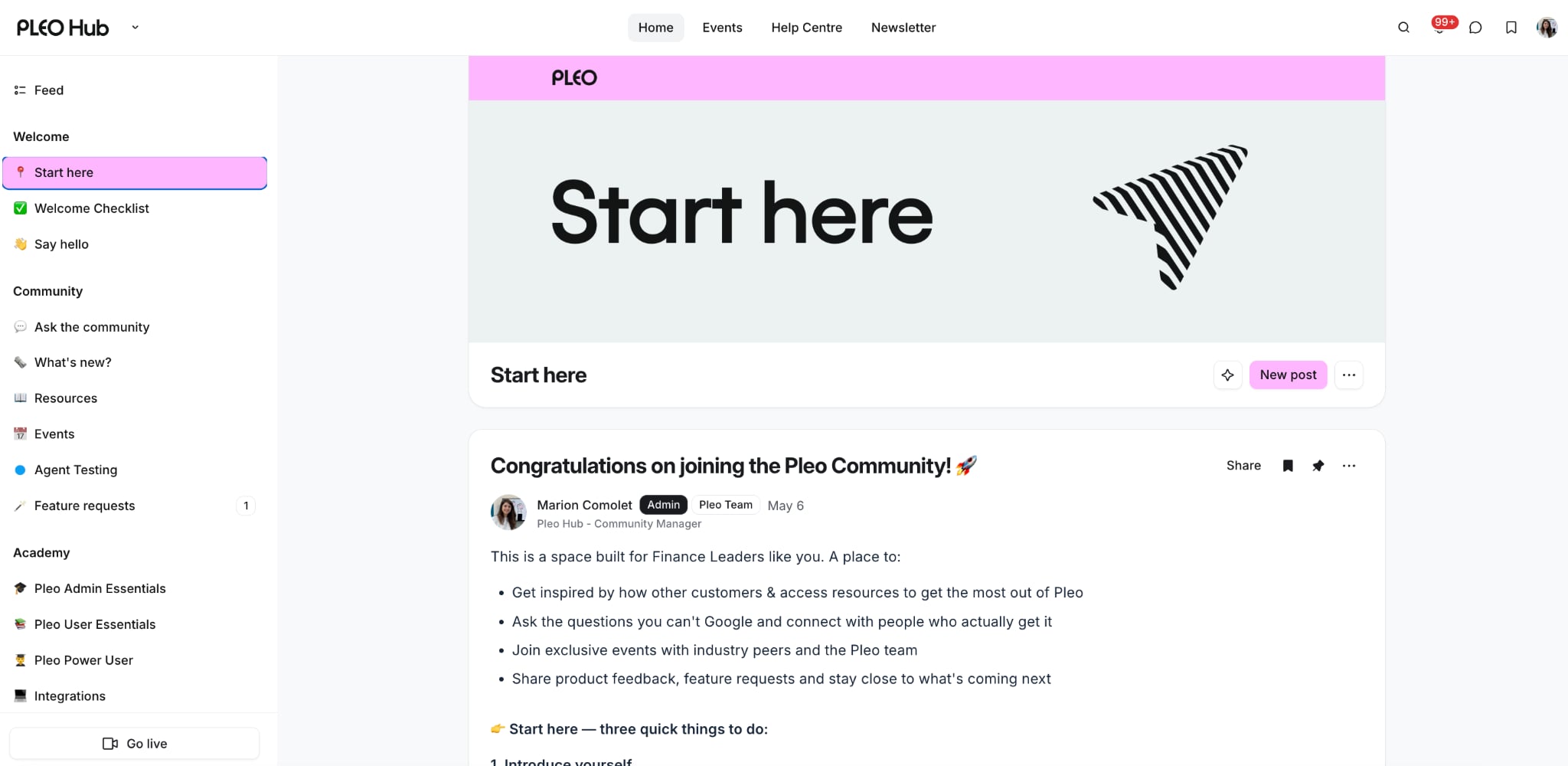
The community directly addresses the scaling problem. Pleo wanted to create a place where customers could find content, ask questions and exchange with other users without systematically depending on a CSM.
“The idea is that our customers can also help each other directly. A CFO who runs into a problem can talk with another CFO who has already been through the same situation and find a solution without necessarily going through our teams.”
Three platforms were considered:  Turf,
 Bettermode and Circle.
Pleo had a good relationship with Turf, but was looking for a platform able to support an immediate opening to a very large population. The team hesitated more between Bettermode and Circle.
Circle was ultimately chosen, notably for its AI features and for the confidence its team gave Pleo in its ability to keep innovating. Marion notably mentions that Circle was already working on MCP at a time when the topic was still not widespread.
Choosing the platform took about two weeks.
Pleo then benefited from about eight weeks of onboarding. Marion points out that the platform was simple enough for the team to handle much of the configuration itself, with the support being mostly useful for certain specific points and to secure the launch.
How did Pleo get 2,000 users on its community?
Pleo did not send its invitations to its entire base at the same time. The launch was organized in four waves.
The first deliberately targeted the most satisfied customers. The goal was to create some initial positive activity before opening the community more widely. Pleo also offered merchandise to the first 30 users posting on the community to get the momentum going.
This first wave quickly generated posts and positive interactions. When the following waves were sent, new members therefore did not land on an empty community.
About 100,000 potential users were invited, since several users can belong to the same customer company. At the time of the interview, about 2,000 people had joined the community, a conversion rate of 2%.
Above all, Marion points out that these first members did not just create an account: some of them posted and took part in the discussions.
The priority is now shifting from acquisition to engagement.
For example, Pleo noticed a strong presence of German users but a lack of content in German. The team therefore plans to increase content production for that market.
How does Pleo produce its educational content with Clueso?
The community also works as a distribution channel for the Pleo academy. To feed this academy, CSMs use  Clueso. About 60 videos were produced in three months.
CSMs record their screen and then use Clueso to produce a more polished video. The tool notably makes it possible to generate an AI voice, edit a passage without re-recording the whole video and adapt the content into many languages.
This last feature is especially useful for a European company like Pleo.
Before Clueso, the teams notably used Tella and Loom.
For Pleo's use case, Marion believes Clueso makes it easier to produce content with a professional look and, above all, to better industrialize multilingual production.
The videos are not personalized customer by customer. They are designed as a shared library for new users, advanced users or certain specific use cases.
Pleo is also developing content more focused on “best practices”: how to make better use of the product or optimize certain workflows.
Tools in this section
How does Pleo maintain human interaction in a self-service model?
The shift to self-service does not mean CSMs disappear. The community also makes it possible to organize virtual events.
Pleo notably offers office hours every week. Customers can join a session and talk with a CSM when they have a question, want to go over a part of the product again or are stuck on a problem.
“Self-service has to let us scale, but never at the expense of the customer experience. Our principle is simple: no customer should ever be stuck without being able to talk to someone.”
Pleo is also considering organizing office hours with company leaders, for example with the CEO or other members of the executive team.
The model taking shape therefore does not pit humans against self-service.
Self-service absorbs the questions that can be solved instantly. The community lets customers help each other. Content addresses recurring issues. And a human remains available when these different layers are not enough.
What AI agent does Pleo want to build for its customers?
The next step is to make the chatbot much more contextual. Pleo started from a fragmented situation: several teams had developed their own bots.
- The sales teams had a bot on the website.
- Support had another one.
- CSMs had also built their own bot for the Help Center.
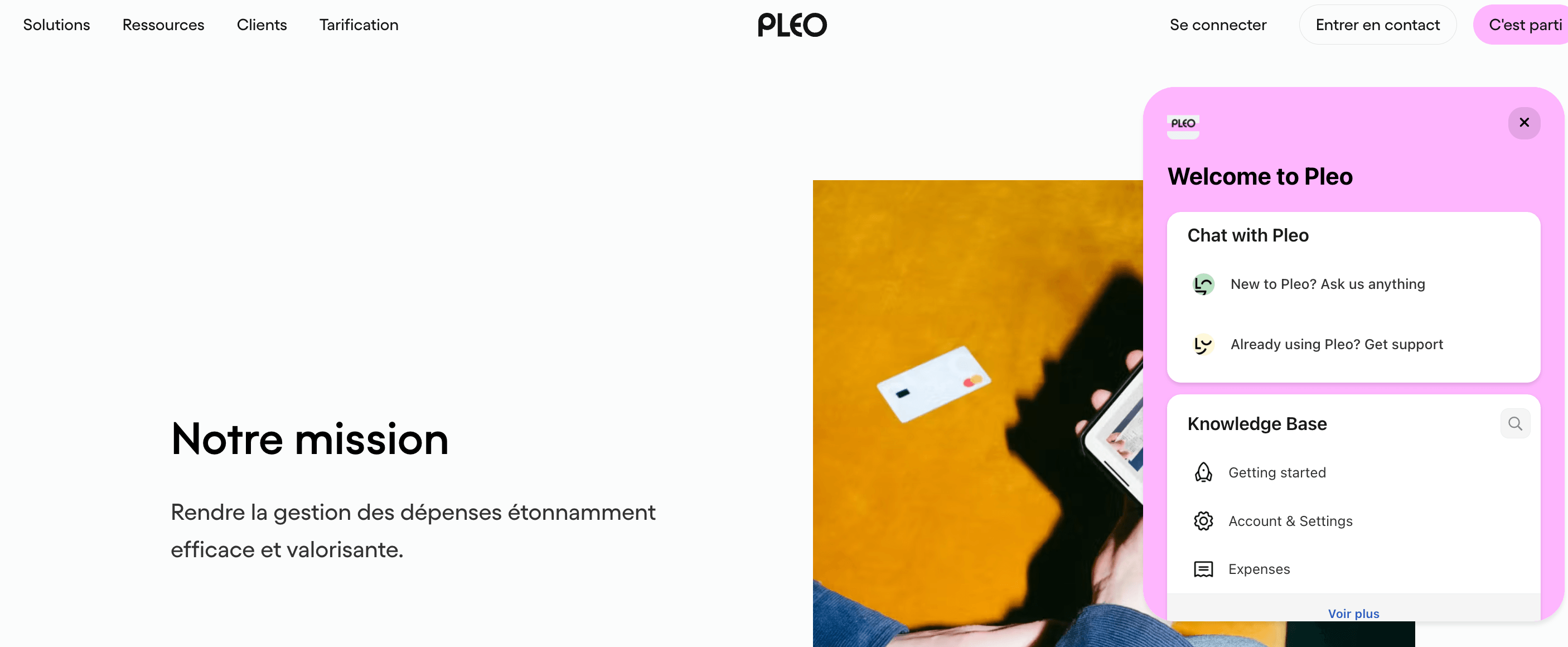
The first project was therefore to start over on a shared architecture. Pleo wants to use the same Freshworks bot on the website, in the Help Center, in the community and in the product.
“Whatever the touchpoint, our goal is for the customer to find the same experience and the same level of response.”
The second step is more ambitious: give the bot enough context to avoid asking the customer for information Pleo already has. Today, a bot may need to ask whether the person is an administrator or a user, or which transaction is causing a problem.
Pleo wants to gradually eliminate these questions. The goal is for the bot to know the customer's context well enough to provide a more relevant, even proactive, answer.
Marion sums up the goal this way:
“We really want to create a relationship of instantaneity with the customer.”
What other tools does Marion Comolet use day to day?
Two other tools stand out from the interview:  Miro and
 Notion.
Marion uses Miro when a problem is easier to represent visually than to explain.
“As soon as a topic becomes hard to explain in words, I prefer to lay it out visually. A diagram often makes it possible to understand the problem much faster.”
Notion plays a different role. Pleo centralizes much of its internal information there: product, processes and documentation. Marion explains that for a long time she was not very convinced by the tool, notably because the amount of information made searching difficult.
Her opinion changed with Notion AI.
She now uses it to search for information in the documentation more easily, find the associated sources and identify pages that may need updating.
What Pleo's CX stack shows
The Pleo case shows that Customer Success at scale does not rely on a single tool.
Vitally gives CSMs a consolidated view of the customer. Gong structures conversation analysis and coaching. Freshworks and Rippit handle support, automation and its quality control. Clueso makes it possible to industrialize customer education. Circle adds a community layer where users can access content, take part in events and help each other.
The next step is to better connect these different data layers to AI.
Pleo's ambition is for a customer to get a contextualized answer immediately when their problem can be automated, while keeping simple access to a human when the situation calls for it.
Summary of the software this article mentions in Pleo's stack
| Status | Workflow | Tool | Usage |
|---|---|---|---|
| In use | Sales CRM | HubSpot | Management of Sales interactions and data |
| In use | Usage data |  Google BigQuery | Feeds the product data used in Vitally |
| In use | Customer Success | Vitally | Daily cockpit for CSMs and centralization of customer data |
| In use | Customer callsForecast | Gong | Recording, AI analysis, coaching and scorecardsChurn forecast filled in by CSMs |
| In use | SupportKnowledgeChatbot | Freshworks | Tickets and support managementHelp Center and knowledge baseAI bot shared across the different touchpoints |
| In use | Quality Assurance | Rippit | Analysis and QA of tickets and bot conversations |
| In use | Video | Clueso | Production of multilingual educational content |
| In use | Community |  Circle | Customer community, content, events and peer-to-peer exchanges |
| In use | Internal documentation | Notion | Knowledge base and internal information search |
| In use | Visualization | Miro | Diagrams and visual representation of problems |