



With 12,000 free trials per month and over 50,000 users, lemlist has built a stack that connects product data, marketing, and sales teams. Nicolas Gromer, Growth at lemlist for three years, discusses the software used, choices inherited from the company's early days, and the automations implemented to convert users into customers.
A stack built around product-led growth
lemlist is a sales engagement platform that allows sourcing, enriching, and contacting prospects across multiple channels. Historically, the company has grown through Product-Led Growth (PLG): users discover the software, try it for free, and then can switch to a paid subscription.
Over time, lemlist has also developed a Sales-Led Growth (SLG) approach, where salespeople engage with higher-potential prospects. This evolution explains a significant part of the company's technological choices.
“We have a product that is both PLG and SLG, but with a stronger PLG history. This led to tool choices at the beginning that are still retained today and might not have been the same if it had been SLG from the start.”
Today, each registration generates data on the user's profile, needs, initial actions in the product, and potential transition to a paid offer. The goal is to circulate this information between software to trigger the right marketing and sales actions.

How lemlist connects BigQuery, RudderStack, and Customer.io
It all starts with the data collected in the product. When a user registers on  lemlist, the company records several events: their registration, responses during onboarding, features used, or even credit purchases.
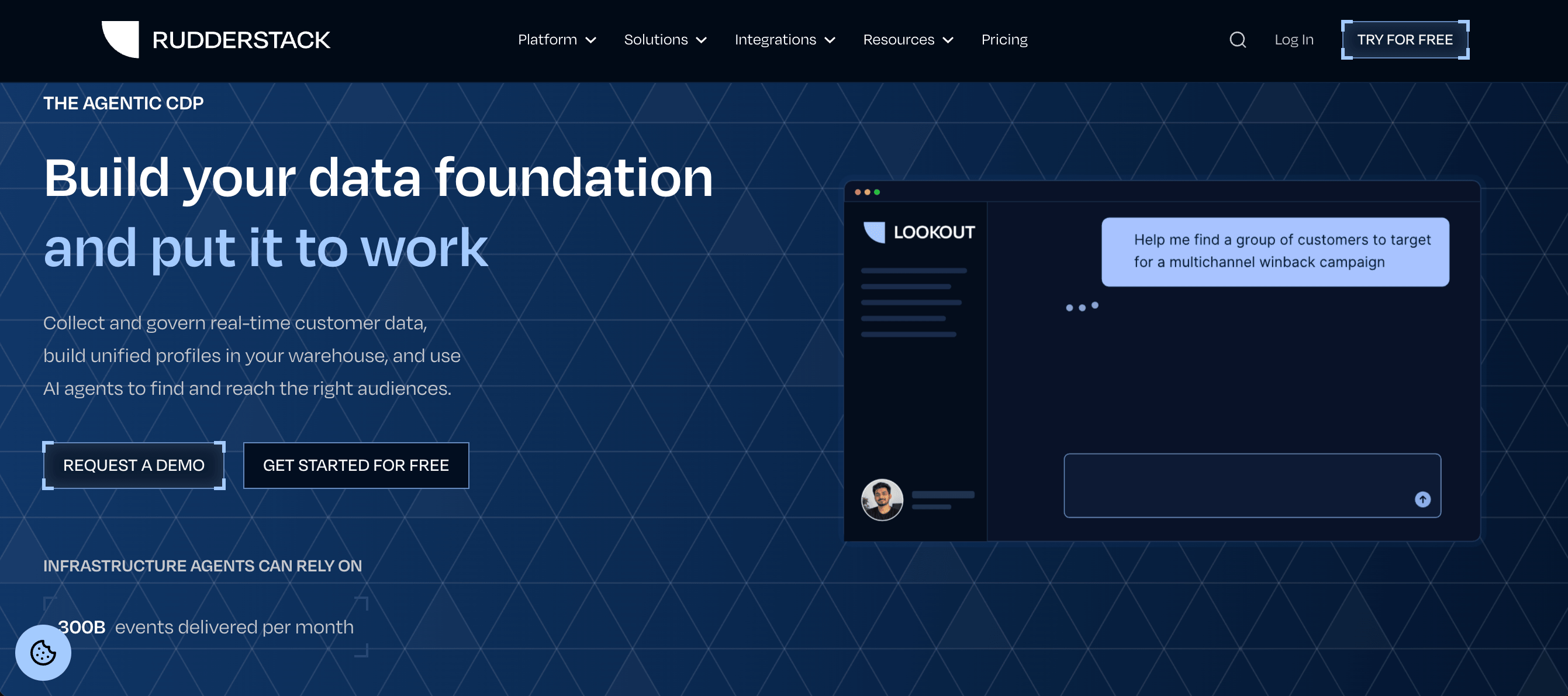
This information is stored in  Google BigQuery, which serves as a data warehouse. To distribute it to other software, lemlist uses
 RudderStack.
“RudderStack allows collecting the data flow and redirecting it to several different applications while maintaining event uniqueness. This helps synchronize the marketing CRM and the Sales CRM, which is HubSpot, and avoids duplicates or data synchronization issues.”
RudderStack retrieves two main categories of events. Frontend events correspond to interactions in the software: creating a campaign, configuring it, or launching it. Backend events are more about operations like billing.
The data is then sent to  Customer.io,
 HubSpot, and other relevant applications, without having to develop an independent integration for each tool.
The choice of RudderStack dates back to a benchmark conducted by the Data team. One of the data architects was already familiar with the software from previous use, which facilitated its adoption.
Customer.io for automating communications
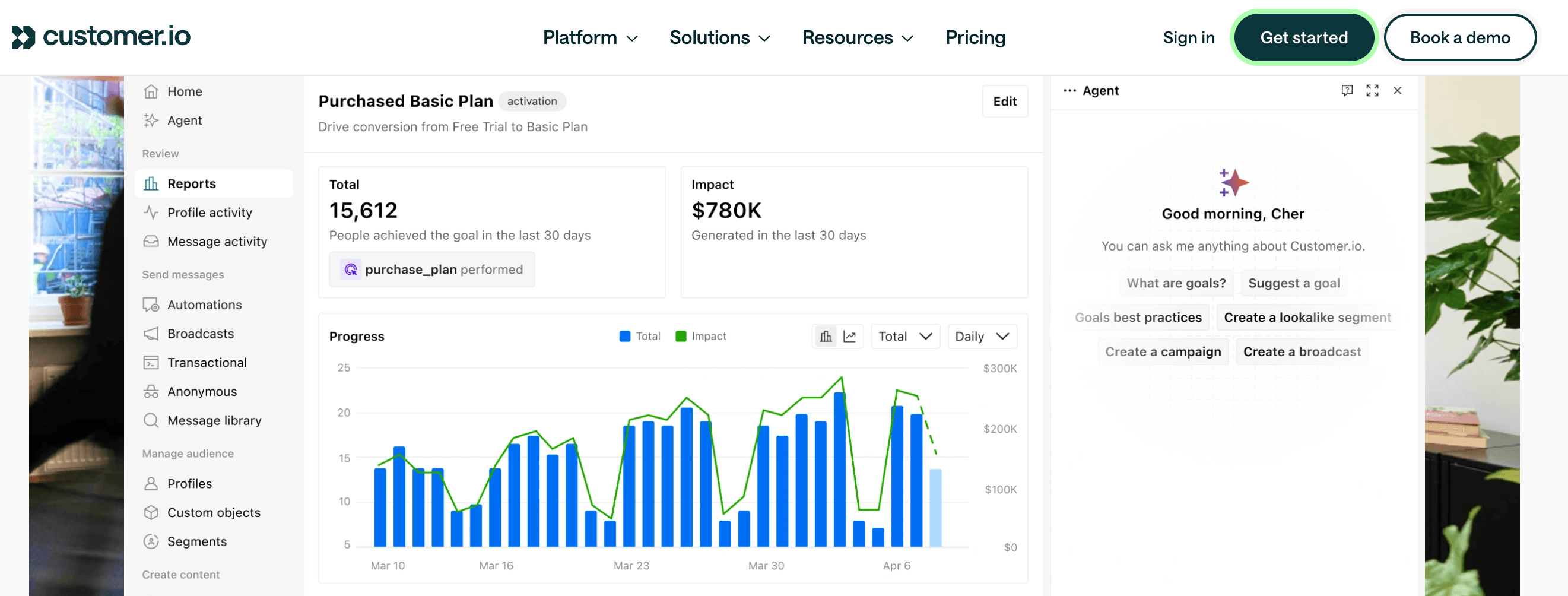
Customer.io is at the heart of lemlist's marketing automations. The company uses it for transactional emails, one-off campaigns, and automated scenarios triggered based on user profiles or behavior.
The tool receives events transmitted by RudderStack, but can also directly retrieve information from BigQuery thanks to its reverse ETL feature.
“Customer.io is very powerful because it has an integrated reverse ETL function. It allows connecting Customer.io to BigQuery and, every day or every two or three days, fetching information. I can then trigger automation, upsell, and cross-sell flows.”
For example, lemlist can periodically retrieve the number of credits purchased by certain users to offer them a complementary offer.
Nicolas thus distinguishes events that require an immediate reaction from information that can be updated daily or every two or three days. The company also benefits from an old Customer.io contract, with certain features whose availability may differ from current offers.
Tools in this section
Customer.io and Intercom for personalizing onboarding
Not all users sign up for lemlist for the same reasons. Some want to send email campaigns, others to automate their LinkedIn prospecting or enrich prospect lists.
The company uses the responses collected during registration to tailor its communications. Nicolas himself built the email journeys in Customer.io.
When a user registers, a webhook can send their information to  n8n, which retrieves additional data and contributes to their segmentation. Customer.io then takes over to send the tailored communications.
Why lemlist keeps Intercom despite its limitations
For in-app notifications, lemlist uses  Intercom, managed from Customer.io.
Consider a user who has completed part of their onboarding but still hasn't launched their first campaign. Customer.io can assign them a tag in Intercom. Upon their next login, a popup appears to encourage them to take action.
The system allows for coordinating emails and notifications within the software. However, Nicolas is quite critical of the possibilities offered by Intercom.
“Intercom still has a lot of work to do on the in-app part. The design is still quite basic, very little can be modified. And it works with tags: you have to tag a user, remove the tag if you want to retag them a second time. It's quite limiting.”
This tag management complicates certain scenarios and can prevent messages from being sent.
“Intercom is not the product I would recommend for this part, except that it was already in place with us.”
lemlist had tested another specialized solution, priced around $600 per month, but its value for money did not convince the team.
Intercom therefore remained in place. Changing software would have involved revisiting already operational integrations, for a benefit that did not necessarily justify the effort.
Tools in this section
How lemlist turns its PLG users into business opportunities
Product-Led Growth is also an important source of leads for the sales teams.
The information collected during onboarding allows for the personalization of prospecting campaigns according to the user's profile. A Head of Sales can thus receive an email sent in the name of lemlist's Head of Sales. A salesperson will be contacted by a salesperson, while a CSM can receive a message from a CSM.
These campaigns are orchestrated from Customer.io, notably thanks to webhooks to lemlist. The goal is to turn product users into business meetings, with contact tailored to their role.
Emails remain the main channel used. LinkedIn is more reserved for opportunities deemed particularly interesting.
Why not call all promising users directly?
The question arose at lemlist. But the sales teams already have a lot on their plate.
According to Nicolas, inbound represents nearly 80% of commercial activity, compared to about 20% for outbound. Demo requests and intent signals already generate a significant volume of work. Systematically calling all PLG users with commercial potential would therefore add a significant burden.
The company has nevertheless hired two BDRs to experiment with this approach. At the time of the interview, this organization is still recent.
Why lemlist chose Default over Chili Piper
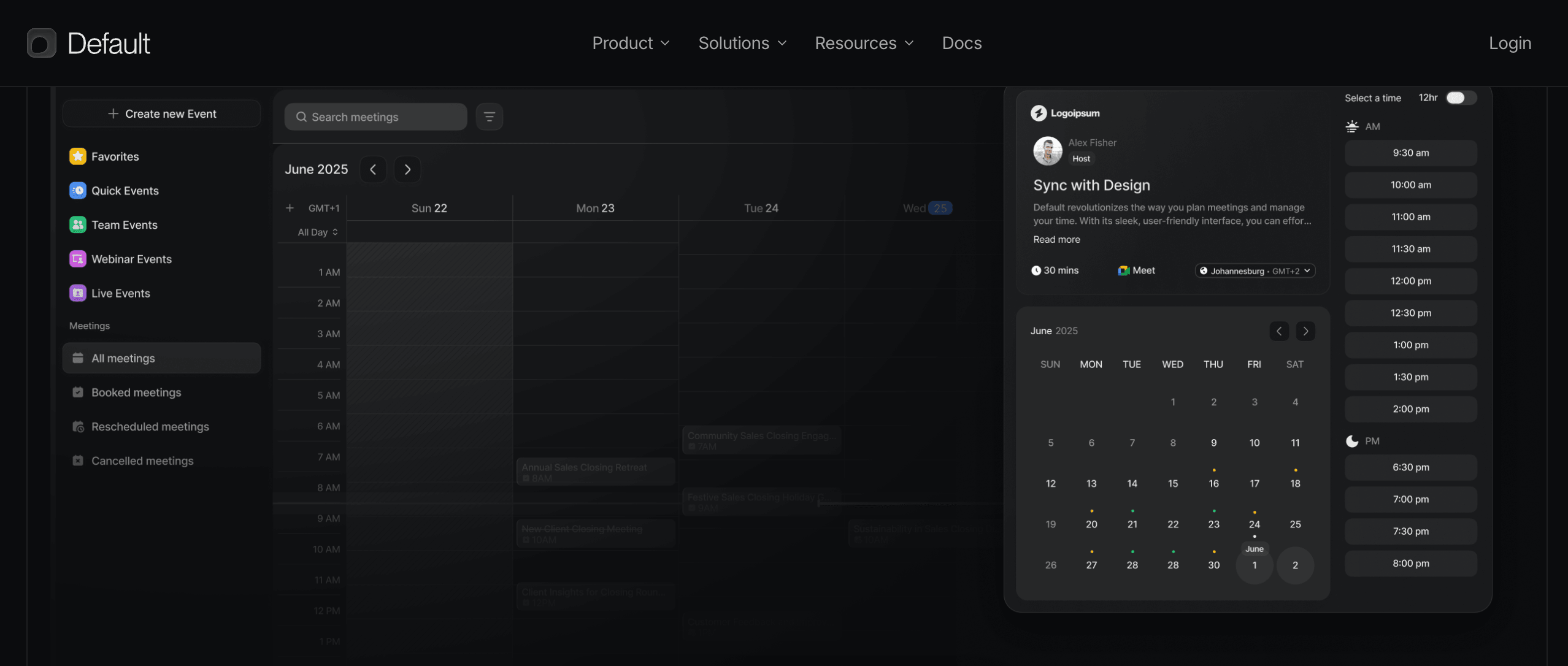
When a prospect requests a demonstration, it's essential to direct them to the right salesperson. At lemlist,  Default handles this task.
The company compared Default and  Chili Piper before making its choice.
Default distributes requests based on several criteria: industry, company size, language, or the existence of an account manager already associated with the prospect in HubSpot.
If an account has a sales contact, the tool can maintain this assignment.
Default is directly connected to HubSpot. The collected information can also be sent to Customer.io via RudderStack. This allows, for example, to automatically follow up with a prospect who filled out a form without booking an appointment.
Nicolas appreciates the operational functionality of Default and its integration with the website forms. However, he is less convinced by its analytical features.
“Default works quite well and integrates well with a website's native forms. However, they have somewhat neglected performance analysis. There are very few filters to analyze all the leads collected.”
Some bugs have also been encountered. For lemlist, Default remains primarily a good lead distribution tool rather than a solution for in-depth performance analysis.
Tools in this section
HubSpot, a CRM retained since the beginning
HubSpot is the central CRM for lemlist to manage accounts and sales opportunities.
Its adoption did not result from a major benchmark pitting HubSpot against Salesforce. The explanation is simpler: HubSpot was already present in the company.
When lemlist began to structure its sales organization, the teams naturally used the existing CRM.
“There was already a HubSpot created a long time ago. When we started to implement the Sales motion, we naturally relied on what already existed. We didn't have visibility on the fact that the Sales motion would take off as it has today.”
Supersonic to automate part of the demonstrations
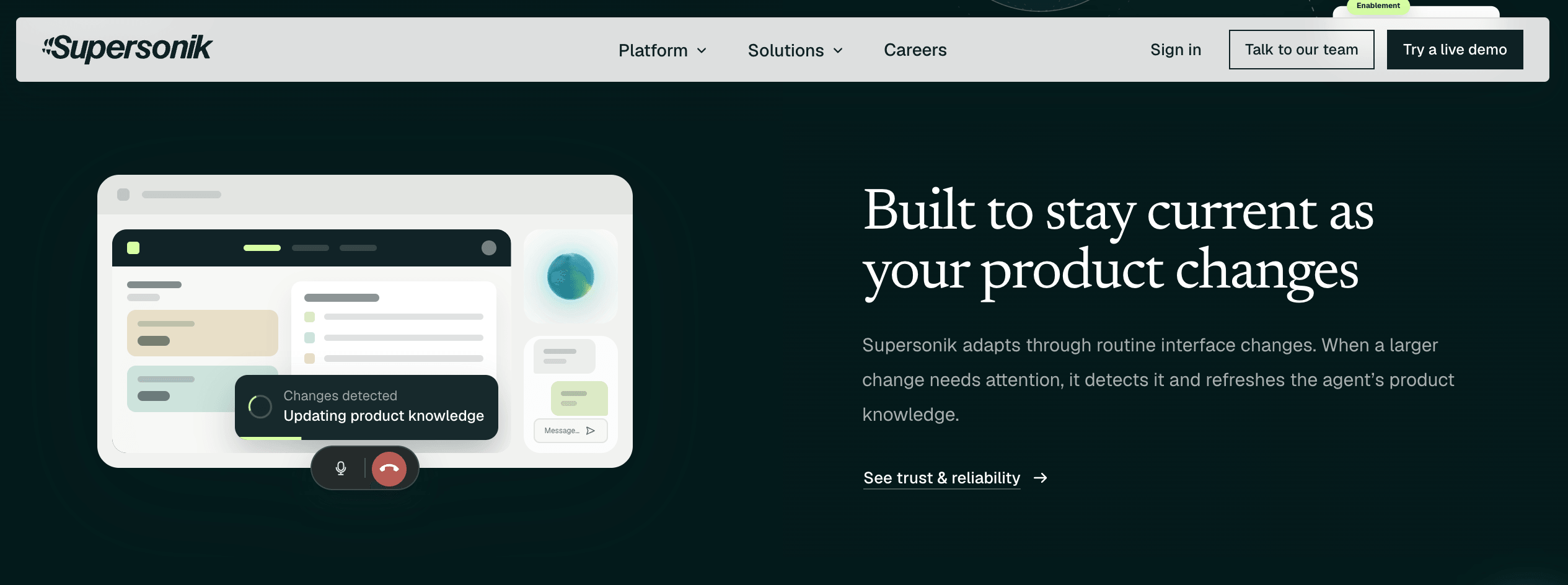
Not all demonstration requests are handled by a salesperson. For some prospects, lemlist uses  Supersonik, an AI-assisted demonstration software.
The operation resembles an interactive product tour but with a conversational dimension. An AI verbally asks the prospect questions to understand what they want to do with lemlist. Based on their answers, it presents videos showing the corresponding features.
“Supersonic is a bit like a product tour, except an AI asks you questions verbally. You answer, and it shows you, with a video, how to do that in lemlist. The performance is decent, even if it doesn't perform as well as a demo handled by a salesperson.”
Its main challenge remains maintenance. The lemlist product evolves rapidly, and the videos must be regularly updated. A person from the enablement team is specifically responsible for this task.
Supersonik thus allows more sales time to be reserved for the most promising opportunities, even though human demonstrations remain more effective.
Tools in this section
Intent signals used by lemlist for prospecting
For its prospecting, lemlist extensively uses its own software. Among the various signals available, Nicolas particularly highlights the identification of website visitors.
“The signal we use the most is the website visitor. Someone signs up but is not active in the product. We know they continue to visit the website, or someone from their company visits the site. We then trigger a lemlist campaign to contact their Head of Sales.”
This is known as multithreading: contacting multiple stakeholders within the same account.
lemlist also leverages other signals, such as interactions with LinkedIn posts, connections with competitors, job offers, or job changes. However, signals related to competitors are used less frequently than others.
Calling directly integrated into lemlist
The sales teams also use the telephony features integrated into lemlist. Nicolas describes a product that has gradually evolved, from the initial telephony integrations to the purchase of numbers and the development of more advanced features.
At the time of the interview, the company is particularly preparing a parallel dialer, as well as a sales floor designed to monitor and compare sales activities.
These developments are primarily driven by the product team, which notably includes a Product Manager dedicated to calling.
Slack and n8n to centralize sales responses
lemlist also uses Slack to centralize responses to outbound campaigns.
When a prospect responds to a lemlist campaign, their message is automatically sent to a Slack channel corresponding to their sales region. This way, everyone can track the responses received, even when a salesperson is absent.
The team has also developed a response suggestion system with n8n. When a prospect responds, a workflow analyzes their profile and message to propose a pre-filled response.
“When a response to an outbound lemlist campaign arrives, it shows up in Slack. Each Sales region has its own channel. This helps avoid gaps when someone is absent. We also have pre-filled response suggestions based on the lead.”
This feature is not yet fully integrated into the lemlist product.
The company is accustomed to testing new use cases internally before offering them to its clients. Feedback from the person in charge of outbound can directly feed into the product roadmap. Some features experimented with internally are then integrated into the software in the following weeks or months.
Slack to track leads from marketing campaigns
lemlist broadcasts ads on LinkedIn and Meta offering to create a personalized outbound playbook.
Prospects fill out a form with information about their company, market, and needs. The responses arrive in a Slack channel called “Paid Social Lead Monitoring.”
Salespeople and BDRs can then contact the prospects, while marketing tracks the volume and quality of leads generated. Nicolas mentions 30 to 40 leads per day coming from these campaigns.
Why lemlist replaced Webflow and WordPress with Storyblok
The website redesign is one of the most significant projects described by Nicolas.
Historically, lemlist used  Webflow for its main site and
 WordPress for its blog.
Over the years, this setup became difficult to maintain. Content was spread across two CMSs with different structures, and teams had to deal with translation, SEO, and collaboration constraints.
“Webflow was too expensive for our use, and very limiting as well. The translation and localization features for pages were not optimal at all. We also couldn't have two people designing a page at the same time.”
The company eventually decided to migrate to  Storyblok, a headless CMS that separates content management from its technical implementation. Team members can now work simultaneously on their pages, with more flexibility in their construction.
Eight months of migration to revamp over 12,000 pages
The main challenge was to revamp the existing content. According to Nicolas, the site had over 12,000 historical pages spread between WordPress and Webflow.
The team had to identify which content to keep, clean the data, review the site's architecture, and prepare it for internationalization.
“We worked on the migration to Storyblok for eight months because there was a lot of legacy. We had the blog on WordPress and the main site on Webflow. There were over 12,000 pages, and we had to clean up what we wanted to keep.”
In parallel, the rebranding took about six months of work.
The design team, along with Domitille, studied numerous SaaS sites to find references.
The final identity chosen is based on a space theme, linked to the origin of the name lemlist.
Figma and Claude Code to accelerate the redesign
The mockups were created in  Figma, with numerous tests using
 Claude.
Once the designs were approved, the teams used Claude Code to implement the pages in the source code, interacting with Storyblok.
The production rollout occurred in two phases. A staging version incorporating the new design was first prepared over about three weeks. The pages were then published, with numerous compatibility tests.
Tools in this section
How lemlist analyzes journeys between its site and product
RudderStack not only collects events within the software. It is also used on lemlist's website to link site interactions with behaviors observed in the product.
For example, the company can identify the pages viewed by a registered user when collection conditions allow. In Europe, Nicolas notes that this depends particularly on cookie acceptance.
However, RudderStack does not have the same role as a product analytics tool like Amplitude. It is primarily used to collect and distribute events, even though this data can later be used to analyze journeys.
In parallel, lemlist is experimenting with  PostHog, particularly for its heatmaps. Nicolas is satisfied with this use, but the company is still evaluating the tool before deciding to keep it permanently.
Other software used at lemlist
Beyond PLG and sales, lemlist relies on several specialized tools for content, advertising, and internal functions.
SEO, GEO, and content production
For its SEO and GEO content production, lemlist uses  AirOps, connected notably to
 Semrush and
 Google Search Console.
Nicolas describes an organization capable of producing, rewriting or merging 50 to 80 articles per week, with a high level of workflow automation. This operation is the subject of a dedicated article.
Paid acquisition and advertising creation
lemlist uses Google Ads, Meta Ads, and LinkedIn Ads for its acquisition campaigns.
Nicolas manages part of these operations with Claude and  AdKit, particularly to create campaigns and analyze their performance.
The design team also uses  Higgsfield to produce advertising videos. However, Nicolas notes that some static creations achieve better results than videos.
HR, recruitment, finance, and development
For human resources, lemlist uses  Lucca, which covers leave, personnel management, onboarding, interviews, and various HR processes.
Recruitment relies on  Ashby to post job offers and track applications.
 Welcome to the Jungle notably provides greater visibility for positions among tech professionals. The recruitment team consists of two people, one specializing in technical profiles and the other more generalist.
On the finance side,  Stripe is used for billing. Some expense report processes go through Slack workflows.
Summary of the software this article mentions in lemlist's stack
| Status | Workflow | Tool | Usage |
|---|---|---|---|
| In use | Data warehouse | Google BigQuery | Product data storage |
| In use | Data infrastructure | RudderStack | Event collection and distribution |
| In use | Marketing automation | Customer.io | Emails, segmentation, and reverse ETL |
| In use | Automation | n8n | Webhooks, enrichment, and response suggestions |
| In use | CRM | HubSpot | Account and sales opportunity management |
| In use | In-app engagement | Intercom | Popups and notifications, despite some limitations |
| In use | Sales engagement | lemlist | Prospecting, intent signals, and calling |
| In use | Lead routing | Default | Demo request qualification and distribution |
| Dropped | Lead routing | Chili PiperDropped | Alternative compared to Default |
| In use | AI demonstration | Supersonik | Automated and personalized demonstrations |
| In use | Collaboration and operations |  Slack | Outbound responses, lead tracking, and internal workflows |
| In use | Headless CMS | Storyblok | New website management |
| Replaced by Storyblok | CMS / Website builder | WebflowReplaced by Storyblok | Former main site CMS, replaced by Storyblok |
| Replaced by Storyblok | CMS | WordPressReplaced by Storyblok | Former blog CMS, replaced by Storyblok |
| In use | Design | Figma | Rebranding and mockup creation |
| In use | Artificial intelligence | Claude | Design, analysis, and automation |
| In use | AI-assisted development | Claude Code | New site implementation |
| Dropped | Web and product analytics | PostHogDropped | Heatmaps under experimentation and design reference |
| In use | Content automation | AirOps | SEO/GEO production and optimization |
| In use | SEO | Semrush | Keyword research |
| In use | SEO | Google Search Console | Search data |
| In use | Advertising |  Google Ads | Paid acquisition |
| In use | Advertising | Meta Ads | Acquisition and lead magnet campaigns |
| In use | Advertising | LinkedIn Ads | Acquisition and lead magnet campaigns |
| In use | Advertising automation | AdKit | Campaign management with Claude |
| In use | AI video generation | Higgsfield | Creation of advertising videos |
| In use | HRIS | Lucca | HR management and onboarding |
| In use | ATS / Recruitment | Ashby | Job posting and application management |
| In use | Recruitment | Welcome to the Jungle | Job posting and visibility |
| In use | Payment / Billing | Stripe | Billing |
| In use | Hosting / Development |  Vercel | Side projects |