



At Folk, the support team is still a single person despite strong business growth over three years. Julien Frèche, who joined the company to grow revenue and sales operations, explains how Intercom Fin now handles about 70% of customer requests, thanks to regularly updated documentation, escalation rules and human oversight of conversations.
Three years ago, Folk had a single person on customer support. Since then, the company's ARR has grown sharply, but the support team has not grown.
Folk sells a CRM built for B2B teams. Its users regularly contact support to understand certain features, configure their environment or use the product's integrations. As the company grew, the volume of requests naturally increased, without headcount keeping pace.
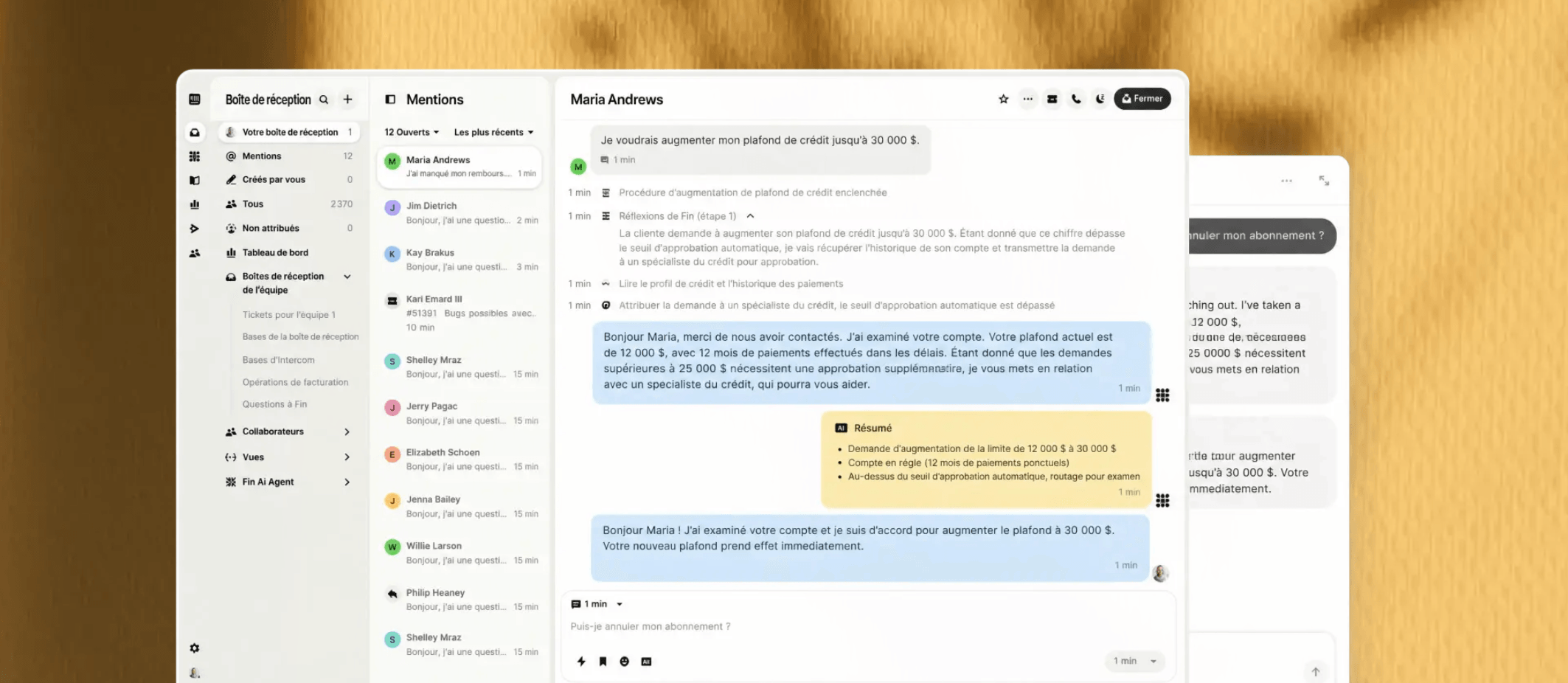
Part of this growth could be absorbed thanks to  Fin, Intercom's AI agent, which now handles about 70% of customer requests. But Folk did not just switch on a chatbot. The company gradually organized its support around Fin, with a precise knowledge base, rules for knowing when to hand over to a human, and a weekly review of conversations. At Folk, the teams notably keep responsibility for closing tickets.
Tools in this section
Why Folk uses Fin for all its customers, including key accounts
When Fin launched, Folk chose to be cautious. Automated answers were mainly reserved for small teams, while the largest customers more systematically got a human response.
This distinction gradually disappeared. Fin now works across all customer segments, including key accounts. The main reason is response speed.
“At first, we reserved Fin for small teams. But we realized it also improved the experience of our big accounts: Fin answers in under two minutes, 24 hours a day, whereas our human support takes half an hour at the median.”
This availability is particularly useful for international customers. Folk notably targets the US market, with users active at different hours from the French team.
For Julien, this speed directly improves the customer experience, provided the answers are reliable. That is why Folk places so much importance on the documentation Fin uses.
Documentation centralized in Intercom, improved every Friday
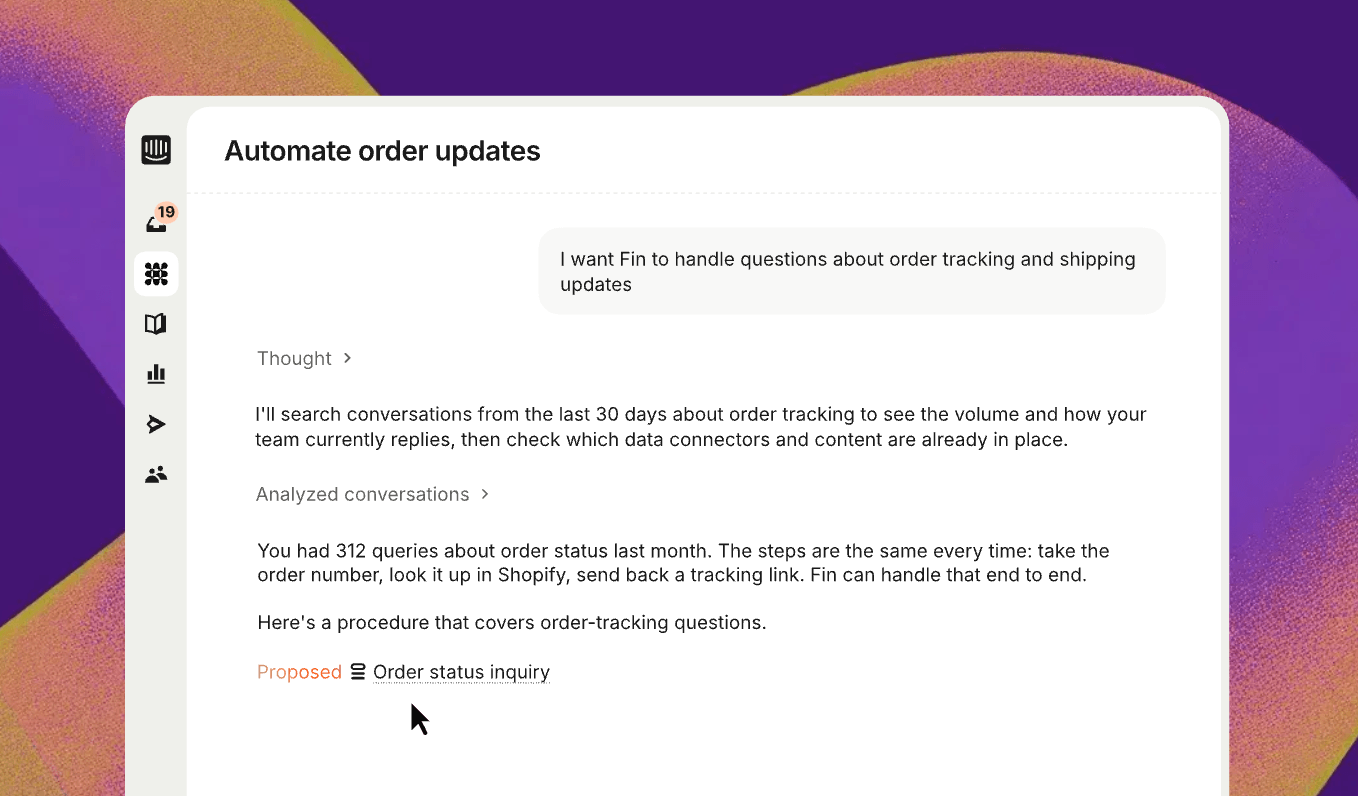
One of Folk's main lessons concerns how its knowledge base is organized. To answer correctly, Fin needs precise, regularly updated information.
The company uses Intercom to host its public Help Center, with articles intended for users. It also has private articles, accessible to Fin, to document procedures or situations that are not meant to be published. The agent can also draw on some of the information available on Folk's website.
This setup requires discipline: every significant product change must come with a documentation update.
“Using Fin adds an extremely interesting constraint: all your context and all your documents have to be up to date.”
Julien sees this constraint as an advantage. It pushes the teams to keep their articles up to date, identify outdated information and better formalize certain internal procedures.
Folk also uses  Notion for some internal processes, but this documentation is not connected to Fin. The knowledge the agent uses remains mainly centralized in Intercom.
Thirty minutes every Friday to correct Fin's mistakes
Even with well-organized documentation, Fin can get things wrong. This happens in particular when a feature changes and the agent keeps relying on an old explanation.
To limit these mistakes, the team has set up a ritual:
“Every Friday, we take half an hour to go over Fin's conversations. When an answer is wrong, we add a snippet with the question and the right way to answer. Updating the Help Center isn't always enough.”
These snippets make it possible to give the agent specific information or instructions, especially when a mistake keeps coming back. This is one of the interesting points of this experience: fixing a Help Center article is not always enough to change Fin's answers. Sometimes more explicit instructions need to be added to keep a mistake from happening again.
Julien describes this method as a form of reinforcement learning. In practice, Folk mainly improves the knowledge and instructions given to the agent, based on the conversations it observes. The team identifies the gaps, fixes them, then checks whether the following answers are better.
Tools in this section
The limits of automation: when a human takes over
Folk has not given Fin free rein. The company has defined several rules to keep the agent from stepping in on topics that require a human answer.
The first category concerns the nature of the requests. Questions related to pricing, in particular, are reserved for the sales or Customer Success teams. Folk prefers to keep a direct relationship with its customers on these topics, which can have commercial consequences.
Bug reports can also require human intervention. Fin can take part in the first exchanges, but some situations have to be passed on to a team member.
The third category concerns conversations already underway with a Folk employee. The company had run into situations where Fin stepped into an exchange between a customer and a team member, even though the latter had already taken charge of the request.
“We exclude Fin from pricing-related topics so that sales and Customer Success can answer. We also exclude it from conversations where a Folk employee is already involved, so the AI doesn't answer in place of our teams.”
At Folk, only a human can close a conversation
Another rule sets Folk's setup apart: Fin is not allowed to close tickets on its own.
“Only a human can close a conversation.”
This decision addresses a concrete risk. An AI agent may consider that it has answered a question when the customer has not actually gotten what they were looking for. If the ticket is closed automatically, this dissatisfaction can go unnoticed.
By keeping a human sign-off, Folk aims to make sure requests have been handled correctly. It is also an opportunity to spot answers that seem satisfactory but do not solve the customer's problem.
Why Folk is hesitant to connect Fin to its product code
To further improve Fin's answers, Julien is considering another option: giving the agent access to certain information from Folk's code.
The benefit would be to let it answer more complex technical questions, with a more precise understanding of how the CRM actually works. This could be especially useful when the product evolves faster than the Help Center articles.
But this idea raises security questions.
So Folk has not yet connected Fin to its code. For Julien, such a change would require protections strong enough to prevent any leak of sensitive information.
Intercom: an expensive platform, but central to the customer relationship
Beyond Fin, Folk uses Intercom as a central platform for several customer relationship activities.
The tool brings together support conversations, user information, onboarding emails and communications displayed directly in the product.
Usage data is notably collected through  Segment, then sent to Intercom. Other information can be synced from Folk's data warehouse, hosted on AWS. These connections make it possible to trigger communications based on user behavior, such as onboarding emails or in-app pop-ups.
Folk has also used Intercom's product tours, the guided flows that walk users through different steps of the product. But the company has cut back on them. Julien believes these flows can be frustrating when they force too many successive steps in the interface.
Folk does, however, keep using in-app communications, which make it possible to display messages directly in the CRM.
That leaves the question of price. Julien considers Intercom expensive, but Folk remains satisfied with the tool. The reason lies notably in the breadth of its features: Intercom makes it possible to centralize customer knowledge, automated communications, support and the Fin agent.
Rather than multiplying software and integrations, Folk keeps a shared platform to manage a large part of its interactions with users. Its cost must therefore be weighed against the time the teams save and the company's ability to support its growth with a single person on support.
Summary of the software this article mentions in folk's stack
| Status | Workflow | Tool | Usage |
|---|---|---|---|
| In use | CRM |  folk | Product sold by the company, the source of support requests |
| In use | Support and customer relations | Intercom | Conversations, Help Center, onboarding, in-app communications and product tours (reduced use) |
| In use | Internal documentation | Notion | Managing some internal processes, not connected to Fin |
| In use | Data collection | Segment | Collecting user events and sending them to Intercom |