


This article was written by Atlas following an interview with Yves Le Grouyer, Chief Marketing Officer, conducted in November 2026.
iAdvize develops an AI Shopping Assistant for retailers and e-commerce businesses. The company has about 150 employees and supports just over 400 clients in Europe and the United States.
Yves has been working at iAdvize for eight years and currently leads the marketing team. He also participated in a significant project to streamline the company's tools starting in 2021-2022.
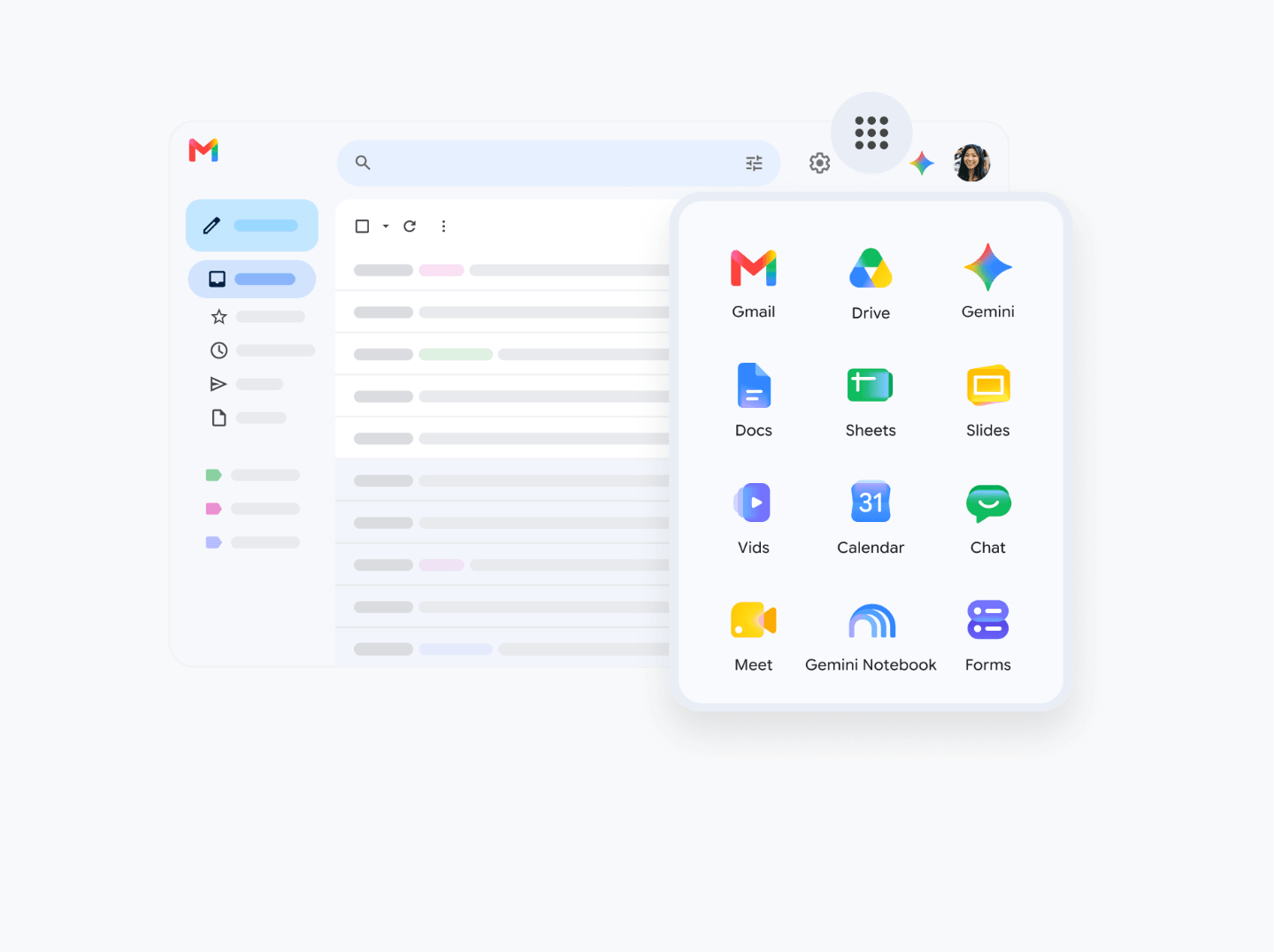
At the time, the accumulation of SaaS was beginning to create redundancies. iAdvize notably replaced Dropbox with Google Drive and consolidated more uses around Google Workspace.
Why did iAdvize streamline its software in 2021-2022?
The issue wasn't with any particular software, but with their accumulation over the course of growth. Teams could choose their own solutions, and some needs ended up being covered multiple times.
“We had reached the point where two teams could separately purchase licenses for the same tool.”
iAdvize therefore initiated a major cleanup of its stack. Yves Le Grouyer does not advocate for a minimal stack at all costs. The company continues to use specialized software when it meets a sufficiently important need.
What has mainly changed is the level of scrutiny before introducing a new tool.
Why did iAdvize replace Dropbox with Google Drive?
 Dropbox is one of the simplest examples of this rationalization.
iAdvize used it for storage before migrating to  Google Drive. The decision was primarily economic: the company already pays for Google Workspace, particularly for its emails, and therefore has Drive included in the same suite.
“When you pay for Google Workspace, you already pay for Google Drive. So why pay for something else?”
The logic has remained the same since: before adding software, the company first checks if a tool already present in its stack can adequately meet the need.
Tools in this section
Why does iAdvize work without Notion?
Internal documentation follows a fairly similar logic.
iAdvize works extensively in Google Docs and has not added  Notion as a documentation platform.
The Message Map of the marketing team is a good example. The brand platform, vision, differentiators, personas, use cases, and even the product structure are grouped in a Google Doc.
With Drive, Docs, Sheets, and Slides, a large portion of the company's documents thus remains in the same environment.
Yves does not consider Google Docs to be better than Notion. The question is simpler: what would Notion bring that is significant enough to justify adding a new platform?
Why does iAdvize use Google Chat instead of Slack?
The entire company uses Google Chat for instant messaging.
Yves Le Grouyer acknowledges, however, that  Slack goes further in certain uses. He specifically mentions automations and some integrations with Salesforce.
But since the Covid period, Google Chat has evolved enough to meet the company's daily needs, particularly with threads and its integration capabilities.
Yves also points out a limitation that more broadly concerns chat tools: conversations accumulate without necessarily becoming an easily exploitable knowledge base over time.
Above all, Google Chat is already deployed throughout the company and included in Google Workspace. Switching to Slack would therefore mean paying for a new solution and migrating the entire company to benefit from additional features that, so far, have not been deemed sufficiently decisive.

How does iAdvize decide if a new SaaS is worth purchasing?
The rationalization of 2021-2022 left a fairly simple rule.
“To add an extra tool, you really have to prove its ROI.”
The license price is not the only issue. Adding a SaaS also means managing its integration, administration, access rights, and the adoption of a new interface by the teams.
This does not prevent iAdvize from purchasing specialized software when the need justifies it.
 Lucca covers most HR topics, while
 Swile is used for meal vouchers.
Can AI lead iAdvize to eliminate more small SaaS?
For Yves Le Grouyer, AI could extend this rationalization in another way.
Some small software solutions meet very specific needs. Until recently, even for a relatively simple tool, buying a SaaS was often more rational than developing the same thing in-house. AI-assisted development tools are beginning to change this decision-making.
Yves believes that some small needs can now be covered by internal tools built much more quickly. He obviously does not think that iAdvize will rebuild  Salesforce or Lucca. These platforms are too structuring and too complex.
The question arises more for small peripheral SaaS whose value is based on a few well-defined features.
For these products, the comparison is no longer just with another vendor. It is also with the time and cost required to build a small tool internally.
It is ultimately the continuation of the logic initiated in 2021-2022: a new software must provide enough value compared to what iAdvize already has, but also, increasingly, compared to what the company can build itself.
Summary of the software this article mentions in iAdvize's stack
| Status | Workflow | Tool | Usage |
|---|---|---|---|
| In use | Collaborative suite | Google Workspace | Collaborative foundation |
| In use | Storage | Google Drive | Replaced Dropbox |
| In use | Documentation | Google Docs | Internal documentation |
| In use | Spreadsheet | Google Sheets | Internal work |
| In use | Presentation | Google Slides | Presentations |
| In use | Messaging | Google Chat | Internal messaging |
| Replaced by Google Drive | Storage | DropboxReplaced by Google Drive | Replaced by Google Drive |
| Dropped | Messaging | SlackDropped | Alternative for automations and integrations |
| In use | CRM |  Salesforce | Integrations with Slack mentioned in the decision-making |
| In use | HR | Lucca | Majority of HR topics |
| In use | Employee benefits | Swile | Meal vouchers |