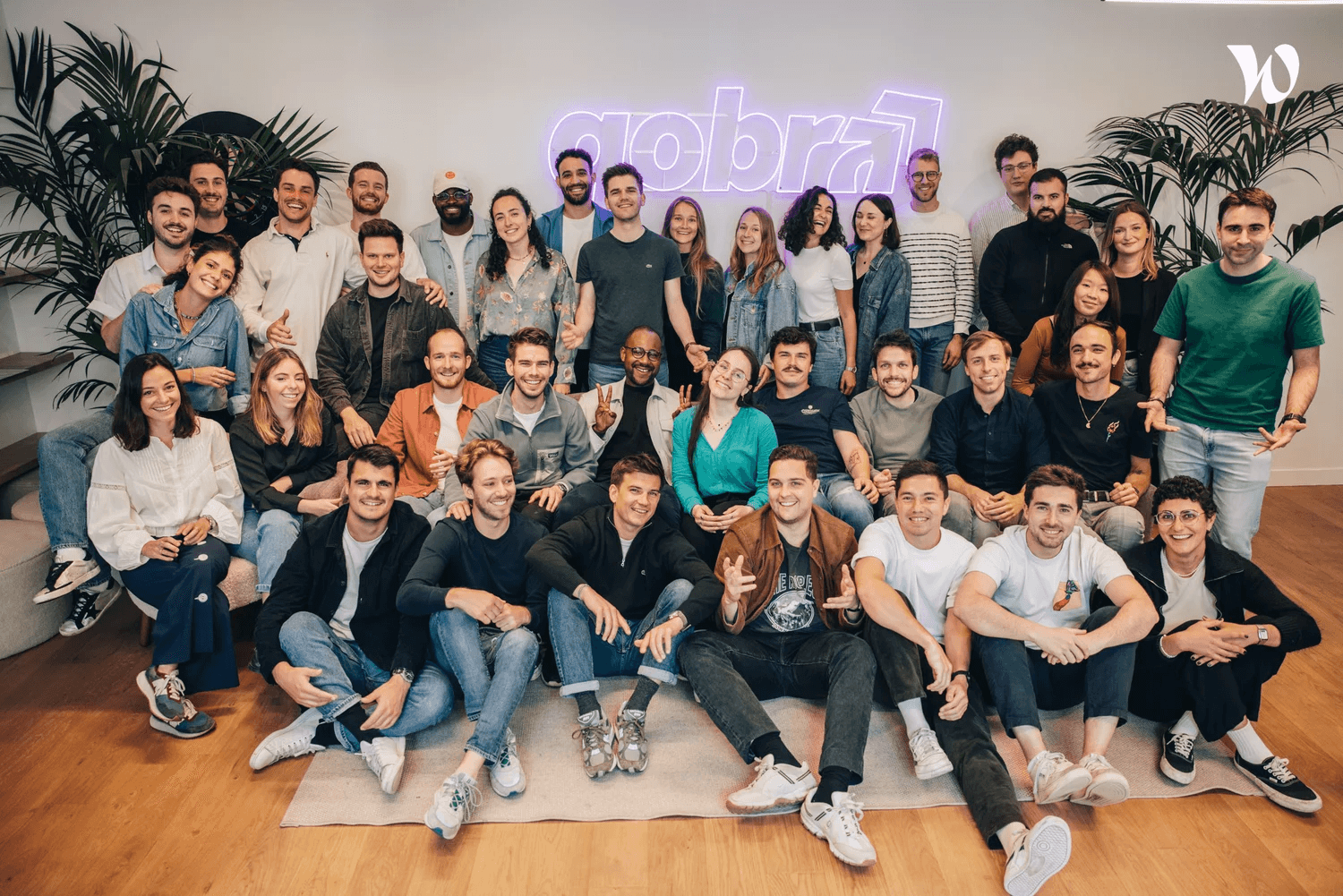





Gabriel de Chazournes, Sales Director at Ankorstore, explains how the B2B marketplace gradually reduced the number of tools used by its teams.
Ankorstore went through a period when some teams could use up to 15 different tools. Since then, the company has largely rationalized its stack. And the issue goes beyond cost: by piling up software, information had also become fragmented across teams.
Conversation transcription is a good example.  Modjo was used by Sales, while Product Managers worked notably with
 Fellow. There was therefore no system to centralize the different conversations with the same partner.
A retailer could thus be contacted by several people about different topics, without any of them knowing about the previous exchanges.
Since then, this rationalization has extended to several functions: CRM, automation, HR, Finance, webinars, expenses and employee benefits. With a fairly consistent logic: weigh each piece of software's level of sophistication and cost against its actual use.
Why replace Workday with Personio?
Ankorstore previously used  Workday for various HR processes, notably employee reviews, recruiting and the org chart.
Gabriel's experience of it is very different from that of the HR teams.
“I didn't really like Workday's user experience. I know the HR side loved it because for data structuring and all that, it's amazing. But as a user, I found it hard for the HR follow-up of my teams.”
His feedback is therefore about his experience as a user and a manager, not about Workday's capabilities for administering HR data.
Ankorstore now uses  Personio, deployed about two years before the interview. Gabriel particularly likes the design, how easy it is to pick up and how quickly he finds information.
“Honestly, great. Really nice design, easy to pick up. The teams like it too. You quickly find the info you're looking for.”

He also says that Personio costs “much less” than Workday. Ankorstore also uses PayFit on the HR side, as well as Swile and Leeto for employee benefits.
From Spendesk to Payhawk for expense reports
For expense reports, Ankorstore previously used  Spendesk and has just switched to
 Payhawk. Gabriel's feedback is mostly about something very concrete: the time spent, as a manager, approving expenses.
“I don't even need to be trained on the tool. The notifications are very good. I approve in two clicks. It's clear and readable for me as a manager.”
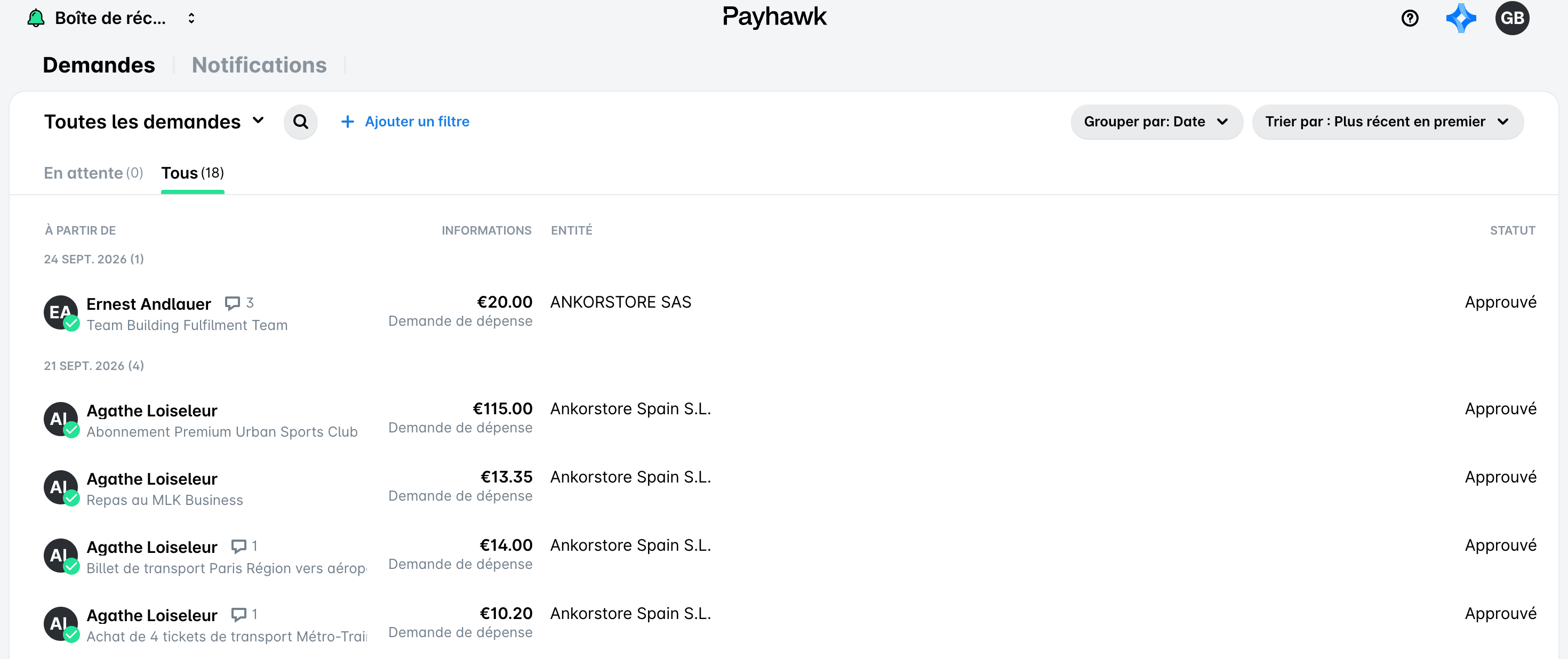
The change therefore has less to do with a specific feature than with two criteria: ease of use and price.
Why did Ankorstore drop Zapier in favor of n8n?
Ankorstore used  Zapier and
 n8n in parallel before dropping Zapier. For Gabriel, n8n notably makes it possible to go further on certain complex workflows.
“I find that you automate more of the somewhat complex flows on n8n than on Zapier.”
Some of the automations built with Zapier involved small integrations with Slack, simple enough to be reproduced another way. According to Gabriel, dropping it represents a few thousand euros in savings per year.
n8n is now part of the Go-to-Market team's stack, alongside  Clay in particular. On the Sales side, Ankorstore also uses FullEnrich for data enrichment.
Why does Ankorstore use Google Meet for its webinars?
Ankorstore held about ten webinars a year with  Livestorm. For that volume, Gabriel found the tool's cost high.
This year, the company therefore tested a much simpler solution: running its webinars directly with  Google Meet.
The setup is less specialized and has several limitations. From Gabriel's experience, beyond 200 registered contacts, only one person can invite and manage participants, for instance. Ankorstore also does not get the same registration flow as with a dedicated platform.
The team therefore built its own process: create the Google event, register participants without sharing the list, personalize the invitation, then send a sequence to let contacts know they have received an invitation to the webinar.
Despite these constraints, Gabriel has not seen any drop in performance.
“We manage to get the same results we had on our webinars when using Livestorm.”
The company's biggest webinars bring together about 500 people. For now, Gabriel therefore presents the move to Google Meet as a test that works, rather than as a definitive model.

Tools in this section
Why leave Alan for SideCare?
Ankorstore was previously a customer of  Alan for health insurance. According to Gabriel, the cost had become high, both for the company and for employees.
The company has since moved to  SideCare, which he describes as an insurance broker with its own app that works with providers for coverage. Gabriel believes Ankorstore now enjoys an equivalent level of coverage, with more flexibility.

Pigment remains first and foremost a Finance tool
The Finance team uses  Pigment to manage the P&L and the budget and, according to Gabriel, is very satisfied with it.
Ankorstore tried to extend its use to other departments, going as far as encouraging someone internally to develop new use cases. Despite this, Pigment remains essentially used by Finance.
The example shows that software capable of covering several functions is not necessarily adopted across the company.
A simpler stack, but not necessarily a unified one
The various migrations Gabriel describes do not reflect a formal purchasing policy. But two criteria come up regularly: simplicity and cost relative to actual use.
This rationalization does not mean, however, that Ankorstore is trying to bring everything together in a single piece of software. The company also accepts having several specialized tools coexist when they can be properly connected.
This is notably the choice made to replace  Salesforce: rather than looking for a new single system for Sales and CX, Ankorstore chose
 Attio on the Sales side and
 Pylon on the CX side.
Summary of the software this article mentions in Ankorstore's stack
| Status | Workflow | Tool | Usage |
|---|---|---|---|
| In use | Conversation intelligence | Modjo | Used by Sales and now more broadly to centralize conversations |
| Replaced | Meetings / transcription | FellowReplaced | Used by some Product Managers |
| Replaced | HRIS | WorkdayReplaced | Reviews, recruiting and org chart |
| In use | HRIS | Personio | Replaces Workday |
| In use | HR |  PayFit | HR tool |
| In use | Employee benefits |  Swile | Employee benefits |
| In use | Employee benefits |  Leeto | Employee benefits |
| Replaced | Expenses | SpendeskReplaced | Former expense report solution |
| In use | Expenses | Payhawk | Replaces Spendesk |
| Replaced by n8n | Automation | ZapierReplaced by n8n | Dropped in favor of n8n |
| In use | Automation | n8n | Automations and GTM stack |
| In use | Collaboration |  Slack | Some small integrations used to go through Zapier |
| In use | Go-to-Market | Clay | GTM stack |
| In use | Enrichment |  FullEnrich | Enrichment on the Sales side |
| Replaced | Webinar | LivestormReplaced | Former webinar solution |
| In use | Webinar | Google Meet | Now used for webinars |
| Replaced | Health insurance | AlanReplaced | Former health insurance solution |
| In use | Health insurance | SideCare | Current solution |
| In use | FP&A | Pigment | P&L and budget |
| Replaced | CRM |  SalesforceReplaced | Former system shared by Sales and CX |
| In use | CRM | Attio | New Sales CRM |
| In use | Support / CX | Pylon | New solution on the CX side |