




At Figures, customer conversations feed directly into the product roadmap through several automations between Claap, Claude, Slack and Linear. Virgile Raingeard, CEO and founder of the company, explains how his teams extract feedback, track requests all the way to delivery and use MCPs to work with their software.
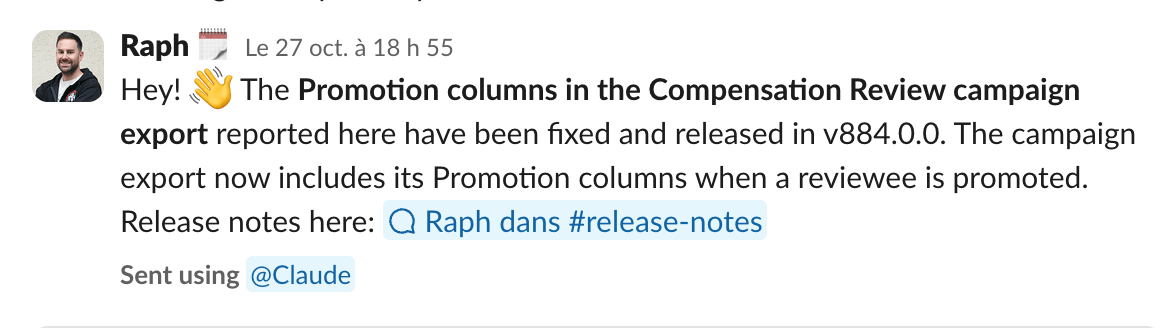
At Figures, a feature request made during a customer call can resurface several months later, when the feature is finally available. The Customer Success Manager then receives a message in Slack reminding them which customer made the request and that they can now let them know.
Behind this process, several tools are connected: Claap to record conversations, Claude to extract information from them, Linear to track development work and Slack to share feedback.
Virgile Raingeard, CEO and founder of Figures, explains how his company, which is approaching 35 employees, built these automations. He also discusses the use of MCPs and the way AI is changing his teams' work habits.
How Figures uses Claap and Claude to make the most of its customer conversations
Figures uses  Claap to record its sales calls and customer meetings. The company had in fact adopted the tool for asynchronous communication, even before it expanded its features dedicated to sales teams.
Today, the conversations recorded in Claap feed both the CRM and product tracking. Exchanges with prospects are notably used to automatically enrich  HubSpot, while customer calls help identify bugs, feature requests and positive or negative feedback.
“Claap is our default tool for recording calls with prospects and customers. We have a lot of loops between Claap and HubSpot to automatically enrich the CRM, but also between Claap, Linear and Slack to surface bugs and feature requests.”
To make use of these conversations, Figures has developed several Claude skills made available to the Customer Success teams.
After a call, a CSM can ask Claude to find the meeting notes in Claap and extract the relevant points. Claude proposes an initial selection of requests. The CSM can then review them, discard certain comments or add information before they are passed on to the product teams.
This human validation remains important. A customer can make many suggestions during a call, and not all of them deserve to become tickets.
Once the requests are validated,  Claude prepares a separate
 Slack message for each bug or feature request, with a link to the Claap recording and the exact timestamp.
The product teams can thus go straight to the moment when the customer made the request, rather than settling for a summary.
Figures has also set up a weekly automation that surfaces the feedback received during the previous week.
How feedback flows between Claap, Slack and Linear
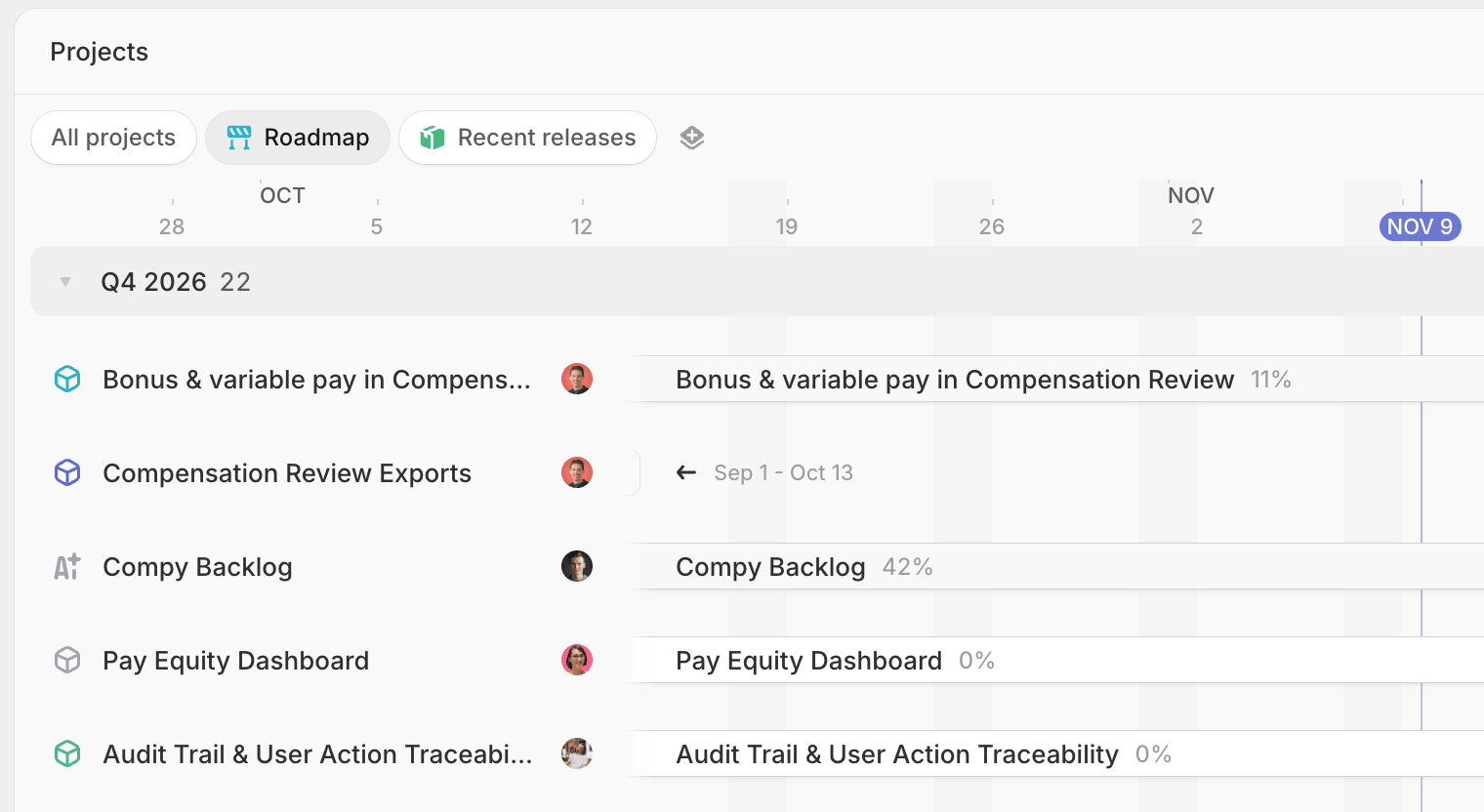
The requests extracted from customer conversations are then sent to  Linear, the product management tool Figures has been using for about three years.
Virgile is particularly satisfied with it. The software makes it possible to track projects, the roadmap, technical development and feedback from customers or internal teams.
“Linear is our central tool. We're huge fans of Linear. We use it to track all our projects, the roadmap, features and all customer feedback.”
The process relies on several steps:
- A customer reports a bug or requests a feature during a call recorded in Claap.
- Claude finds the meeting notes and extracts the points likely to interest the product teams.
- The CSM reviews the information and selects the relevant requests.
- Claude posts a Slack message for each request, with the Claap link and timestamp.
- Linear picks up the information and attaches it to the corresponding tickets or feedback.
Figures uses Claude skills and MCP connections to automate part of these exchanges. The teams can then find in Linear the requests related to a topic, even when they were made several months earlier.
Linear is also connected to  GitHub, which makes it possible to link product tickets to the corresponding pull requests.
On the other hand, Figures does not try to use Linear for all its internal processes: requests addressed to internal functions, such as legal questions or design needs, are coordinated without a dedicated service desk.
How Figures lets its customers know when a feature ships
One of the most interesting automations concerns following up on requests after they have been developed.
But at release time, an automation finds the old Slack thread and reminds the CSM that a customer was waiting for this feature. The CSM can then get back in touch with the customer to announce that their request has been addressed.
The point is to keep the link between a customer request and its delivery, without having to manually look up the customers concerned with each new release.
Weekly releases automated with Claude and MCPs
Figures ships new features every week. To support these releases, the company uses several Claude skills that take on part of the documentation and communication work.
The automations can notably prepare comments, explanations of what's new, release notes and notifications in Slack.
“We have a lot of Claude skills that handle releases. They do the work of comments, explanations, release notes and notifications in Slack. All of that goes through MCPs.”
MCP connections let Claude retrieve the information it needs from the various pieces of software, notably Linear tickets and the related technical details.
But their use goes beyond release automations. At Figures, most employees now go through Claude to interact with Linear, rather than opening its interface directly. This saves them from switching back and forth between several interfaces to get their tasks done.
“Most people almost never use the Linear interface. It's almost exclusively MCP across all these tools. We really use MCPs and Claude skills a lot.”
HubSpot, Lonescale and Lemlist: Figures' sales automations
On the sales side, Figures uses HubSpot as its main CRM.
It was not its first choice, though. When the company launched, Virgile himself set up  Pipedrive, before deciding to migrate to HubSpot about a year later.
In hindsight, he believes Pipedrive did not really match the way Figures sells.
“I was the one who set up Pipedrive, pretty much on my own, and I don't think it was a good idea. We moved to HubSpot because we're a very inbound company, with 80 to 85% of our business coming from inbound. HubSpot does the job very well for that.”
To enrich its leads, Figures uses  Lonescale via MCP. The tool fills in information about prospects coming from website forms, content downloads or webinar registrations, before they are qualified through scoring.
The company also uses  Lemlist for its multichannel outbound prospecting sequences. Virgile acknowledges, however, that Figures performs less well on this channel than on inbound.
The other software Figures uses
Beyond its sales and product automations, Figures uses  Notion for documentation and internal collaboration.
On the finance side, the company has relied on  Spendesk to manage its expenses for at least four years. Virgile says he is satisfied with the software. Accounting is outsourced to an accounting firm that works with
 Pennylane.
Figures also has a bank account with CIC. In its early days, the company used  Qonto, which Virgile remembers very fondly.
Riot to raise employee awareness of cybersecurity
Figures has been using  Riot for about two years to train its employees on cybersecurity risks, notably as part of its ISO 27001 and SOC 2 compliance requirements.
The tool offers awareness training and phishing simulations. Virgile particularly appreciates the gamification of the content.
“We're very happy with Riot. I think the gamification of the lessons and training is well done. We also run phishing simulations.”
For Virgile, these exercises are useful for making teams aware of real risks and also help reassure prospects about Figures' security practices.
Tools in this section
Summary of the software this article mentions in Figures's stack
| Status | Workflow | Tool | Usage |
|---|---|---|---|
| In use | Conversation recording | Claap | Prospect and customer calls, meeting notes and feedback extraction |
| In use | AI and automation | Claude | Skills, request extraction, releases and interactions via MCP |
| In use | Internal communication | Slack | Sharing feedback and delivery notifications |
| In use | Product management | Linear | Roadmap, tickets, bugs, feedback and release tracking |
| In use | Development | GitHub | Pull requests linked to Linear tickets |
| In use | CRM | HubSpot | Centralizing and enriching sales data |
| In use | Customer support |  Intercom | Customer support management |
| In use | AI and development |  OpenAI | Code and code reviews alongside Claude |
| In use | Recruiting |  Welcome to the Jungle | Recruiting and exploration of additional AI features |
| Replaced by HubSpot apr | CRM | PipedriveReplaced by HubSpot apr | Figures' first CRM, replaced by HubSpot after about a year |
| In use | Data enrichment | LoneScale | Lead enrichment via MCP |
| In use | Sales prospecting | lemlist | Multichannel outbound sequences |
| In use | Documentation | Notion | Documentation and collaboration |
| In use | Expense management | Spendesk | Expense management for at least four years |
| In use | Accounting | Pennylane | Figures' accounting, through its external accounting firm |
| Replaced | Banking | QontoReplaced | Bank used in the company's early days |
| In use | Cybersecurity | Riot | Awareness, training and phishing simulations |