


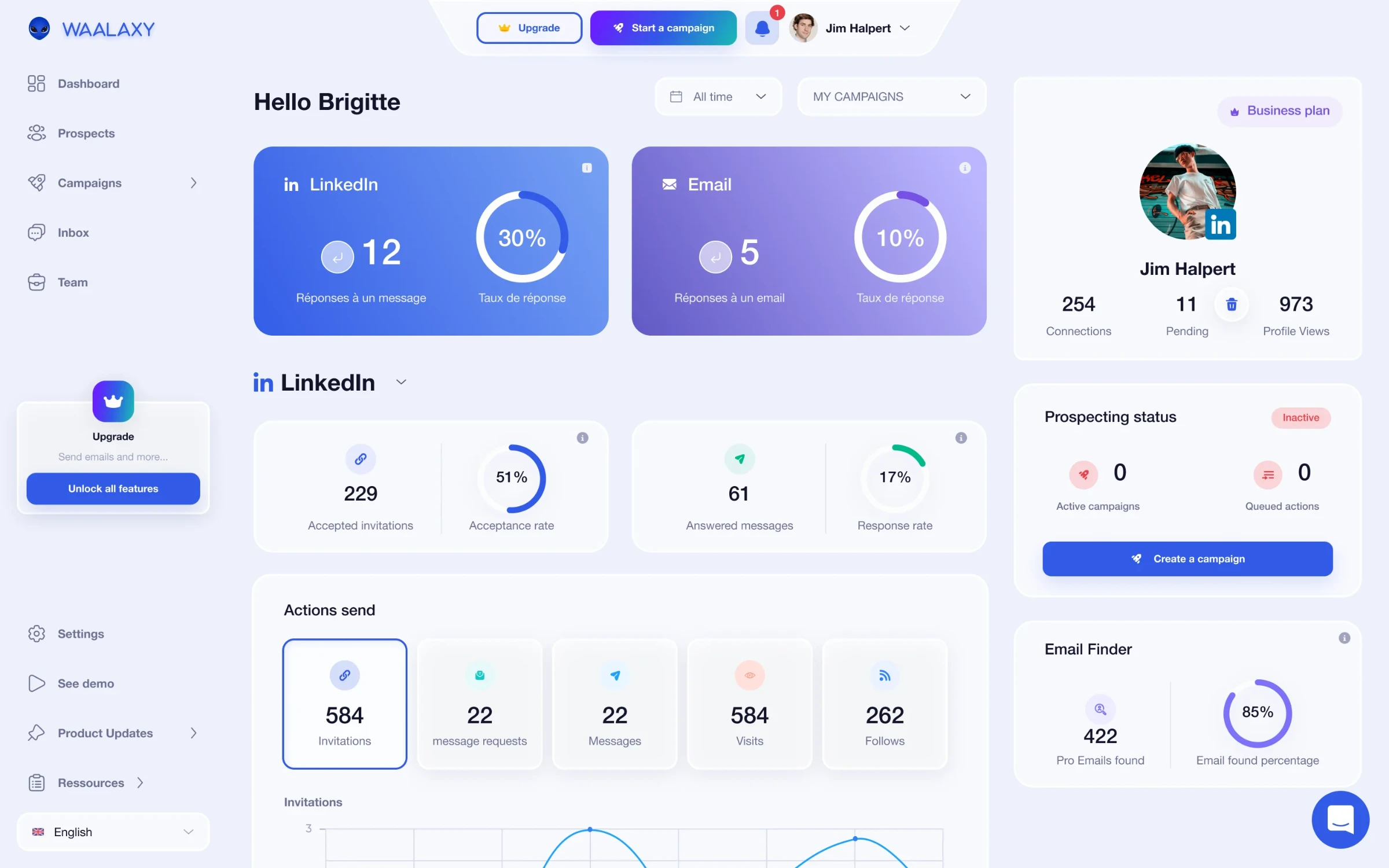

Toinon Georget, co-founder of Waalaxy, explains how his company uses Claude Code to replace some of its SaaS software. From migrating its WordPress blog to dropping Figma, by way of financial automations, he looks back on the tools abandoned, those kept and the results achieved.
At Waalaxy,  Claude Code has become an everyday tool: they replaced
 WordPress and
 Framer, dropped
 Figma and started phasing out
 Lovable.
After going from zero to €10 million in ARR in four years, without any fundraising, Waalaxy went through a period of decline and undertook a major overhaul of its product.
Historically, Waalaxy made it possible to automate prospecting on LinkedIn, but users still had to identify their prospects and write their messages. With Waalaxy AI, their new product, users describe their business and an AI agent takes care of identifying prospects, assessing their relevance and preparing the messages.

How did Claude Code become an everyday tool at Waalaxy?
At Waalaxy, the marketing, product and administrative teams use Claude Code every day to build features, modify web pages or automate tasks.
“Today, at our company, there is nobody who doesn't spend part of their day on Claude Code, in any of the teams, including the admin teams.”
Previously, a change to the website required a request to marketing, a pass through design, then technical work. Each step involved back-and-forth, approvals and sometimes several weeks of waiting.
Today, an employee can make the change themselves with Claude Code, then submit their work as a pull request on GitHub.
“We went from a process that took a month and a half to something that takes an hour and that anyone can do.”
This autonomy was built gradually, as the teams learned to use AI-assisted development tools.
It has also changed the way Waalaxy chooses its software. When a feature can easily be reproduced with Claude Code, the company now considers building it itself rather than taking out an additional subscription.
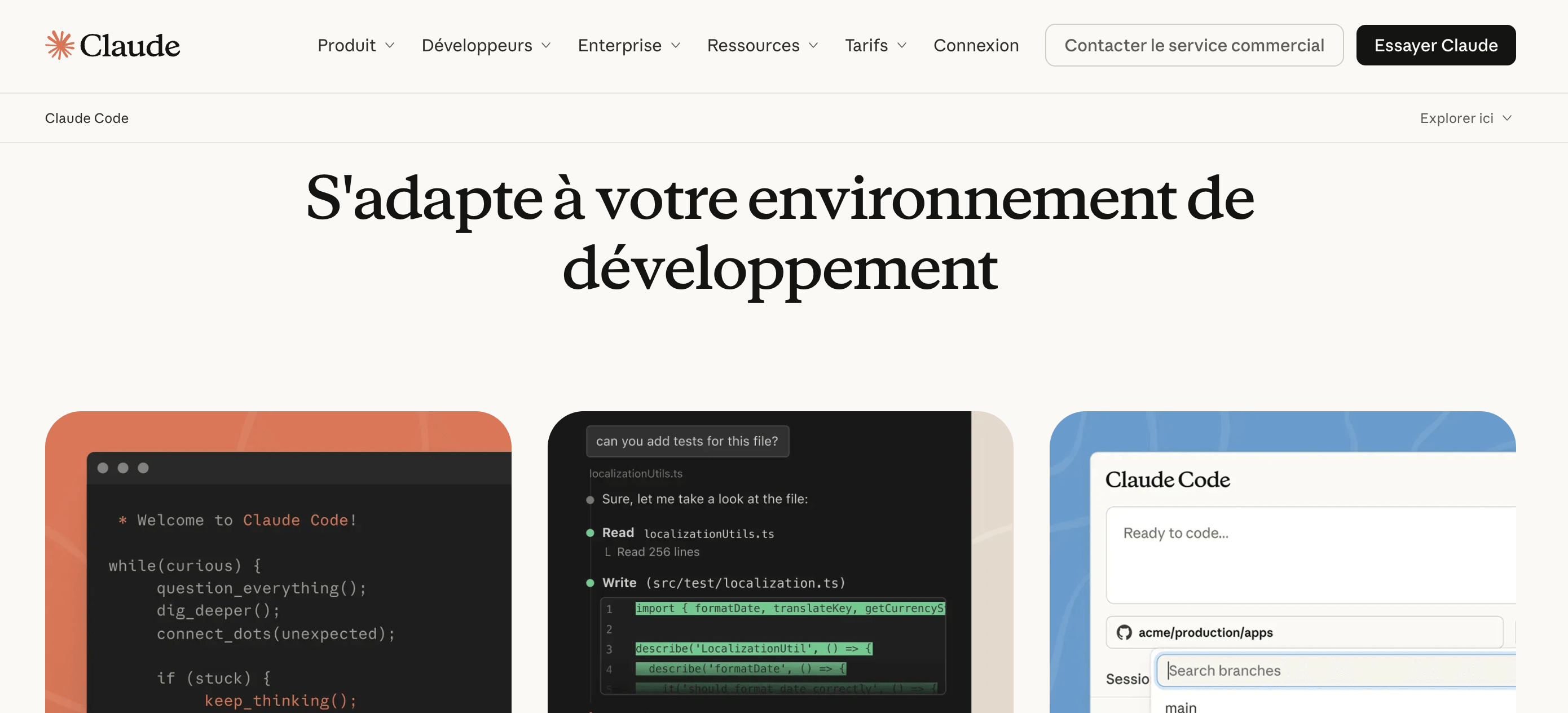
WordPress, Framer and Figma: three tools replaced by in-house solutions
A 900-article blog migrated off WordPress
Waalaxy's blog had about 900 articles, historically hosted on WordPress.
Over the years, the company had piled up plugins, custom features and translation systems. The whole thing had become hard to maintain. Conflicts between plugins made changes harder and technical performance was degrading.
 Waalaxy was struggling in particular to meet Google's requirements for performance and mobile display. According to Toinon, these problems contributed to a sharp drop in SEO traffic.
The company finally decided to replace WordPress with a CMS built in-house with Claude Code.
The migration was carried out by a person who, as it happens, had no prior development skills, with limited supervision. In total, the project took about two person-months of work. Three months after going live, Toinon is seeing his organic traffic grow again.
The teams can now directly modify the blog's content and features, without having to deal with the constraints of WordPress and its plugins.
Framer replaced in five days
After WordPress, Waalaxy tackled its main website, which until then had run on Framer.
Toinon had two main complaints about it: a subscription whose cost rose with customization needs and insufficient integration options via MCP. Since the blog migration had gone well, the teams decided to apply the same method to the main website.
This time, the project went much faster: about five person-days.
In total, replacing WordPress and Framer adds up to nearly €1,000 in monthly savings on web tools.
€1,500 saved every month after dropping Figma
The same logic applied to design.
Waalaxy canceled its Figma subscriptions, which cost about €1,500 a month, and moved to Claude Design. The tool is now used to create mockups, interactive prototypes, interfaces and email templates.
Toinon particularly likes being able to design an interface without mastering traditional design software.
A product manager can describe their idea in Claude Design, get a prototype, then continue development with Claude Code. The marketing teams also use the tool to prepare templates that are then built into their campaigns.
Design and development can thus be done by the same person, without multiplying the back-and-forth between teams.
Why is Waalaxy gradually phasing out Lovable?
Waalaxy has also used Lovable to build prototypes and small internal tools.
Toinon acknowledges the product's strengths, especially for people who cannot code. Lovable makes it possible to quickly create an application, with a database and hosting, without having to set up the whole infrastructure.
But experience revealed certain limits as projects became more complex.
“As soon as you move up in complexity, Lovable's models aren't good enough and it generates too many bugs.”
Toinon also mentions SEO performance problems on some projects. Waalaxy has therefore started gradually moving its projects off Lovable.
This decision also reflects the teams' progress on Claude Code. Employees now know how to start a project themselves, set up a database and organize its hosting.
Lovable had initially made development accessible to non-technical profiles. But as the teams gained skills, they needed this extra layer less.
Which software does Waalaxy choose to keep?
Waalaxy is not trying to replace all its SaaS software. Several specialized tools continue to play an important role in its organization.
ClickUp, for project management
 ClickUp remains the main tool for managing product projects. The teams centralize specs, tasks, development tracking and some automations there.
Toinon is fairly critical of its interface, which he finds unintuitive. On the other hand, he appreciates its rich feature set, its automation capabilities and its price.
These advantages are enough to justify keeping it in the stack.
Slack, Notion, Google Workspace and GitHub stay in place
Waalaxy is also keeping its main collaboration tools.
 Slack is used for internal communication,
 Notion centralizes part of the company's knowledge and Google Workspace provides the usual productivity tools.
GitHub remains at the heart of development, notably for managing the source code and the pull requests created by employees with Claude Code.
These tools continue to meet the company's needs, and no in-house replacement is being considered.
APIs and MCP become essential criteria when choosing software
The growing use of AI agents has changed Waalaxy's software selection criteria.
“Today, in how we use SaaS, a tool that doesn't have an open API that lets you do everything becomes a deal-breaker.”
Employees increasingly want to interact with their software directly from Claude, rather than systematically going through its interfaces. To make that possible, tools must allow access to data, trigger operations and integrate easily into automated workflows.
This requirement explains in particular why  Qonto was kept, why
 PostHog was adopted for product data, and the interest in specialized infrastructure accessible through APIs.
LangSmith to monitor and evaluate AI agents
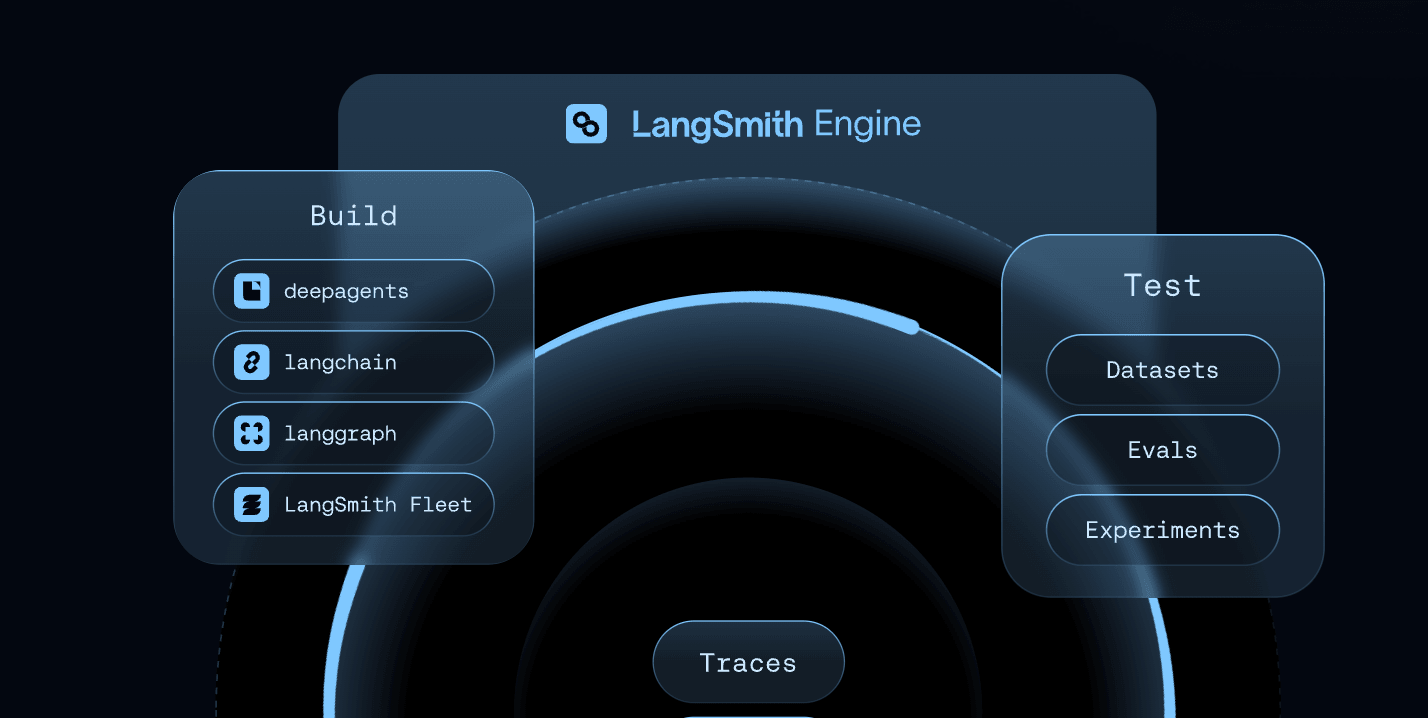
For Waalaxy AI, the company uses LangSmith to trace agent runs, compare prompt results and detect regressions.
Toinon particularly appreciates LangSmith's evaluation features, which make it possible to track the quality of the responses produced by the agents.
How does Waalaxy automate its banking, accounting and HR?
Qonto preferred over Revolut for automations
Qonto remains Waalaxy's main bank, even though the company also uses  Revolut for some international operations, notably dollar flows.
Toinon particularly likes Qonto for the quality of its interface and its integration options.
“For me, Qonto's 3 big advantages are really the quality of the product, the UX and the integrations they offer.”
His experience actually goes beyond Waalaxy.
Toinon personally uses Qonto for several companies and has built automations that let an AI agent prepare certain transfers.
In practice, when he receives an invoice, the agent can identify the company concerned and prepare the payment directly through Qonto's API. Toinon then keeps the final approval, notably thanks to two-factor authentication.
Revolut remains useful for international operations, but Qonto remains his preferred choice for day-to-day operations and automations.
Pennylane, Stripe, PayFit and Swile for administrative functions
For administrative functions, Waalaxy relies on several complementary tools.
 Pennylane centralizes supplier invoices, receipts and transactions from the various bank accounts.
 Stripe handles subscriptions and customer billing.
Qonto remains the main bank, while Revolut and several traditional banks, notably Crédit Agricole and Caisse d'Épargne, are used to manage certain flows and financing.
On the HR side, Waalaxy uses  PayFit for payroll and time off, as well as Swile for meal vouchers.
A single person handles a large share of these administrative operations. This person has notably built automations to pull time-off information from PayFit, prepare salary transfer files and check that meal vouchers match the days worked.
These automations avoid some of the re-entry of data between the various tools.
Toinon likes Pennylane for centralizing accounting, but he is more critical of its API pricing.
He mentions a cost of about €50 per month per company to access the API, which becomes a constraint when you want to automate operations across several entities. He himself uses Pennylane for about seven companies.
Summary of the software this article mentions in Waalaxy's stack
| Status | Workflow | Tool | Usage |
|---|---|---|---|
| In use | Development and automationDesign and prototyping | Anthropic | Internal development, web changes and automationsMockups, prototypes, interfaces and templates |
| In use | Development |  GitHub | Source code, repositories and pull requests |
| Replaced by un CMS interne | CMS | WordPressReplaced by un CMS interne | Former 900-article blog, replaced by an in-house CMS |
| Replaced by un d | Website | FramerReplaced by un d | Former main website, replaced by an in-house build |
| Replaced by Claude Design | Design | FigmaReplaced by Claude Design | Subscriptions canceled in favor of Claude Design |
| In use | AI-assisted development | Lovable | Prototypes and small tools, being phased out |
| In use | Project management | ClickUp | Specs, tasks, development tracking and automations |
| In use | Product analytics | PostHog | Product data and integrations |
| In use | Banking and automation | Qonto | Main bank and banking automations |
| In use | Banking | Revolut | International operations and dollar flows |
| In use | Accounting | Pennylane | Invoices, receipts and bank transactions |
| In use | Payments and billing | Stripe | Subscriptions and customer billing |
| In use | HR and payroll | PayFit | Payroll, time off and administrative automations |
| In use | Employee benefits |  Swile | Meal vouchers |
| In use | Banking |  Crédit Agricole | Bank accounts and financing |
| In use | Banking | Caisse d'Épargne | Bank accounts and financing |
| In use | Scheduling |  Calendly | Replacement by Waalaxy AI under consideration |
| In use | Internal communication | Slack | Conversations between employees |
| In use | Documentation | Notion | Knowledge centralization |
| In use | Productivity |  Google Workspace | Collaboration suite |
| In use | AI agent evaluation |  LangChain | Execution traces, prompt evaluation and regression detection |
| In use | Webinars |  Demio | Running webinars |