




Guillaume Blanc, CEO of MerciYanis, looks back on several changes made to the company's stack: Pipedrive to HubSpot, Spendesk to Qonto, Aircall then Onoff to Allo, as well as dropping Dropcontact and LaGrowthMachine. The September 2026 interview shows how MerciYanis weighs specialized software, consolidation and process simplification.
MerciYanis is a company of just over 20 employees with about €3 million in revenue. Based mainly in Toulouse, with its first employees in the Paris region, it develops a workplace management platform, focused in particular on maintenance, cleaning and employee services.
At this size, the stack starts to become a structural question. As it grew, MerciYanis accumulated specialized tools to meet various sales, financial and operational needs. The company is now looking more to rationalize this setup.
Why replace Pipedrive with HubSpot?
MerciYanis replaced  Pipedrive in particular to bring the sales and Customer Success teams closer together and centralize more processes around the same CRM.
Yet Guillaume Blanc liked the simplicity of Pipedrive.
The limit showed up when MerciYanis tried to bring the sales and Customer Success teams closer together. At the time, the CSMs managed part of their projects in Gmail. Once a contract was signed, the salesperson therefore had little visibility into what happened next with the project. Pipedrive already offered project management features, but Guillaume Blanc felt at the time that the product did not go far enough for MerciYanis's needs, especially on the API side.
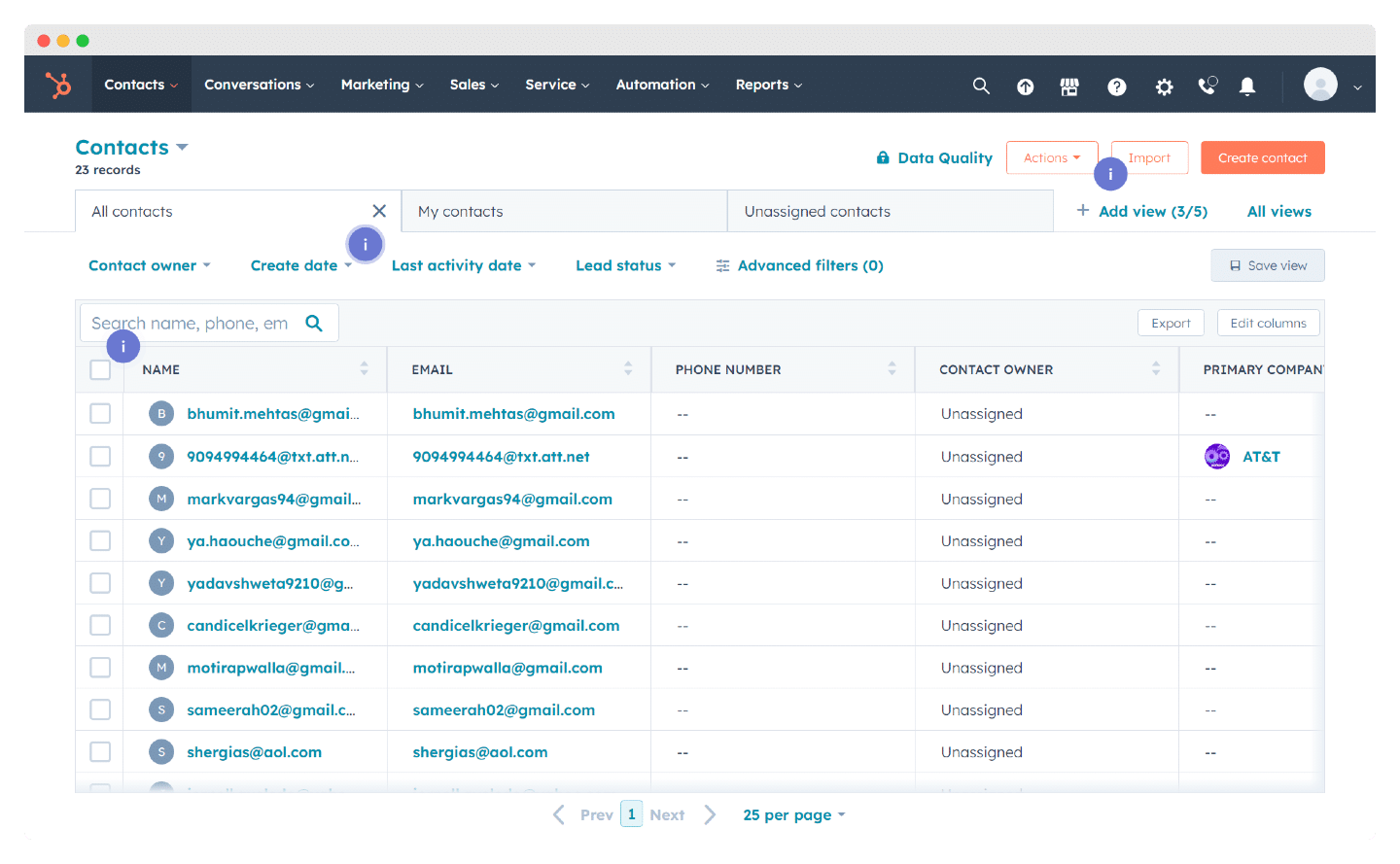
The switch to  HubSpot above all made it possible to rethink the tool and the processes at the same time.
“Changing tools, from Pipedrive to HubSpot, made it easier internally to say: we're going to change the processes.”
Sales, marketing and project management were thus brought closer together around the same CRM.
Tools in this section
Why did MerciYanis choose HubSpot over another CRM?
One of Guillaume Blanc's main arguments is the ecosystem. When a B2B software vendor builds a CRM integration, Guillaume Blanc notes that HubSpot is very often available quickly. He cites  Modjo as an example. Conversely, he had the impression that some integrations with Pipedrive arrived later.
This network of integrations is becoming important in MerciYanis's stack.
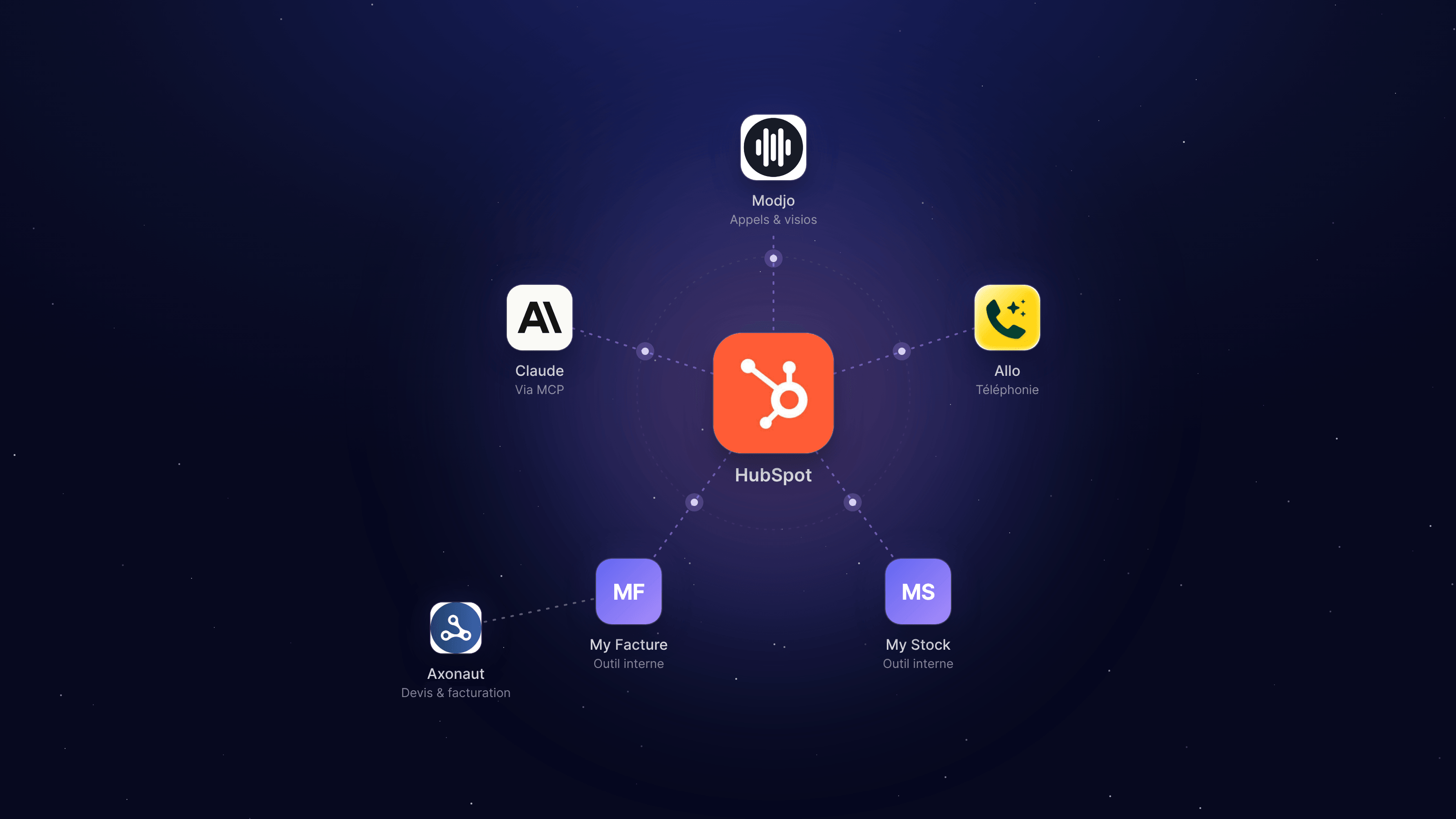
HubSpot is connected to Modjo, to the telephony tools and to several internal applications. Claude can also use some of the CRM data through an MCP.
Tools in this section
How do you migrate four years of data to HubSpot?
MerciYanis had about four years of history to migrate from Pipedrive to HubSpot.
The company was supported by the integrator Make the Grade. Guillaume Blanc says he is satisfied with the support and highlights in particular the provider's advisory role.
The main difficulty concerned the email history. MerciYanis had to bring in another dedicated tool to sync the 800,000 emails to the new environment.
How do HubSpot and Modjo work together at MerciYanis?
Modjo was already in use before the migration to HubSpot. MerciYanis adopted it about three years ago to record video meetings and allow managers to coach the teams based on the calls.
Its use has gradually expanded.
The recorded data now helps the product team find the pain points customers express, the marketing team produce content, and  Claude analyze certain interactions.
With HubSpot, calls and video meetings are attached to the CRM history.
For Guillaume Blanc, this is one of the benefits of centralization: the CRM no longer contains only the information entered by the salespeople, but a broader part of the relationship history.
MerciYanis also uses  Mailchimp for its marketing emails.
Aircall, Onoff, Allo: why hasn't MerciYanis found the miracle telephony solution yet?
MerciYanis first used  Aircall for at least a year, before testing
 Onoff and then, more recently,
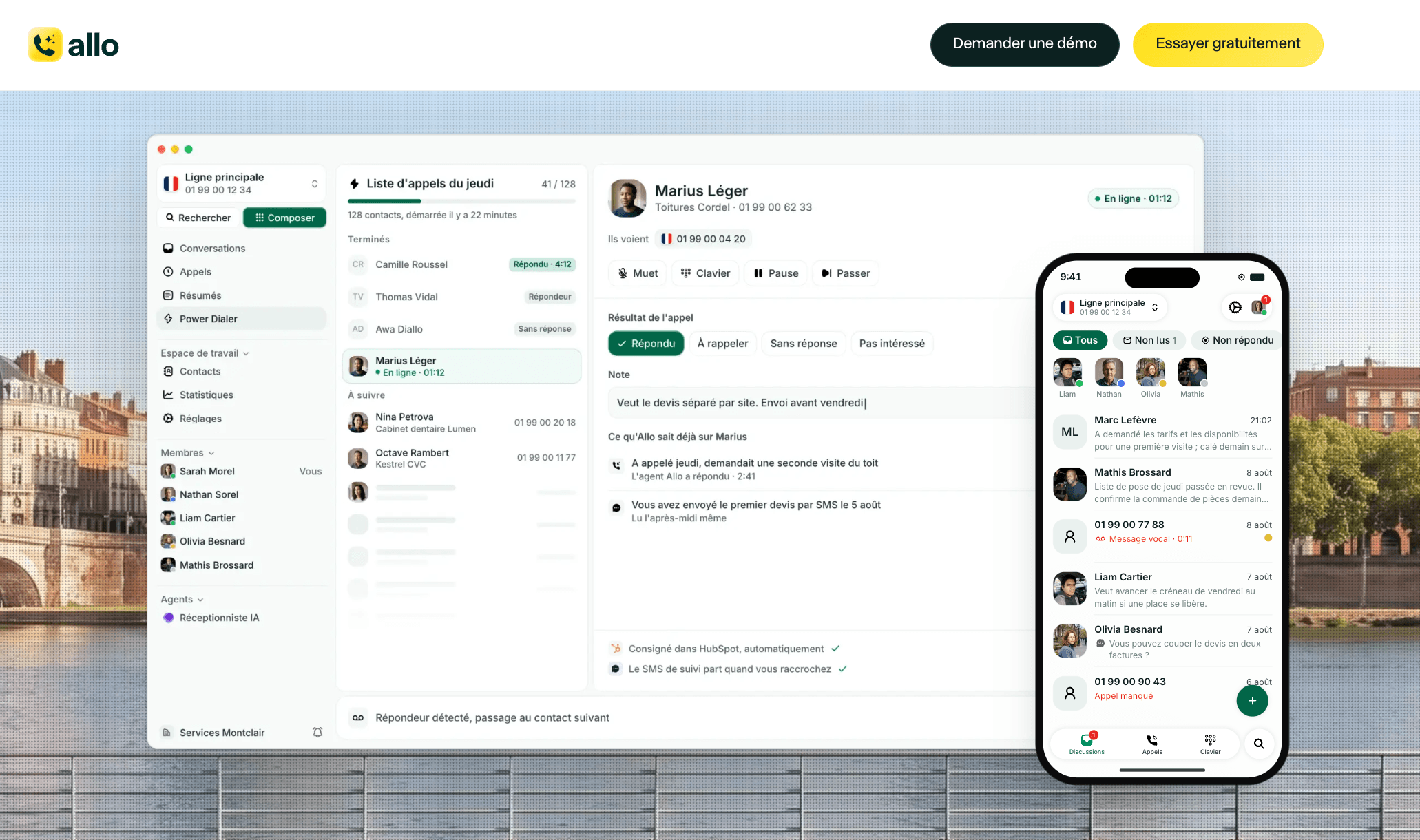
 Allo. Each time, the goal was similar: to have telephony well integrated with HubSpot, able to log calls in the CRM without sacrificing call quality.
With Aircall, Guillaume Blanc reports several difficulties: call quality that was sometimes inadequate, text messages that did not always go out, and imperfect caller identification. Onoff did not fully solve the problem, still with “a few small bugs.”
A few months before the interview, a new salesperson tested Allo. Her positive feedback led MerciYanis to switch the rest of the team over to it, about ten people. But here again, Guillaume Blanc reports a few occasional problems.
In his view, the features and CRM integrations offered by these solutions are ultimately fairly similar. The main criterion remains much more basic: call quality.
To the point of considering a return to a traditional mobile plan with a carrier like Orange, if calls can be recorded and attached to the CRM. Guillaume Blanc even says he is ready to give up some automations in exchange for more reliable telephony.
Why did MerciYanis stop using LaGrowthMachine?
 LaGrowthMachine was dropped for an entirely different reason. MerciYanis used it to run prospecting automations.
Then the company called the approach itself into question.
“We realized we were one of those vendors that send hundreds of messages and, in the end, spam customers.”
MerciYanis mainly targets mid-sized companies and large enterprises. Guillaume Blanc believes that the number of truly relevant accounts is not large enough to justify a volume approach. The teams now favor more carefully crafted messages, site visits and lunches with prospects.
So LaGrowthMachine was not dropped because the tool did not work. MerciYanis eliminated the workflow it automated.
The nuance matters for anyone evaluating the software: in this case, the change comes from the sales strategy, not from a criticism of the product.
Why replace Spendesk with Qonto?
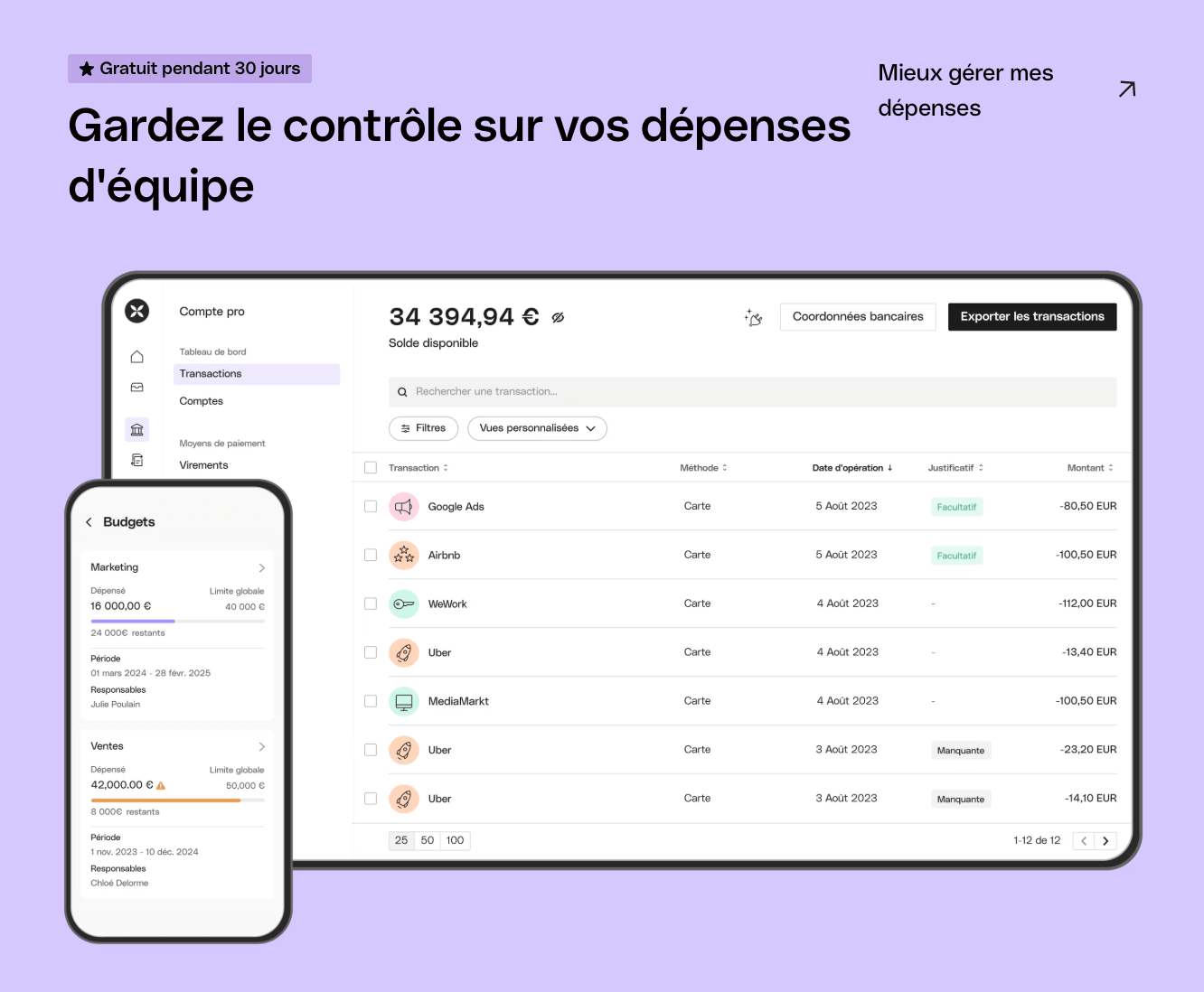
MerciYanis was already using  Qonto as its bank when the teams finally decided to move expense report management there, which until then had been handled by
 Spendesk.
The trigger was a pricing change. Guillaume Blanc says Spendesk proposed almost doubling the subscription price while adding new features. Features he does not dispute, but which MerciYanis simply did not need.
“None of those Spendesk features interested us. We just wanted the basic thing. Qonto covered it.”
At the same time, Qonto, already used for the company's bank account, could cover this need. Rather than keep an additional specialized tool, MerciYanis therefore dropped Spendesk and brought both uses together at Qonto.
Guillaume Blanc describes the migration as simple and says he is satisfied with the result.
Tools in this section
Why is MerciYanis still keeping Axonaut?
For now, MerciYanis is keeping  Axonaut for quotes and invoicing, even though Guillaume Blanc is eventually considering a tighter finance stack built around Qonto and
 Pennylane.
Finance is the area where consolidation remains unfinished.
MerciYanis uses Qonto for banking, payments and expense reports. Axonaut is still used for quotes and invoicing. The accountant works with Pennylane.
Guillaume Blanc acknowledges that the three tools overlap in places. Axonaut remains in place largely as a legacy.
The company even built My Facture to cover workflows that, in its view, are not handled well enough in the current setup: chasing overdue payments and anticipating renewals. My Facture is connected to Axonaut and HubSpot via API and webhooks.
Eventually, Guillaume Blanc may consider leaving Axonaut to work with a tighter set of tools built around Pennylane and Qonto.
Tools in this section
Why doesn't MerciYanis buy every module of the software it uses?
The same logic shows up in another area with  PayFit. MerciYanis uses PayFit for time off and absences.
The company could also use a module dedicated to reviews, but Guillaume Blanc sees no point in paying more when evaluations and reviews are already organized in  Notion.
The choice sums up his way of making trade-offs fairly well.
A feature has no value simply because it is offered by a vendor already in the stack. It has to be sufficiently better than the existing workflow to justify its cost and its adoption.
Summary of the software this article mentions in MerciYanis's stack
| Status | Workflow | Tool | Usage |
|---|---|---|---|
| Replaced by HubSpot | CRM | PipedriveReplaced by HubSpot | MerciYanis's former CRM, replaced by HubSpot |
| In use | CRM | HubSpot | Central CRM for sales, marketing, projects and integrations |
| In use | Email / collaboration | Gmail | Email and former home of some project workflows |
| In use | Conversation Intelligence | Modjo | Recording and analyzing calls and video meetings |
| In use | AI | Claude | Using CRM data and analyzing conversations |
| In use | Email marketing | Mailchimp | Managing email marketing campaigns |
| Replaced by Onoff | Telephony | AircallReplaced by Onoff | Former telephony solution, replaced by Onoff |
| Replaced by Allo | Telephony | OnoffReplaced by Allo | Telephony solution used after Aircall, replaced by Allo |
| In use | Telephony | Allo | Telephony solution rolled out to the sales team |
| Replaced | Data enrichment |  DropcontactReplaced | Former CRM data enrichment tool |
| Replaced by une approche personnalis | Prospecting / automation | La Growth MachineReplaced by une approche personnalis | Prospecting automation dropped in favor of a personalized approach |
| In use | Banking / spend management | Qonto | Banking, payments and expense reports previously handled with Spendesk |
| Replaced by Qonto | Spend management | SpendeskReplaced by Qonto | Former spend management solution, replaced by Qonto |
| In use | Invoicing | Axonaut | Quotes and invoicing, complemented by My Facture |
| In use | Accounting | Pennylane | Used by the accountant, considered for future financial consolidation |
| In use | Invoicing / collections | My Facture | In-house tool for overdue payment reminders and renewals |
| In use | ERP / inventory management | My Stock | In-house tool, connected to HubSpot |
| In use | HR / absence management | PayFit | Managing time off and absences |
| In use | Documentation / HR | Notion | Managing reviews and evaluations without an additional PayFit module |