



Guillaume Vignerot, freelance VP Sales at Modjo, now more focused on outbound, discusses the tools used by the sales teams. From Salesforce to Outreach, including Surfe, Lusha, and Clay, he explains how Modjo has streamlined its data enrichment, the limitations of certain software, and the choices that structure its prospecting, marketing, and recruitment.
At Modjo, a BDR can make 350 calls a week. At this pace, data quality makes a real difference. According to Guillaume Vignerot, unreliable contact information can cause a salesperson to lose up to 15% efficiency in a week.
Having joined Modjo about six months before our interview, Guillaume initially took on a freelance VP Sales role. For nearly two months, he has been more focused on outbound strategy, in collaboration with the Ops, Marketing, and BDR teams.
With 17 years of experience in SaaS, he has seen several generations of CRM and prospecting tools. At Modjo, part of his job is to bring order to a stack that has gradually expanded, keeping the software that works and streamlining those that are redundant.
Today, the organization relies mainly on Salesforce for CRM, Outreach for sales sequences, Aircall for telephony, and Surfe for enrichment, with Lusha as a complement. Behind this fairly classic architecture, several choices deserve explanation.
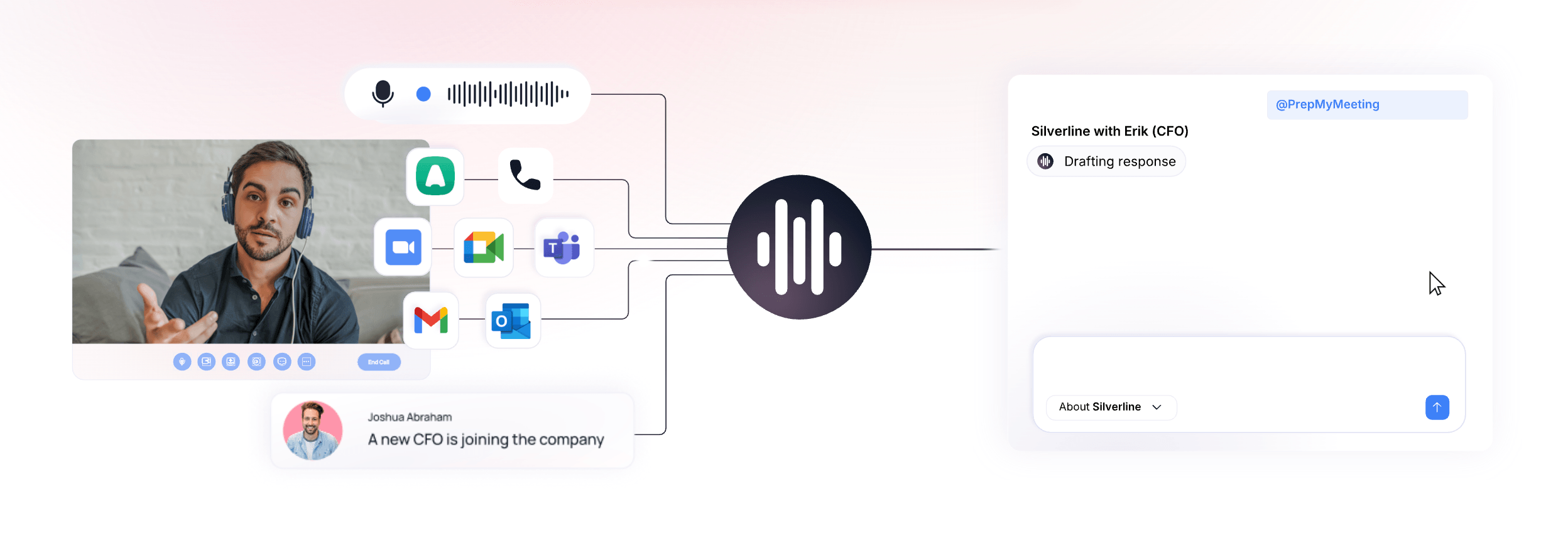
How does Modjo organize its sales stack around Salesforce?
 Salesforce is the main CRM for
 Modjo. It centralizes accounts, contacts, opportunities, and the sales pipeline.
Guillaume is well-acquainted with this environment. Throughout his career, he has mainly worked with Salesforce and  HubSpot, although he admits to having less experience with the new CRMs that have emerged in recent years.
At Modjo, Salesforce is connected to several software tools.  Surfe allows for enriching sales records from LinkedIn and various databases.
 Oneflow is involved in contract creation. Modjo, finally, leverages CRM information and sales conversations to provide more context to the teams.
The goal is to prevent a salesperson from having to search for account information between Salesforce, their emails, calls, and meetings. Thanks to the integration with Modjo, they can find key contacts for an opportunity, previous exchanges, and planned next actions.
The company also uses HubSpot for its marketing campaigns, with tools and integrations managed by this team.
The use of Modjo and its AI agents in opportunity tracking is the subject of a second article, dedicated to how the company uses its own technology.
Tools in this section
Outreach and Aircall: how Modjo organizes its sales prospecting
At Modjo, prospecting relies on Outreach for sales sequences and  Aircall for telephony.
Historically, Aircall was adopted to provide phone numbers and manage incoming calls. The company then added  Outreach, which allows organizing sequences mixing emails, calls, and LinkedIn interactions.
Today, salespeople use the numbers provided by Aircall directly in Outreach. Guillaume describes this setup as a hybrid organization that could still be optimized.
Calls are also connected to Modjo, allowing managers to analyze them afterward. They can review a week's conversations, identify the most frequent objections, measure the BDRs' execution quality, or spot competitors regularly mentioned in a segment.
Another benefit concerns the handover between teams. When a BDR secures an appointment, Modjo can pass a summary of previous exchanges to the Account Executive. The salesperson thus retrieves the conversation context without having to piece together the history from scattered notes.
Why keep Outreach despite its limitations?
When Guillaume arrived at Modjo, Outreach was already in place. He did not participate in the initial software choice, but his daily use has allowed him to form an opinion.
“Outreach is satisfactory enough that we don't think about changing it.”
The software correctly fulfills its main function: organizing and executing prospecting sequences. Guillaume's main reservation concerns the prioritization of prospects. In the current configuration of Modjo, Outreach remains quite static. Teams must determine for themselves which accounts to target, whom to contact, and what actions to take.
Guillaume compares this operation to that of  lemlist, which he used at the beginning of his career. From what he has observed or heard about its recent developments, lemlist seeks more to guide BDRs in their daily work, notably by suggesting prospects to contact based on detected signals.
This is not a recent benchmark between the two solutions, and Guillaume does not know their price differences precisely. But he sees a distinction in how the tools support commercial work.
In his previous companies, he also used the sequencing features of HubSpot. These experiences allowed him to discover several ways to organize prospecting.
Why has Modjo streamlined its enrichment around Surfe and Lusha?
Modjo has streamlined its enrichment tools around Surfe, while retaining  Lusha for certain segments where its data remains particularly effective.
This is one of the most concrete changes initiated since Guillaume's arrival. At the time, several tools coexisted, notably  Kaspr and Lusha, with different practices depending on the salespeople.
The goal was to improve data quality while controlling expenses.
“In an outbound system, data is your precious metal. It is very expensive, and there are a lot of players in the market.”
The choice was made for Surfe, which allows enrichment orchestration directly from LinkedIn and LinkedIn Sales Navigator.
When a salesperson views a profile or account, Surfe can query multiple data providers through a waterfall enrichment system. If a first source does not find the sought information, another can be solicited.
Guillaume notably cites Lusha and  FullEnrich among the providers that can intervene in this type of operation. The retrieved information can then be automatically synchronized with Salesforce, which prevents salespeople from having to perform multiple operations between LinkedIn, enrichment platforms, and the CRM.
However, this streamlining has not led Modjo to abandon Lusha. The company retains it as a complement, because its data remains particularly reliable in the markets, ICPs, and personas it targets.
Guillaume emphasizes one point: a provider can perform very well in one segment and be significantly less effective in another. And this quality can evolve over time.
“Each segment, each ICP, each persona has its specificities. The same provider cannot cover all the scenarios encountered in prospecting.”
For him, it is better to test providers on one's own prospects than to rely solely on rankings or the commercial promises of publishers.
Tools in this section
Why is data quality essential in outbound?
For Guillaume, the work does not stop once the right enrichment provider is selected. It is necessary to continue monitoring data quality over time.
This involves, in particular, staying close to the prospecting teams. When salespeople make calls in succession, they quickly spot problems: wrong numbers, outdated contact details, or contacts that do not match the desired profiles.
If these difficulties persist for three consecutive weeks, Guillaume believes that the provider's performance should be re-evaluated.
“When a BDR makes 350 calls a week, a data quality issue can cause them to lose 15% efficiency in a week. This can cause their numbers and performance to plummet.”
A salesperson can have a good method, well-constructed sequences, and an effective pitch. If they spend part of their week calling wrong numbers, their results will suffer.
That's why data enrichment remains a topic to monitor constantly, even after reducing the number of tools used.
How does Modjo use Clay and intent signals to prioritize its prospecting?
Modjo doesn't just enrich prospect lists. The company also works on intent signals, with an organization largely driven by Marketing.
Guillaume specifically mentions campaigns called ABX internally.
The principle involves exposing certain segments of prospects to content, for example through LinkedIn advertising campaigns, and then observing their engagement.
The teams monitor several behaviors: content consultation, repeated visits, resource reading, or white paper downloads. These interactions help build a commercial maturity score. When a prospect reaches a certain level of engagement, a prospecting action can be triggered.
Modjo is also interested in other signals, such as visits to its website or job changes.
Clay is among the tools mentioned for leveraging this information, in an organization involving the Marketing and Ops teams. This organization complements the use of Outreach: rather than launching the same sequences on undifferentiated prospect lists, Modjo seeks to identify accounts that already show signs of interest.
How does Modjo use HubSpot, Oneflow, and Contrast?
Beyond prospecting, several software tools are involved in Modjo's marketing and sales processes.
The Marketing team uses HubSpot for its campaigns, as well as Claude in its daily work. On the sales side, Oneflow is used for contracting and electronic signatures. The software is integrated with Salesforce.
When a prospect gives verbal agreement on a proposal, the salesperson can generate their contract directly from the CRM, with the general terms of sale, budgetary elements, and contractual terms. The signature is then done in Oneflow.
The tool has been in place for over two years. Despite an imperfect user experience, Modjo does not plan to replace it in the immediate future.
For webinars, the company uses  Contrast. Guillaume particularly appreciates the interaction possibilities with participants and the staging of content, such as displaying questions directly on the screen.
Why did Modjo switch from Lever to Teamtailor for recruitment?
If there's one software Guillaume is particularly positive about, it's  Teamtailor.
Modjo previously used  Lever as an ATS before deploying Teamtailor during the summer of 2026.
Guillaume has participated in numerous recruitments since his arrival and appreciates how the software centralizes the different stages of the process. It is possible to configure recruitment stages, evaluation criteria, questions to ask, and associated scorecards.
Evaluations are gradually built up through interviews. Each person involved in recruitment can thus find useful information and track candidates' progress in a shared environment.
Guillaume also appreciates the features of videoconferencing, interview transcription, and generation of structured summaries. They allow for keeping a record of exchanges and facilitate the sharing of information between recruiters and managers.
The advantage is to have the entire process in one tool, rather than multiplying documents, reports, and software.
But Guillaume emphasizes an important condition: Teamtailor must be properly configured and managed to deliver good results.
At Modjo, a dedicated person ensures this management. They are responsible for setting up and ensuring the proper functioning of processes, which according to him contributes to the quality of the experience.
“Teamtailor is great. I would be a promoter of Teamtailor without any problem.”
His enthusiasm is primarily about the experience he currently has with Teamtailor. He prefers not to make a detailed comparison with Lever, which he has used less.
What he particularly appreciates is Teamtailor's ability to bring together application tracking, profile evaluation, and information from interviews in a single environment. For someone who regularly participates in recruitment, this significantly simplifies the work.

Tools in this section
How does Modjo use Notion, Slack, and its internal tools?
 Notion plays an important role in Guillaume's daily routine. He uses it for sales playbooks, weekly meetings, one-to-ones, and various internal rituals.
He explains that he almost no longer prepares his internal meetings with  Microsoft PowerPoint or
 Google Drive documents, as he used to do before.
Notion also serves as a support for a ticketing system connected to  Slack.
When a colleague encounters a problem in Salesforce, reports a bug, or asks a question about the product, they can write in a dedicated Slack channel. Automations then allow for creating tickets tracked in Notion.
Guillaume appreciates the simplicity of this organization, which allows for centralizing requests without imposing a too cumbersome process on the teams.
Summary of the software this article mentions in Modjo's stack
| Status | Workflow | Tool | Usage |
|---|---|---|---|
| In use | CRM |  Salesforce | Main CRM, connected to sales tools |
| In use | Marketing / CRM | HubSpot | Marketing campaigns; former CRM and sequencing tool used by Guillaume |
| In use | Sales intelligence | Modjo | Conversation analysis, coaching, and opportunity tracking |
| In use | Sales engagement | Outreach | Multichannel sequences and calls |
| In use | Telephony | Aircall | Numbers, incoming calls, and connection to Outreach |
| In use | Enrichment | Surfe | Waterfall enrichment and Salesforce synchronization |
| In use | B2B data | Lusha | Complementary enrichment, effective on targeted segments |
| Replaced | B2B data | KasprReplaced | Former enrichment tool, before streamlining |
| In use | Enrichment / signals |  Clay | Exploitation of intent signals, technical scope not detailed |
| In use | Prospecting |  LinkedIn Sales Solutions | Prospect research and account enrichment |
| In use | Contractualization | Oneflow | Contract generation and electronic signature |
| In use | Webinars | Contrast | Organization of interactive webinars |
| In use | Recruitment / ATS | Teamtailor | Candidate management, scorecards, interviews, and summaries |
| Replaced by Teamtailor | Recruitment / ATS | LeverReplaced by Teamtailor | Former ATS, replaced by Teamtailor in summer 2026 |
| In use | Collaboration / ticketing | Notion | Playbooks, meetings, internal rituals, and ticket tracking |
| In use | Internal communication | Slack | Specialized channels and automations with Notion |
| In use | Generative AI |  Anthropic | Used notably by the Marketing team |