



Pierre-Étienne Bidon, co-CEO of Moka.Care, discusses the software used to manage the company's customer relations, operations, and finances. He explains why Moka.Care removed its sensitive data from HubSpot, how Modjo supports its sales teams, and how Qonto simplifies the billing of nearly 30,000 individual sessions per year.
At Moka.Care, certain sensitive information no longer goes through HubSpot. The company has developed its own software to manage crisis files.
The goal is to better control access to health data and its hosting.
Nevertheless, Moka.Care continues to use HubSpot for customer relations and several SaaS software for its operations. The company favors market solutions when they meet its needs but develops its own tools when its business constraints justify it.
This organization is reflected in telephony, commercial conversation tracking, and finance, where  Qonto now handles part of the practitioners' invoicing.
Why did Moka.Care remove sensitive data from HubSpot?
 HubSpot remains the main CRM for Moka.Care, used by marketing, sales, and customer relations teams. However, the company decided to remove certain processes involving particularly sensitive data.
Moka.Care notably supports companies facing crisis situations: the death of an employee on site, suicide, or events requiring psychological intervention.
Pierre-Étienne Bidon provides a concrete example. On a Tuesday morning, a customer relations manager receives a call from an industrial client who has just experienced a death at one of its sites.
At the time, the consultant would write a report in HubSpot. The information was then passed on to those responsible for managing the situation, including the practitioner who had to intervene on-site to organize a support group or assist the affected teams.
Access was limited to certain people, and additional exchanges took place in private Slack channels. However, this setup did not give Moka.Care the desired level of control.
“Historically, when we managed a crisis, we entered the information into HubSpot. Even if access was restricted, some data could end up being hosted partly in the United States. We wanted to perfectly control their hosting and the people who could access them.”
Pierre-Étienne also mentions the proliferation of artificial intelligence tools, which can facilitate access to information previously scattered across different software.
Moka.Care therefore chose to manage crisis files directly in its own product. The data is hosted in France and Germany. At the time of the interview, the company was also in the final phase of obtaining HDS certification, related to the hosting of health data.
The main change concerns the management of authorizations. When a practitioner intervenes in a crisis, they receive the necessary information to assist the affected individuals. Once their intervention is complete, their access is removed.
“With our own software, we can open access to the people managing a crisis, then remove it once the intervention is complete. The practitioner then no longer has any access to the information.”
The confidentiality of this data justifies, for Moka.Care, developing this functionality internally rather than continuing to use external software.
How Moka.Care uses HubSpot and Modjo for customer relations
Moka.Care's commercial stack is mainly based on  Google Workspace, HubSpot,
 Modjo, and
 Aircall.
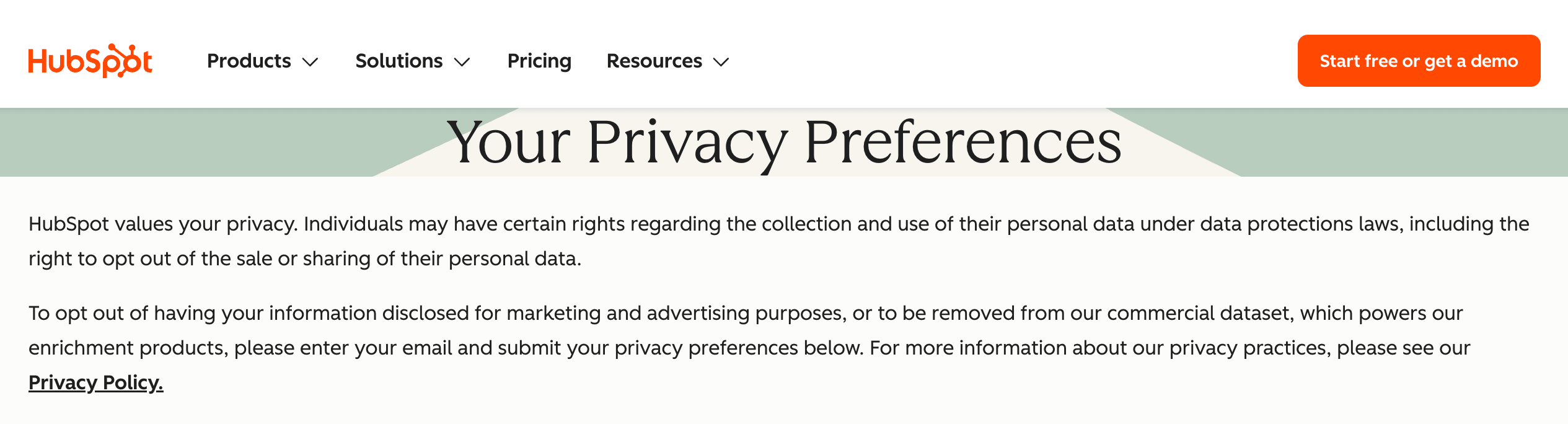
HubSpot centralizes commercial information and customer data. Modjo allows for recording conversations, preparing follow-up emails, and training teams from calls.
The tool has long been used by customer relations teams, particularly for onboarding and training. Its deployment among salespeople is more recent: Pierre-Étienne places it about six months before the interview.
Today, the sales team notably uses Modjo to find specific passages in their conversations and share the best responses to objections.
“With Modjo, the sales team directly prepares their follow-up emails. They can also find an objection in a call, see how someone responded to it, and share the sequence to train the rest of the team.”
The information extracted from conversations is also structured to feed HubSpot. But Moka.Care also uses Modjo in a slightly different way, to share positive feedback from clients and prospects.
The company has a Slack channel called “Life Celebration,” where employees post video clips of conversations. This could be a client thanking the teams for their support or a prospect highlighting the quality of the work done.
“We are very attentive to the subject of recognition at Moka.Care. In our Slack channel Life Celebration, the teams share Modjo clips where a prospect or client gives positive feedback on our work.”
Pierre-Étienne places great importance on this recognition. Positive feedback received during a call can thus be shared with the entire company, rather than being limited to those present in the conversation.
The limitations encountered with Aircall for international helplines
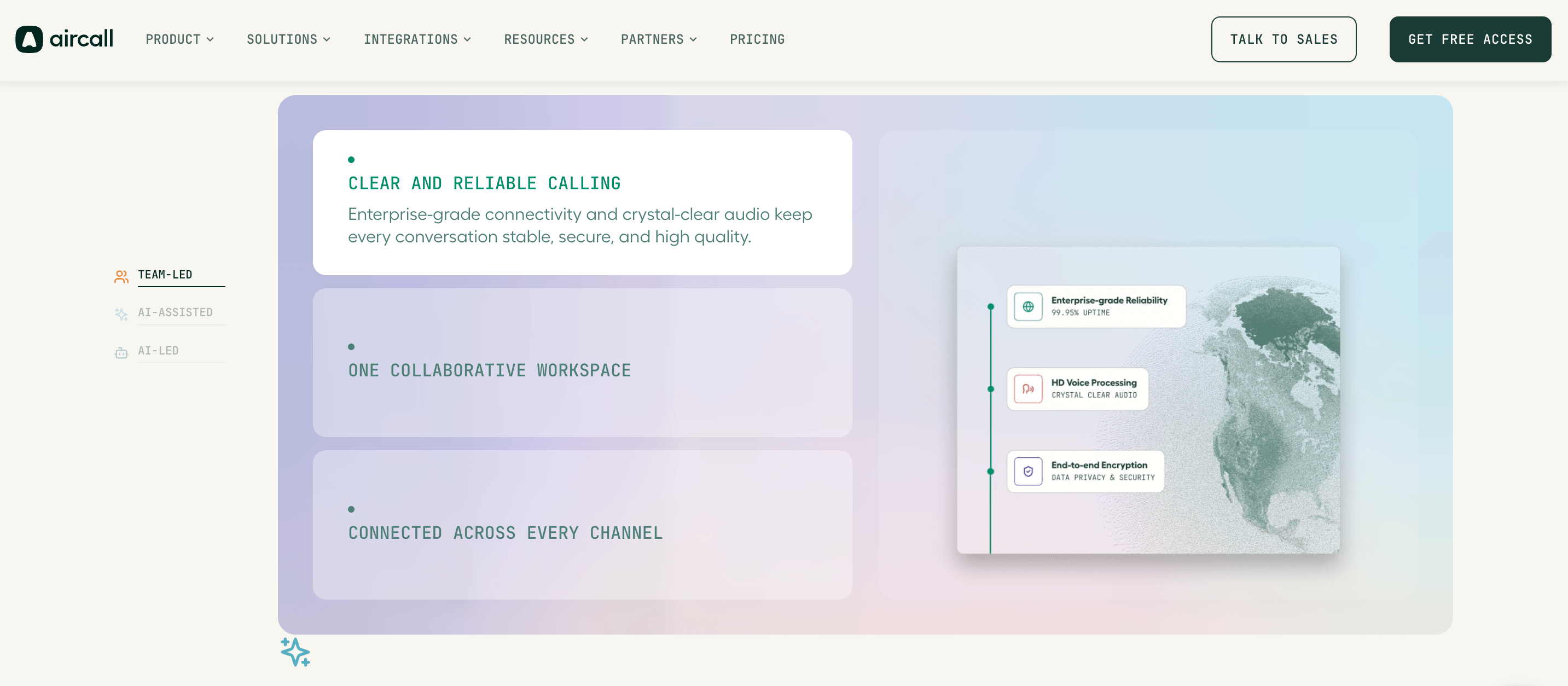
Moka.Care uses Aircall for its internal telephony, but also as a technical provider for certain features of its offering. The company notably offers an emergency helpline accessible internationally, in many languages.
Pierre-Étienne says he is generally satisfied with Aircall, but encountered a difficulty with managing international numbers.
He gives the example of a French employee of Air Liquide based in Egypt. Moka.Care wants this employee to be able to call a French-speaking helpline for free from their country of residence.
However, in this specific case, Aircall did not allow for a free local number. One of the alternatives was to call a standard French number, with a cost that could reach about one euro per minute for the employee.
The difficulty also lies in the constraints of international telephony, not just with Aircall.
Moka.Care eventually found a workaround solution with a specialized provider. The company retained Aircall for its usual uses, while using another provider for this particular need.
Tools in this section
How Qonto simplified billing for Moka.Care's practitioners
Qonto is primarily used by Moka.Care for its daily banking operations. However, the company has gradually extended its use to billing, with a significant change in the way it works with its practitioners.
“We are going to conduct nearly 30,000 individual sessions this year. Historically, practitioners sent us hundreds of invoices each month. Now, we offer those who wish to manage part of the billing for them, directly with Qonto.”
Pierre-Étienne is particularly satisfied with Qonto, both for banking operations and for the ability to centralize certain administrative processes.
Its main limitation concerns debt financing. Moka.Care therefore maintains several relationships with traditional banking institutions, notably BNP Paribas, Banque Populaire, and Bpifrance.
Upflow, Stripe and GoCardless for collections and payments
For invoice collection, Moka.Care uses  Upflow.
Pierre-Étienne lets the finance team manage the software on a daily basis and focuses mainly on the results, particularly the average collection time.
“We use Upflow for collections. Today, our average collection time is 24 days, while our contractual payment terms average 47 days. I let the team handle the subject; I mainly ensure that the money arrives on time.”
Pierre-Étienne is satisfied with this organization, Upflow, and the results achieved by the finance team.
Additionally, Moka.Care uses  Stripe and
 GoCardless for certain payments.
Stripe is particularly involved in Moka.Care's application. When an employee wishes to continue their support after the initially planned individual sessions, they can pay directly in the application.
GoCardless is used for certain automated payments for specific clients when the process does not go through Qonto.
These two tools therefore play a more occasional role in the company's financial stack.
Tools in this section
Why EcoVadis has become important for Moka.Care
Moka.Care uses  EcoVadis to assess its CSR performance.
According to Pierre-Étienne, the company is in the top 3% of companies with fewer than 1,000 employees evaluated. The evaluation is renewed every two years.
Initially, he struggled to see the economic benefit of this approach. But his opinion changed as Moka.Care grew, particularly with the arrival of larger clients and more public contracts.
In tenders, companies must regularly present their CSR commitments. Having an EcoVadis evaluation then facilitates the process.
Pierre-Étienne also noticed interest from the banking sector. Some banks offer different rate conditions based on the evaluations and certifications presented.
“At first, I had a hard time seeing the ROI of EcoVadis. Now, I see it very clearly: the evaluation is requested in the vast majority of public tenders, and it has also allowed us to optimize our bank rates.”
GitHub, Datadog, and Metabase for technical and data teams
On the technical side, Pierre-Étienne mainly mentions  GitHub and
 Datadog, which are among the main tools used by the development teams.
Moka.Care also uses  Metabase to consult and analyze its data. Access is restricted based on the nature of the information, but Pierre-Étienne estimates that at least half of the employees have access.
He appreciates the data manipulation capabilities offered by Metabase, even though he finds its visualization features less convincing. The company is therefore starting to explore charts in Notion for certain reporting needs.
Moka.Care also uses  Notion AI and
 Claude for its automations and internal agents, use cases presented in a dedicated article.
Summary of the software this article mentions in Moka.Care's stack
| Status | Workflow | Tool | Usage |
|---|---|---|---|
| In use | CRM | HubSpot | Marketing, prospecting, and customer relations. Sensitive data removed |
| In use | Collaboration |  Slack | Internal exchanges and sharing of customer feedback |
| In use | Conversation analysis | Modjo | Call recording, sales tracking, and training |
| In use | Telephony | Aircall | Internal telephony and listening lines |
| In use | Productivity | Google Workspace | Tools for sales teams |
| In use | Banking and invoicing | Qonto | Daily banking and practitioner invoicing |
| In use | Debt collection | Upflow | Payment tracking |
| In use | Payment | Stripe | In-app payments |
| In use | Payment | GoCardless | Some automated payments |
| In use | Financing |  Bpifrance | Financial partner |
| In use | CSR evaluation | EcoVadis | Tenders and financing |
| In use | Development | GitHub | Main tool for technical teams |
| In use | Observability | Datadog | Main tool for technical teams |
| In use | Business intelligence | Metabase | Data consultation and manipulation |
| In use | Documentation and reportingArtificial intelligence | Notion | Documentation and graph explorationInternal automations presented in a dedicated article |
| In use | Artificial intelligence | Claude | Development and agents presented in a dedicated article |
| In use | Sensitive data management | Logiciel propriétaire Moka.Care | Developed internally for crisis management and access control |