




This article was written by Atlas following an interview with Idriss Khouader, Co-founder and CEO, conducted on October 13, 2026.
Meteoria now has about 300 customers and a team of 25 people, freelancers included. The company started building its product in March 2025, before bringing it to market in September. In early 2026, it raised about €1 million.
It works with agencies, brands and media companies that want to understand their visibility in the answers of generative AI: do their products appear in the recommendations? How is their brand presented? Which sources influence the answers? Its customers come in particular from retail, banking and insurance, with both B2B and B2C use cases.
To build his stack, Idriss did not run a big benchmark. He had already founded several companies, mainly B2B SaaS businesses in MarTech, and knew a good share of the software he needed.
Why choose HubSpot over Pipedrive?
When Meteoria launched, the founders did not need a complex sales infrastructure. They started out using  Slack, when there were still only two of them. The need for a CRM came as the sales team grew.
At his previous companies, Idriss tended to use  Pipedrive, whose balance between features and price he appreciates.
“At my previous companies, we usually went with Pipedrive. I think it works well and it's a lot cheaper than HubSpot.”
For Meteoria, however, he went with  HubSpot. The reason is first and foremost financial: the company was eligible for a startup offer providing, according to him, a 90% discount for one or two years. A discount that is hard to turn down at launch, even though Idriss knows the bill will rise sharply when it ends.
He nonetheless considers HubSpot more complete than Pipedrive, which helps justify his choice.
Today, HubSpot is Meteoria's central CRM. All sales leads are handled there. The tool is connected to the website to capture information from visitors who download content or fill out a contact form. Salespeople also use its meeting booking links, which work in a similar way to  Calendly.

Tools in this section
Why use Brevo when HubSpot also offers email marketing?
While HubSpot centralizes the sales relationship, Meteoria does not group all of its marketing operations there. For its newsletters, the company uses  Brevo. Idriss believes that sending large volumes of email costs a lot more with HubSpot.
“For newsletters, we use Brevo because it's very expensive in HubSpot. Brevo costs almost nothing and does the job really well.”
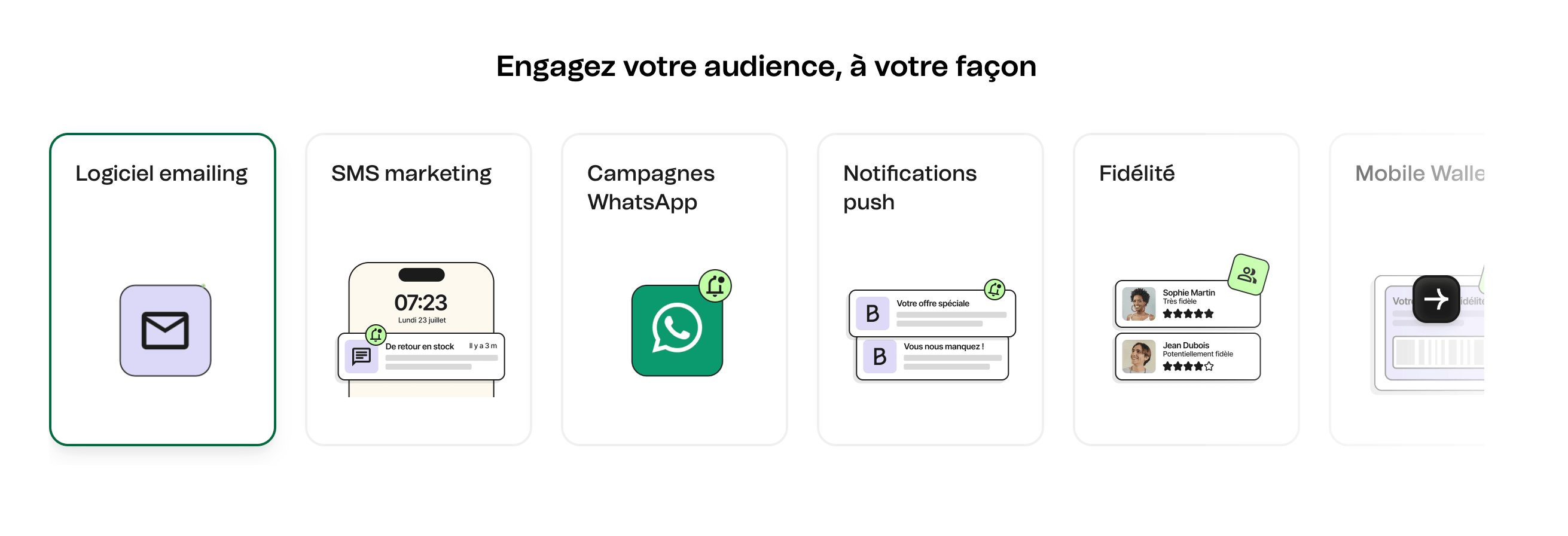
Meteoria therefore keeps HubSpot for CRM and Brevo for newsletters, rather than paying more to centralize everything.
For prospecting, the team relies heavily on  LinkedIn, in particular to identify and contact prospects. It also runs cold emailing campaigns.
After using  Lemlist, Meteoria now favors a tool built in-house for part of these campaigns. This solution better fits its prospecting method, especially when it comes to email deliverability.
Contact enrichment relies on  FullEnrich. Here again, the commercial terms mattered: thanks to an agreement with Tomcat Factory, its investment fund, Meteoria gets discounts on the software.
Tools in this section
How did Webikeo help Meteoria find its first webinar attendees?
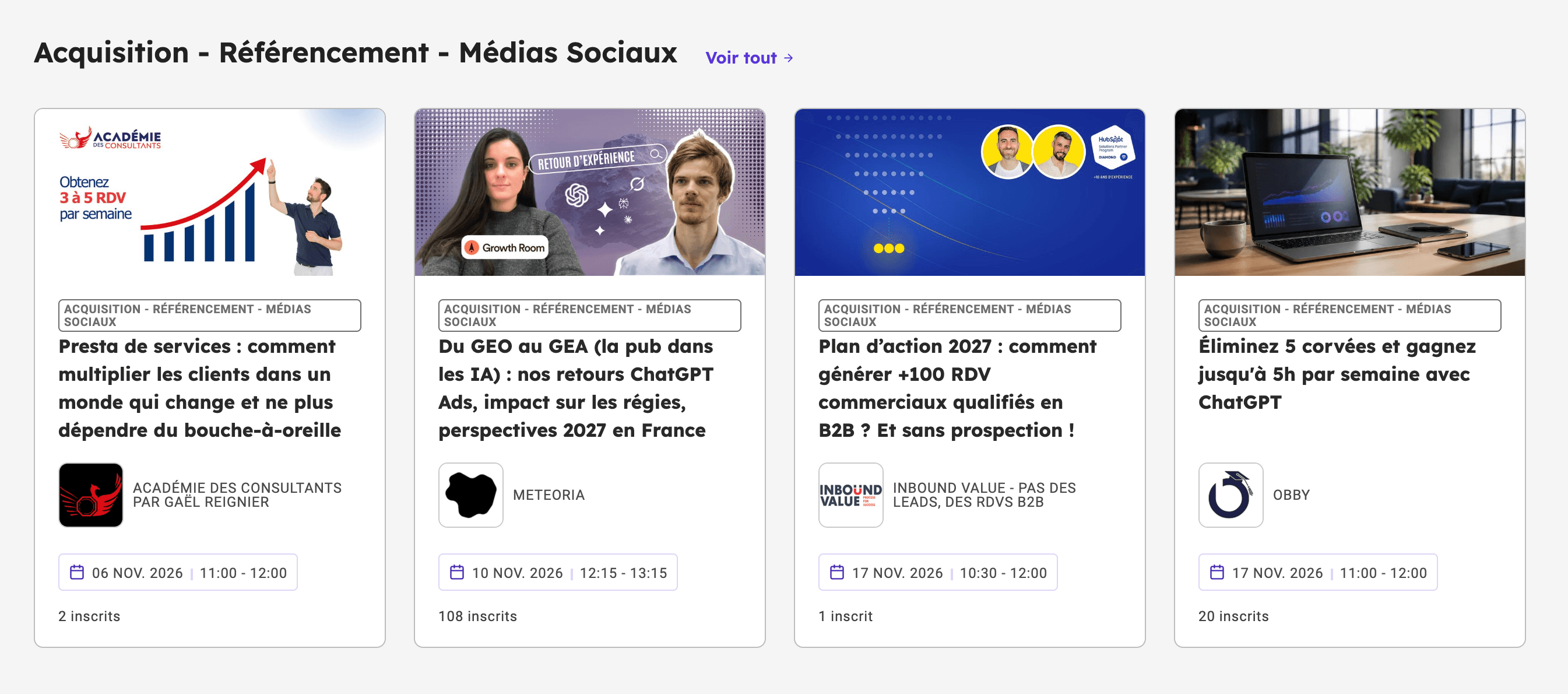
Meteoria uses  Webikeo to organize its webinars and recruit attendees through the platform's audience. In the early days, up to 90% of registrants came from Webikeo.
What convinced Idriss was not just the technical features. Unlike a solution such as  Livestorm, Webikeo has, according to him, a community it can mobilize to promote its customers' events.
A company can thus recruit attendees with its own marketing campaigns, while also benefiting from Webikeo's audience. For Meteoria, which was still little known in its early days, this made a real difference.
“At the start, Webikeo sometimes brought us 200 or 300 people. That was about 90% of registrants.”
The situation gradually changed. At the time of the interview, Idriss estimates that about half of the registrants come from Webikeo and the other half from Meteoria's own marketing efforts, perhaps even more on the company's side.
How does Meteoria combine Stripe, Qonto and Pennylane?
For finance, Meteoria started by opening an account with  Qonto.
Idriss already knew the service from his previous companies. Opening an account seemed simple and quick to him, and he liked the interface. So he did not look much further.
He does, however, have one reservation about bank financing. In his view, when a startup wants to obtain certain loans, in particular to complement a fundraising round, a relationship with a traditional bank can become necessary. Meteoria has not opened a second account at this stage.
The company considered switching to the  Pennylane bank account, but ultimately preferred to keep Qonto. The interest earned on cash also weighed in the decision: Idriss mentions a return of around 2% on the funds held at Qonto.
Pennylane is still used for accounting, mainly by the external accounting firm. Idriss admits that he rarely opens the app himself.
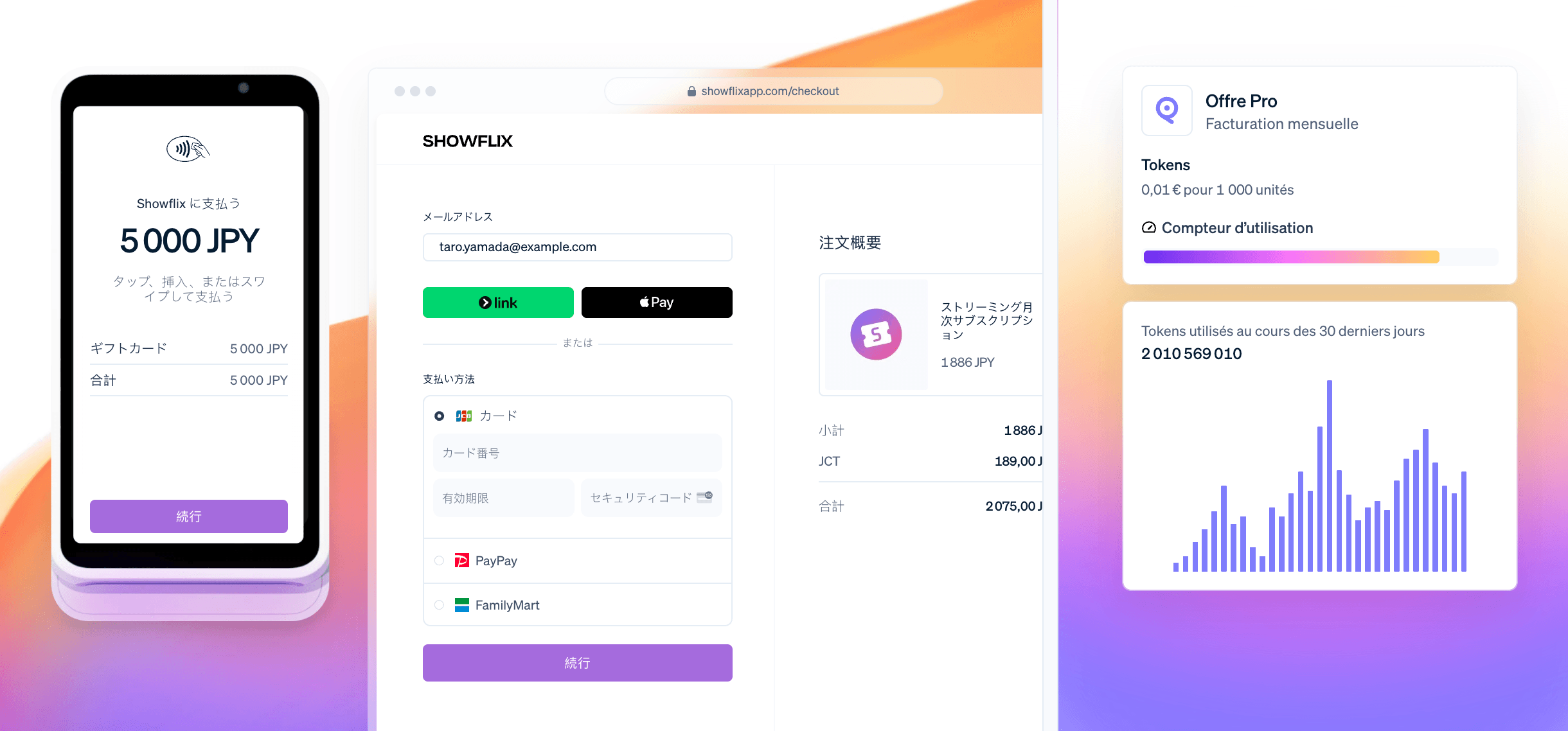
For invoicing and payments, Meteoria uses  Stripe.
Collecting supplier invoices remains largely manual. Every six months, the team has to track down the supporting documents in the various tools, gather them and send them to the accountant.
Idriss would like to automate this work with AI agents capable of fetching documents directly from the applications Meteoria uses. The project is still being studied, but it could eliminate a particularly time-consuming administrative task.
The setup is therefore fairly simple: Stripe for invoicing, Qonto for banking operations and Pennylane for accounting.
“On collections, our stack is pretty clean. I think we could scale with this setup.”
Tools in this section
Webflow vs. WordPress: which one to choose?
For its website, Meteoria uses  Webflow. A choice that has less to do with the software's features than with a bad past experience with WordPress.
At their previous companies, Idriss and his partners had run into several incidents: sites suddenly became inaccessible, for no immediately identifiable reason, and someone had to step in to bring them back online.
Idriss acknowledges that these problems may have come from a lack of maintenance or poorly executed updates. He does not consider WordPress inherently unreliable, but the founders wanted to avoid having to deal with this kind of problem at Meteoria.
“With Webflow, it costs more, but they make sure the site stays accessible and that everything works well. We didn't want to have too many headaches with that.”

Tools in this section
Which tools does Meteoria use for recruiting?
For recruiting, Meteoria mainly uses  Hellowork and LinkedIn.
Hellowork is used to post job offers and receive applications. The choice is also tied to the existing business relationship between the two companies: Hellowork is already a Meteoria customer.
Idriss also knows  Welcome to the Jungle, which he had used at his previous companies, but did not choose the platform for Meteoria. He questions its ability to generate applications directly. He sees it more as a tool that lets candidates discover a company and feel reassured before applying. By contrast, Hellowork seems to him closer to
 Indeed, with an approach more focused on generating applications.
For the administrative management of employees, Meteoria relies mainly on its accounting firm. Business email, for its part, runs on  Google Workspace.
Tools in this section
Summary of the software this article mentions in Meteoria's stack
| Status | Workflow | Tool | Usage |
|---|---|---|---|
| In use | CRM | HubSpot | Central CRM, lead management, forms and meetings. 90% startup discount. |
| Replaced | CRM | PipedriveReplaced | Used at previous companies. Cheaper than HubSpot. |
| In use | Email marketing | Brevo | Newsletters, at a lower cost than HubSpot. |
| In use | Prospecting | LinkedIn | Identifying and reaching out to prospects. |
| Replaced | Prospecting | lemlistReplaced | Cold emailing, partly replaced by an in-house tool. |
| In use | Enrichment | FullEnrich | Contact enrichment, preferential pricing through Tomcat Factory. |
| In use | Webinars | Webikeo | Organizing and promoting webinars. Initially brought in up to 90% of registrants. |
| In use | Webinars | Livestorm | Compared with Webikeo, without its built-in audience. |
| In use | Banking | Qonto | Main bank, cash management and interest on deposits. |
| In use | Accounting | Pennylane | Accounting handled by the external firm. |
| In use | Payments and invoicing | Stripe | Customer invoicing and payment collection. |
| In use | Website | Webflow | Website, chosen to limit maintenance. |
| Replaced | Website |  WordPressReplaced | Ruled out after difficult maintenance experiences. |
| In use | Recruiting | Hellowork | Posting job offers and receiving applications. |
| Replaced | Recruiting | Welcome to the JungleReplaced | Used previously, seen more as an employer branding tool. |
| In use | Recruiting | Indeed | Benchmark for generating applications. |
| In use | Communication | Slack | Internal communication since the company was founded. |
| In use | Productivity | Google Workspace | Business email and collaboration. |
| In use | Meeting scheduling | Calendly | Compared with HubSpot's meeting scheduling features. |