




Raphaël Boukris, co-founder of Didomi, looks back on the company's software choices, from Salesforce to Claude Enterprise, by way of HubSpot, Planhat, Lemlist and Pennylane.
With about 200 employees and more than 3,500 customer companies, Didomi relies on a SaaS stack built over the years. Salesforce for CRM, HubSpot for marketing, Planhat for Customer Success, Lemlist and Clay for prospecting, Pennylane and Upflow for finance. More recently, Claude Enterprise, Userled and Payhawk have rounded out the set.
For Raphaël Boukris, co-founder of Didomi, the coherence of this stack matters as much as the individual performance of each piece of software. Some tools have been in place for nearly ten years, and replacing them means revisiting integrations, processes and team habits.
The acquisition of Sourcepoint, its American competitor, sharpened this thinking. Between legacy software, new uses of AI and the consolidation of two environments, Raphaël explains how Didomi evolves its stack without trying to rebuild everything.
Salesforce and HubSpot: a power duo or complexity worth challenging?
Didomi adopted  Salesforce after its Series A, in particular to support its expansion into the United States. At the time, Raphaël recalls, having Salesforce was almost a prerequisite for hiring certain American salespeople. The CRM had established itself as a reference among growing SaaS companies.
But Salesforce was not Didomi's first CRM. The company initially used HubSpot, before running into limits with reporting pricing, whose cost rose with the complexity of the dashboards. Salesforce then seemed a better fit.
Nearly nine years later, the question is coming up again.  HubSpot has evolved considerably, and Raphaël sees its progress at other companies he has invested in.
“HubSpot in 2019 and HubSpot in 2026 are not the same thing at all.”
Didomi has therefore already considered going back to HubSpot, and is also thinking about what AI could make it possible to rebuild in its CRM processes. But switching software after nine years is not just a matter of comparing features. Salesforce is at the heart of the sales organization, the teams know it well and many tools are connected to it. A migration would mean reworking the data, the integrations and part of the processes.
“When you look at the migration costs, how hard the change is and the team training, you wonder whether it's really worth it.”
On top of that come the advantages of long-standing contracts, often renegotiated over the years. Raphaël nonetheless remains aware of the risk of keeping software out of habit, while its competitors have made progress.
How do Salesforce, HubSpot and Planhat fit together?
To manage its prospects and customers, Didomi relies on three complementary pieces of software:
- Salesforce for CRM,
- HubSpot for marketing and part of the ticketing,
- and
 Planhat for Customer Success.
The tools are interconnected. HubSpot Marketing is synced with Salesforce so that salespeople can make use of campaign data. Planhat, also integrated into this environment, lets CSMs track their customers, in particular through health scores, which give an indication of the health of the relationship.
Didomi had chosen Planhat for its specialization, at a time when general-purpose CRMs covered Customer Success needs less well. Since then, HubSpot has expanded its offering, but no migration has been decided. The company is also testing Planhat's new AI features, in particular to analyze customer interactions and feedback, without yet having enough perspective on their reliability.
This split between tools also reflects how the teams are organized. Every customer has a Customer Success Manager (CSM), but only about 25% also have a Key Account Manager (KAM), depending on their ARR or their sales potential.
When there is no KAM, the CSM handles renewals directly in Salesforce, as well as simple upsells: increased consumption, adding SSO or activating options. More complex sales, in particular cross-selling new products, are entrusted to a CAM or a salesperson.
Salesforce thus remains the reference for sales operations, while Planhat lets CSMs manage the customer relationship day to day.
How is Didomi consolidating its stack after the acquisition of Sourcepoint?
In July 2025, Didomi announced the acquisition of Sourcepoint, an American data protection player with a particularly strong presence among publishers and media companies. This deal led the teams to compare their software to decide which tools to keep.
On several fronts, the integration was relatively simple. Sourcepoint already used Salesforce, which made it easier to consolidate the CRM. The uses of  ZoomInfo, also in place at Sourcepoint, were brought together. Overall, Didomi's existing stack was the one that prevailed.
Choosing the ticketing software is proving more complicated. Didomi's teams are happy with HubSpot, while Sourcepoint's are used to  Zendesk. A tender was therefore launched to decide between the two solutions.
At the time of the interview, no final decision had been made. Raphaël stresses that the choice does not rest solely on features, but also on the teams' habits and preferences.
Which tools does Didomi use for sales prospecting?
Didomi's sales prospecting relies mainly on  Clay, ZoomInfo and
 Lemlist, alongside Salesforce.
For data enrichment, Didomi uses Clay, which provides access to several providers through a credit system. Raphaël mentions in particular  Similarweb, used to get information on website traffic.
ZoomInfo complements this setup, mainly in the United States, where Didomi has an Enterprise contract. Enrichment practices vary by market, with particular attention paid to regulatory compliance, especially in Europe. Data sources and how they are used are therefore subject to legal review.
For prospecting campaigns, Didomi replaced  Salesloft with Lemlist several years ago. Raphaël particularly appreciates the responsiveness of the Lemlist teams and their ability to evolve the product quickly.
This satisfaction also weighed in the adoption of  Claap, which joined Lemlist in October 2025. Didomi uses Claap to record and analyze its customer conversations, with uses that now go beyond the sales teams: managers, CSMs and product teams also make use of the transcripts.
Raphaël sees value in this gradual consolidation around Lemlist, without trying to replace all of his sales tools.
Aircall and Qobra: two tools kept for the long haul
Didomi has used  Aircall for six years, mostly for inbound calls: its salespeople do very little phone prospecting. Reliability problems had almost pushed the company to change providers, to the point that some employees no longer wanted to use the software.
The situation improved and Aircall stayed in place.
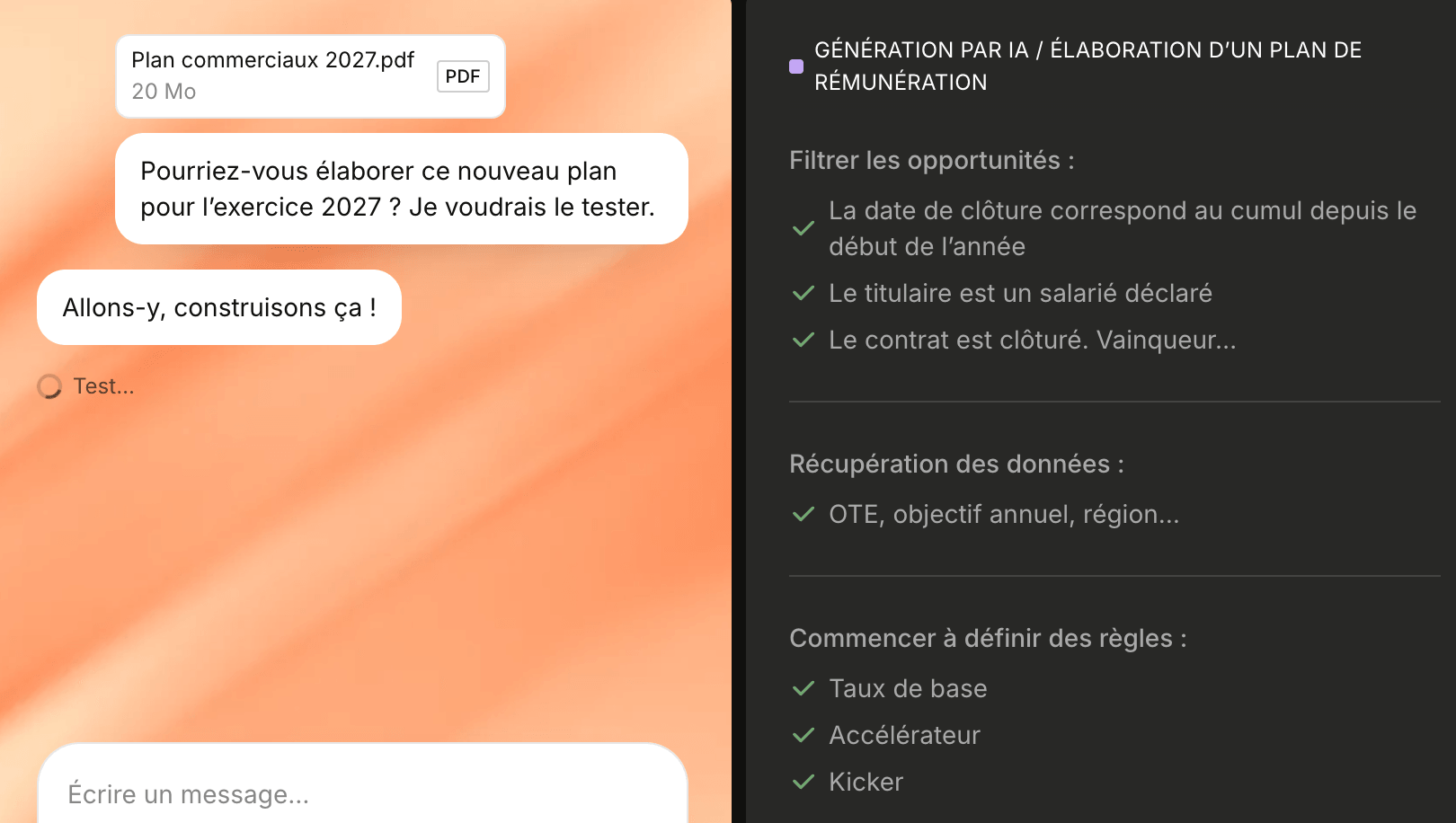
Didomi has also used  Qobra since around 2020 to calculate and track its sales teams' commissions. Raphaël Boukris particularly appreciates the reliability of the software, on a topic where errors can quickly create tension with salespeople.
“Qobra works really well. Once the commission plans are set up properly, it runs on its own and it makes a lot of things simpler.”
Raphaël is also interested in Qobra's new AI features, in particular the ability to create or check commission plans in natural language, without having to configure each rule manually. Finally, Didomi uses the integration between Qobra and HiBob, its HRIS, to better connect HR data to commission management.
After several years of use, Raphaël is very positive about the impact of Qobra on Didomi.
Why did Didomi migrate from HubSpot CMS to Webflow?
Didomi's website is now built with Webflow, after a migration from HubSpot CMS. The change was driven mainly by the marketing teams' need for autonomy.
With HubSpot, some changes required more technical intervention. After training on  Webflow, the teams were able to take on a larger share of the work directly.
“With Webflow, the marketing teams have total autonomy.”
Raphaël does not regret this migration, even though he now wonders about the future of traditional CMSs in the face of AI website generation tools.
How does Didomi use Userled for Account-Based Marketing?
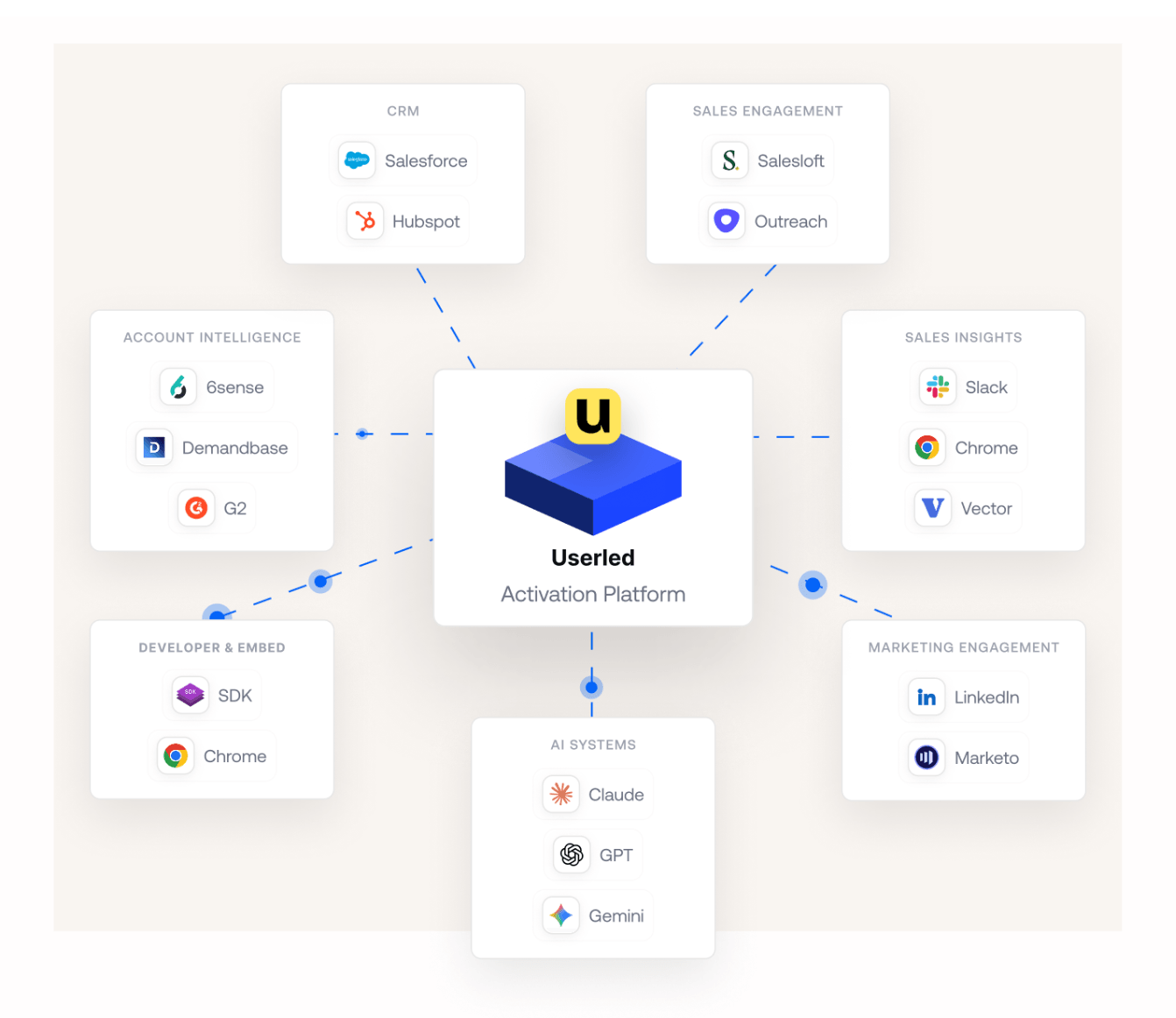
Didomi recently adopted  Userled to develop its Account-Based Marketing (ABM) campaigns. Each salesperson selects about fifteen strategic accounts, for which the marketing teams build personalized campaigns.
Userled makes it possible, in particular, to create landing pages tailored to each company, highlighting the most relevant customer references and messages. To target a car manufacturer, Didomi can thus showcase its automotive references rather than a generic sales pitch.
These campaigns come with advertising spend, mainly on  LinkedIn. Long skeptical about the platform's cost, Raphaël has changed his view: when selling to key accounts, awareness and reassurance play an important role in purchasing decisions.
Didomi also invests in  Google Ads, while
 Meta remains a secondary channel.
For now, the company is moving cautiously on ABM, with budgets that are still limited. The goal is to validate the effectiveness of the campaigns before ramping up investment. No figures on conversions or on Userled's return on investment have been shared yet.
Which tools does Didomi use for its webinars and GEO tracking?
HubSpot remains Didomi's main marketing automation tool. Raphaël does point out one difficulty, though: coordinating the communications sent to customers and prospects to avoid over-soliciting them. The company has not yet rolled out a dedicated solution for this orchestration.
For its online events, Didomi has used  Livestorm for several years, at a pace of about one webinar per month. Raphaël sees big differences depending on the format: some events with well-known speakers, sometimes paid, can attract several thousand registrants.
Finally, Didomi uses  Peec AI to track its visibility in the answers of artificial intelligence engines, in particular ChatGPT. The goal is to understand to what extent Didomi appears in LLM recommendations and how its presence evolves on queries related to its market. This use is part of Didomi's first GEO (Generative Engine Optimization) initiatives, alongside its traditional marketing efforts.
Why did Didomi go back to Upflow after adopting Pennylane?
Didomi's finance stack relies in particular on  Pennylane,
 Stripe and
 Upflow.
About three years ago, Didomi adopted Pennylane to replace  QuickBooks, after the latter shut down in France. Raphaël says he is happy with this migration. The company also uses Stripe for some payments, even though its key account customers largely prefer bank transfers.
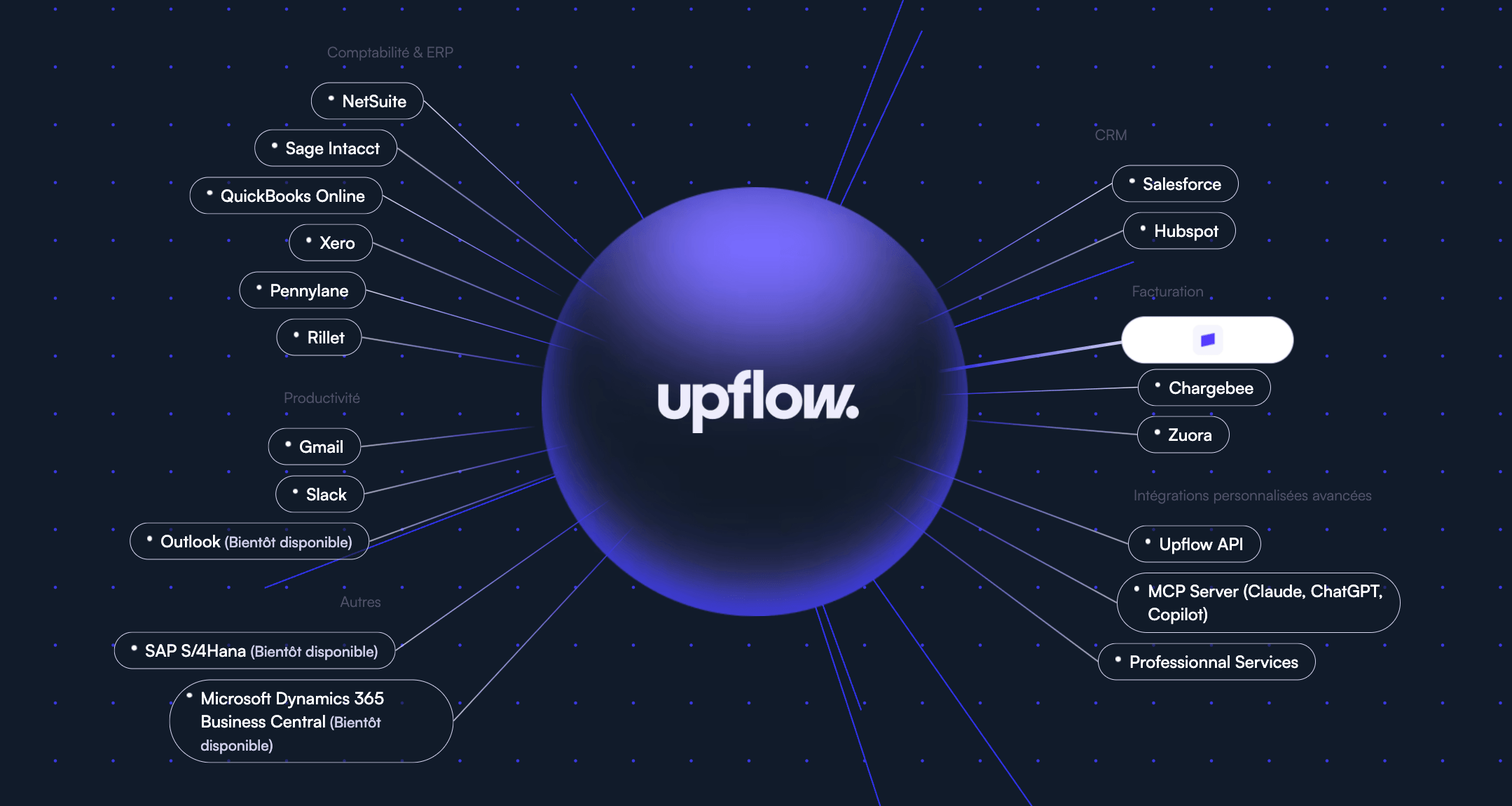
In this context, collections are a major issue. Didomi historically used Upflow to automate its invoice reminders, before dropping it in favor of the features built into Pennylane, which were deemed sufficient at the time.
But Upflow came back to present the changes to its product. Raphaël noted significant progress, in particular in the management and smart automation of reminders. Convinced by these improvements, Didomi ultimately readopted Upflow, now connected to Pennylane.
“So we took the solution back and, today, we're very happy.”
For a company generating several tens of millions of euros in revenue, late payments can quickly add up to significant sums. Raphaël therefore believes that a tool specialized in collections can make the difference, even when the accounting software already offers reminder features.
Tools in this section
Which software does Didomi use for HR, expense reports and recruiting?
 HiBob is Didomi's main HRIS, used to manage time off, annual reviews and various HR processes. The company did not have a real HRIS before. Raphaël says he is happy with his choice, even though he admits he did not carry out an in-depth benchmark against alternatives such as Lucca.
For expense reports, Didomi recently adopted  Payhawk, replacing a French software product that struggled to meet the needs of an organization present in several countries. After a few months of use, the first assessment is positive, even though some settings still need fine-tuning.
On the recruiting side, Didomi has used  Lever for four to five years. Raphaël logs in about once a week to follow the hiring processes he takes part in, in particular those for his direct reports.
To manage its employees hired internationally through an Employer of Record (EOR), Didomi works with  Oyster. The acquisition of Sourcepoint, which used
 Deel, required consolidating several contracts. Raphaël keeps a close eye on pricing, while stressing the complexity of these services and the administrative and HR risks that come with changing providers.
Finally, Didomi has used Swile for six or seven years for meal vouchers and Benefiz for health and disability insurance, after leaving  Alan. Raphaël still has an excellent opinion of Alan, but price increases prompted the change. He considers both solutions good products, whose value for money deserves to be reassessed regularly.
To challenge its contracts, Didomi works successfully with, in particular,  Najar for the past three to four years. The solution supports it with software purchasing, benchmarks and some major negotiations. Raphaël knows that loyalty to a tool can mask the progress of its competitors, but he also takes into account the time needed to change processes and train teams.
Tools in this section
Why did Didomi roll out Claude Enterprise to all its employees?
For internal collaboration, Didomi relies on  Slack and
 Google Workspace, in particular Gmail. On artificial intelligence, however, the company recently changed its strategy.
While access to  ChatGPT was previously reserved for certain employees, with a professional plan that was not Enterprise, Didomi chose to roll out Claude Enterprise to all of its employees.
Feedback from the teams is very positive: according to Raphaël, employees strongly prefer Claude to ChatGPT. Raphaël, however, keeps using ChatGPT personally to stay familiar with both environments.
To make it easier to adopt Claude, Didomi has developed ready-to-use instructions and skills, allowing employees to make use of AI without having to build complex prompts themselves. Raphaël is also interested in  Claude Design, in particular to quickly generate presentations.
Summary of the software this article mentions in Didomi's stack
| Status | Workflow | Tool | Usage |
|---|---|---|---|
| In use | CRM |  Salesforce | Central CRM for almost nine years |
| In use | CRM, marketing, ticketing, CMS | HubSpot | Marketing and ticketing; former CRM and CMS; synced with Salesforce |
| In use | Customer Success | Planhat | Health scores and customer tracking |
| In use | AI | Claude / Claude Enterprise | AI assistant rolled out to employees |
| In use | Sales data | ZoomInfo | Prospecting, especially in the United States |
| In use | Enrichment | Clay | Sales data enrichment |
| Dropped | RevOps |  CargoDropped | Alternative to Clay considered for a comparison |
| In use | Sales engagement | lemlist | Sales prospecting |
| Replaced by Lemlist | Sales engagement | SalesloftReplaced by Lemlist | Former prospecting tool, replaced by Lemlist |
| In use | Conversation intelligence | Claap | Recording and analysis of conversations |
| In use | Telephony | Aircall | Sales calls |
| In use | Commissions | Qobra | Commission management |
| In use | HRIS | HiBob | HR and integration with Qobra under consideration |
| In use | CMS | Webflow | Website |
| In use | ABM | Userled | Personalized landing pages |
| In use | Advertising | LinkedIn Ads | ABM and awareness campaigns |
| In use | GEO | Peec AI | Tracking visibility in AI engines |
| In use | Finance | Pennylane | Accounting and invoicing |
| Replaced by Pennylane apr | Finance | QuickBooksReplaced by Pennylane apr | Former accounting software, replaced by Pennylane after it shut down in France |
| In use | Payments | Stripe | Customer payments |
| In use | Collections | Upflow | Collections; readopted after a period of discontinued use |
| In use | Expense reports | Payhawk | Multi-country management |
| In use | Recruiting | Lever | ATS |
| In use | Employer of Record | Oyster | Didomi's long-standing provider |
| In use | Employee benefits |  Swile | Meal vouchers |
| In use | Health and disability insurance |  Benefiz | Employee benefits coverage |
| Replaced by Benefiz principalement pour le prix | Health insurance | AlanReplaced by Benefiz principalement pour le prix | Former health insurance provider, replaced by Benefiz mainly because of price |
| In use | Collaboration | Slack | Internal communication |
| In use | Office suite | Google Workspace / Gmail | Email and collaboration |
| Replaced by Claude Enterprise | AI | ChatGPTReplaced by Claude Enterprise | Former professional use replaced by Claude Enterprise; Raphaël keeps using it personally |
| In use | Visual creation and presentations | Claude Design | AI presentation tool used by Raphaël; exact setup not specified |
| In use | SaaS purchasing | Najar | Benchmarks and negotiations |