

French startups and scale-ups break down their finance stack. Qonto dominates banking, Pennylane accounting (often chosen by the accounting firm), and expense reports are the tool that changes most often.
Banking, accounting, expense reports, billing: a startup's finance stack is built in layers, as needs arise. To understand how these choices are made, we started from the interviews Soft Atlas conducts with executives and finance and operations teams, and from the stacks it catalogs. Thirteen French companies told us which tools they use, which ones they left and why.
Two names come up almost everywhere: Qonto for banking, Pennylane for accounting. It is on expense reports and billing that choices diverge the most, and that changes are most frequent.
Which finance tools do these 13 companies use?
- Agorapulse: Xero for accounting, Chargebee for billing, Fincome for SaaS metrics and Spendesk for spending.
- Ankorstore: moving from Spendesk to Payhawk for expense reports.
- Collective: Qonto, Pennylane, Stripe for subscriptions and ChartMogul to track ARR.
- Didomi: Pennylane in place of QuickBooks, Upflow for collections and Payhawk for expense reports.
- Figures: Spendesk for at least four years, Pennylane through its accounting firm, Qonto in its early days.
- Folk: Qonto for banking, Spendesk for invoices and spending.
- MerciYanis: Qonto for banking and expense reports, in place of Spendesk.
- Meteoria: Qonto for banking, Pennylane for accounting, Stripe for billing.
- Partoo: Chargebee and Evoliz for billing, currently being overhauled, Upflow for collections, Spendesk for spending.
- Qobra: Pennylane for accounting, Hyperline for billing.
- Shine: Chargebee for product-led activities, Zuora for the group's sales-led activities.
- Teamtailor: Revolut for spending.
- Waalaxy: Qonto, Revolut for dollar flows, Pennylane and Stripe.
Banking: Qonto almost everywhere
Five of these companies have  Qonto as their main bank, and Figures used it in its early days. The reasons are similar: fast account opening, the interface and the integrations.
At Meteoria, Idriss Khouader, co-founder and CEO, already knew Qonto from his previous companies and did not look much further. The company considered  Pennylane's bank account, but kept Qonto, notably for the interest earned on its cash, around 2%. Idriss Khouader has one reservation: to obtain certain loans, a relationship with a traditional bank can become necessary.
Waalaxy chose Qonto for day-to-day operations and  Revolut for international flows, especially in dollars. Toinon Georget, co-founder, connected an AI agent to Qonto's API: when an invoice comes in, the agent identifies the company concerned and prepares the transfer, which Toinon then approves himself.
“For me, the 3 big advantages of Qonto are really the quality of the product, the UX and the integrations they offer.”
 Toinon Georget, co-founder of Waalaxy
Collective uses Qonto for its day-to-day operations, for its simplicity and its cost, and keeps an account at BNP Paribas for its financing. At Teamtailor, Revolut handles cards and spending.
“Revolut is the simplest experience in the world.”
Accounting: Pennylane, often chosen by the firm
Pennylane is present at seven of these companies, and the stacks cataloged by Soft Atlas put it well ahead of Qonto. We often hear it at Soft Atlas: it comes in through the accountant rather than through the team. At Qobra, it was adopted a year and a half to two years after the company was founded, on the accountant's recommendation. At Meteoria, Figures and MerciYanis, it is the accounting firm that uses it day to day, and Meteoria's CEO admits he rarely opens the app himself.
Didomi adopted it about three years ago to replace QuickBooks, after QuickBooks was discontinued in France, and says it is satisfied with the migration. At Waalaxy, Pennylane centralizes supplier invoices, receipts and transactions from the various bank accounts. Toinon Georget, who uses it for about seven companies, is however critical of the API's price: about €50 per month per company.
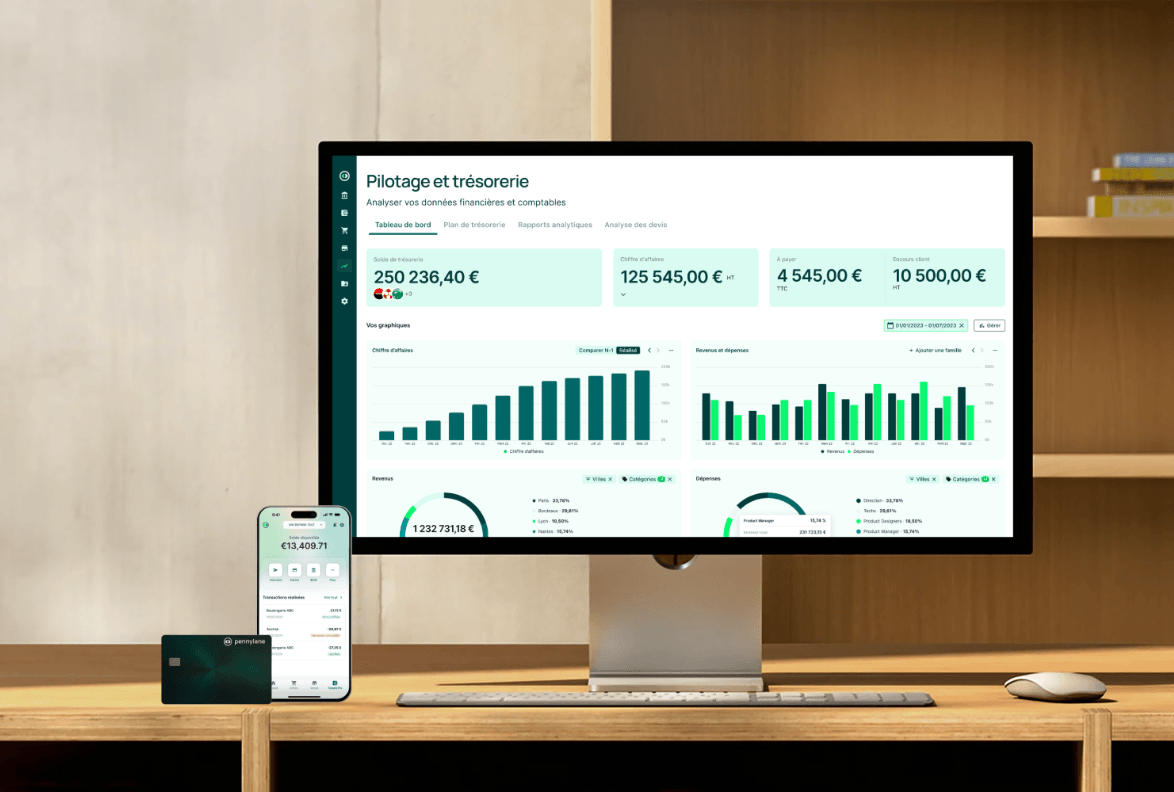
Pennylane does not suit every structure. Agorapulse, which brings together a French holding company and subsidiaries in the United States and Canada, uses  Xero, with a French accountant to adapt the books to French requirements.
“Accounting software that does everything, we haven't found it. We make do.”
 Emeric Ernoult, founder and CEO of Agorapulse
Qonto or Pennylane: soon a single platform?
The line between the two is blurring. Qonto is strengthening its accounting features, notably since acquiring Regate in 2024, and Pennylane is developing its banking services. Théo Bartholmé, Head of Finance & Operations at Collective, is following this convergence closely.
“I get the feeling it's easier for Pennylane to add banking services than for Qonto to build the whole accounting side. Pennylane starts from a fairly complex business, whereas banking features seem simpler to integrate to me.”
 Théo Bartholmé, Head of Finance & Operations at Collective
None of these companies has made the move, though. Collective sees no good enough reason to leave Qonto, and Meteoria ruled out the Pennylane account. MerciYanis is instead considering the opposite of a single platform: a stack tightened around Qonto and Pennylane, which would let it leave  Axonaut, still used for quotes and billing.
Expense reports: the tool that changes the most
It is the building block most often replaced in these interviews, and almost always for the same reason: the ratio between price and actual use. In the stacks cataloged by Soft Atlas, however, Spendesk remains far more widespread than Payhawk.
MerciYanis already used Qonto as its bank. When  Spendesk proposed nearly doubling the subscription price while adding features, the company moved its expense reports there. Guillaume Blanc, CEO, describes a simple migration.
“All those Spendesk features didn't interest us. We just wanted the basic thing. Qonto covered it.”
 Guillaume Blanc, CEO of MerciYanis
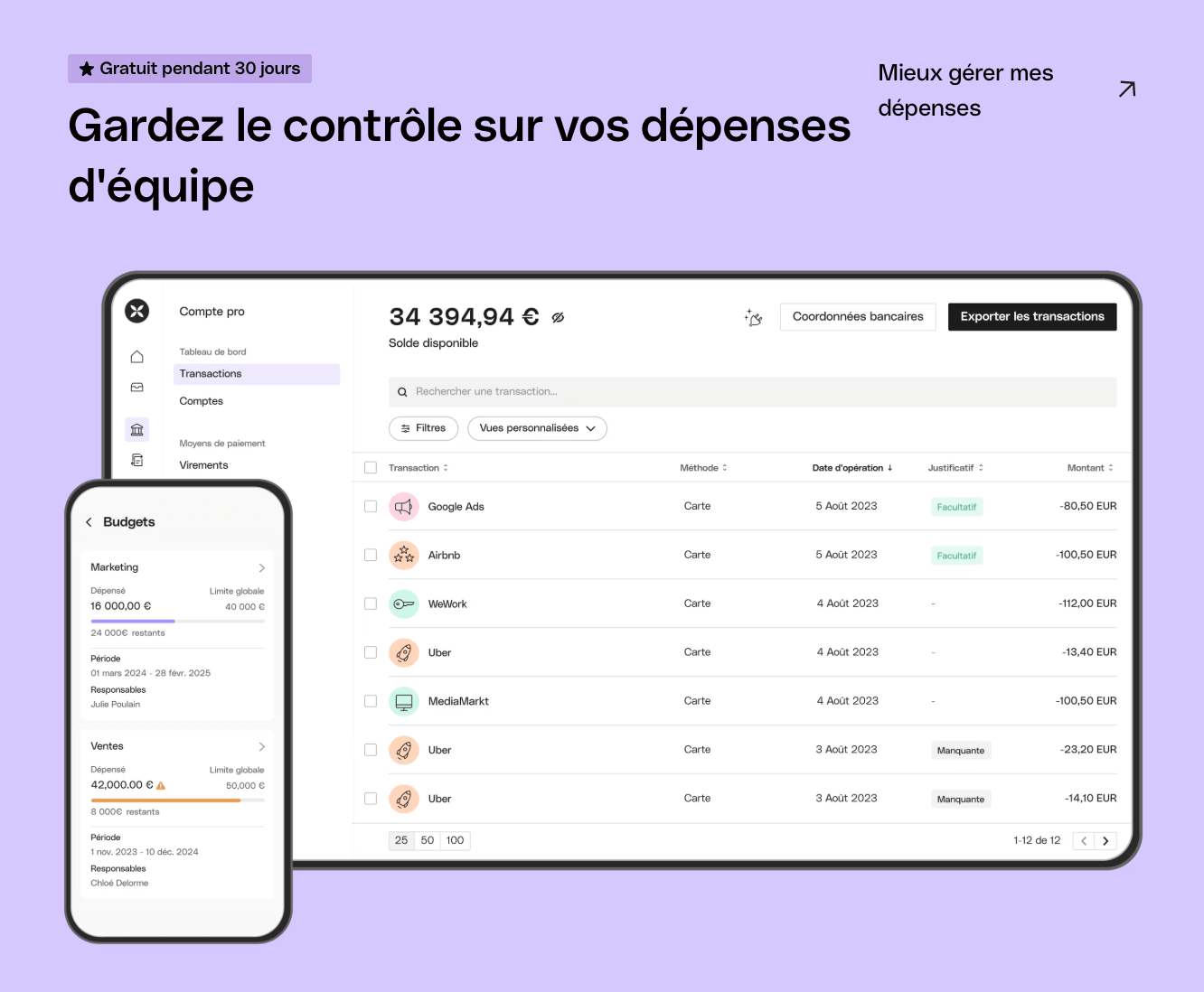
Ankorstore has just moved from Spendesk to  Payhawk, on two criteria: ease of use and price.
“I don't even need to be trained on the tool. The notifications are very good. I approve in two clicks. It's clear and readable for me as a manager.”
 Gabriel de Chazournes, Sales Director France at Ankorstore
Didomi also adopted Payhawk, replacing a French software tool that struggled to meet the needs of an organization present in several countries. After a few months, the initial assessment is positive.
Spendesk still keeps its loyal users. Figures has used it for at least four years and says it is satisfied, Agorapulse reports good feedback from its CFO, and Folk uses it to centralize its invoices. At Partoo, it covers the essential needs, even if the experience seems less smooth than before.
Billing: Stripe, Hyperline or Chargebee?
Collective moved from Mangopay to  Stripe with its pivot to SaaS. About 90% of its billing now goes through Stripe, and salespeople create payment links themselves for custom offers.
“What's really handy with Stripe is that you can do almost everything from the dashboard. If a customer wants to change their subscription or do an upsell, you can handle it directly. You don't need to build an API integration for every operation.”
Théo Bartholmé, Head of Finance & Operations at CollectiveCollective keeps Pennylane for key accounts that pay by bank transfer, with more manual work. Qobra came to the opposite conclusion: invoicing in Pennylane remained too manual for contracts with multiple renewal dates, products and currencies. The company adopted  Hyperline about two years ago.
Partoo is overhauling its financial stack.  Chargebee has historically handled part of the subscriptions,
 Evoliz another large share of billing, and the integrations built with Salesforce have become hard to maintain.
“Evoliz is an excellent tool up to a certain company size, with very good value for money.”
 Clément Bouillaud, Director of Operations at Partoo
At Shine, two tools should continue to coexist: Chargebee for Shine's product-led activities,  Zuora for the sales-led activities of the Cegid group, whose catalogs are more complex. Agorapulse says it is broadly satisfied with Chargebee, with a reservation about support.
Collections and SaaS metrics
Two building blocks often round out the stack once the company grows: collections and SaaS metrics tracking.
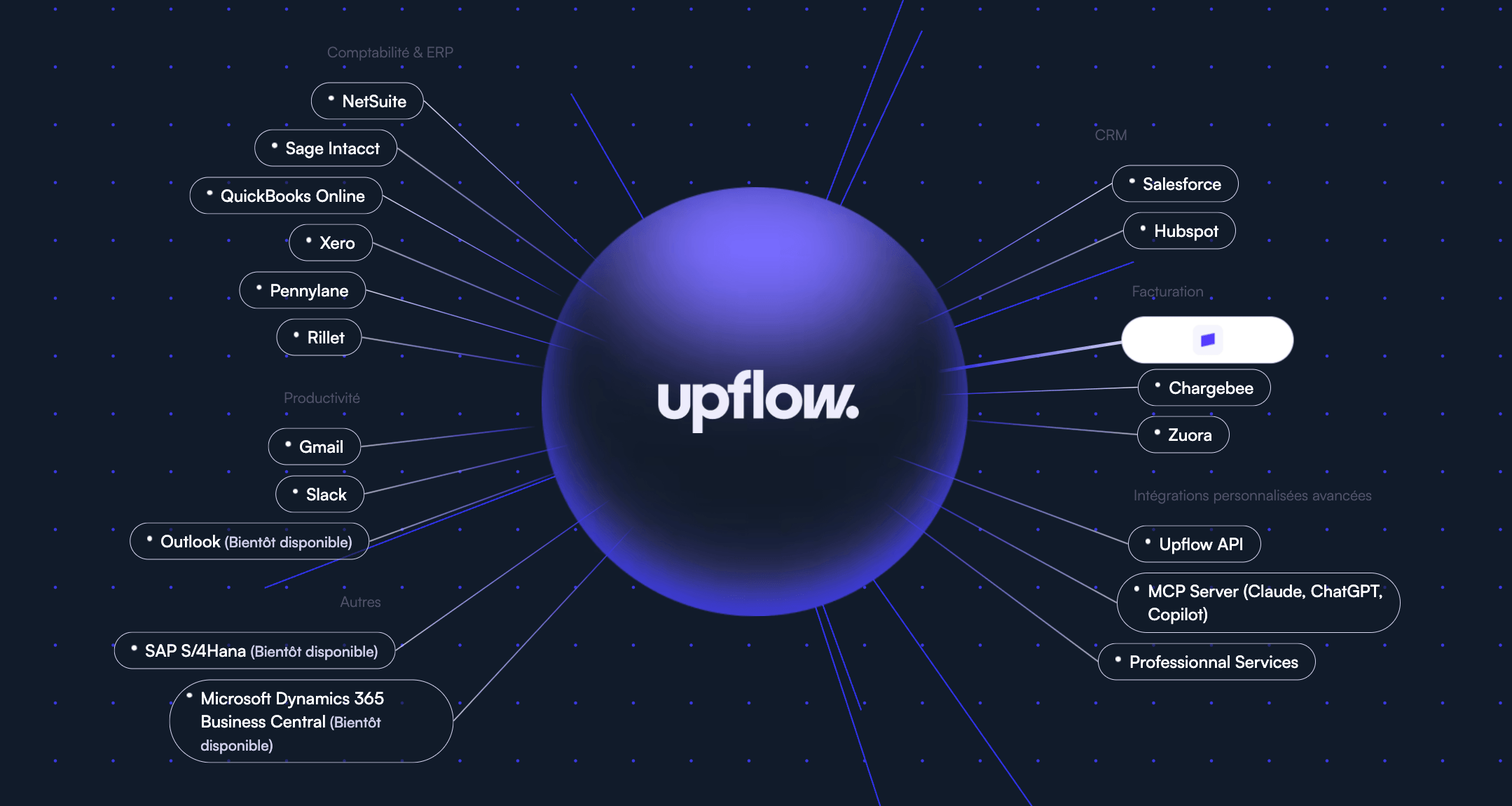
Didomi had dropped  Upflow in favor of the payment reminders built into Pennylane, which were deemed sufficient at the time. Upflow came back to present how its product had evolved, especially reminder automation, and Didomi adopted it again, this time connected to Pennylane.
For ARR, MRR and churn, Agorapulse left  ChartMogul for
 Fincome, connected to Chargebee.
“Fincome is cheaper than ChartMogul. It does the same thing, or even better, for a much more reasonable price.”
Emeric Ernoult, founder and CEO of AgorapulseCollective is sticking with ChartMogul, but has to manually recreate in it the subscriptions billed in Pennylane. Théo Bartholmé has started talking with Fincome, which can consolidate several billing sources, with no plans to migrate in the short term.
“ChartMogul is very easy to use in self-service. Fincome offers more support and can better meet complex needs, especially with Pennylane.”
Théo Bartholmé, Head of Finance & Operations at CollectiveFrequently asked questions
Qonto or Pennylane for a startup?
In these interviews, the two complement each other more than they compete: Qonto for banking, Pennylane for accounting, often handled by the accounting firm. Meteoria looked at Pennylane's bank account and kept Qonto, notably for the interest earned on its cash.
Spendesk, Payhawk or Qonto for expense reports?
MerciYanis brought its expense reports over to Qonto, its bank, after a Spendesk price increase. Ankorstore and Didomi switched to Payhawk, for its simplicity and price or for its multi-country use. Figures, Agorapulse, Folk and Partoo are staying with Spendesk.
Do you need a billing tool in addition to Pennylane?
As soon as contracts get more complex, often yes. Qobra adopted Hyperline to handle multiple renewals, products and currencies. Collective bills 90% of its subscriptions with Stripe and reserves Pennylane for key accounts paying by bank transfer.
About these interviews
Soft Atlas interviews executives and finance and operations teams about the software they really use day to day: what they chose, what they left and why. Each interview becomes a use case published on Soft Atlas, reviewed by the company before publication, and adds to the company's stack on Soft Atlas. The quotes in this article are taken from them word for word; the overall trends come from the stacks cataloged by Soft Atlas.